

Newsroom
Looking for something specific? Search through our press releases by keyword:
Find Releases by Date
- April 2026
- March 2026
- February 2026
- January 2026
- December 2025
- November 2025
- October 2025
- September 2025
- August 2025
- July 2025
- June 2025
- May 2025
- April 2025
- March 2025
- February 2025
- January 2025
- December 2024
- November 2024
- October 2024
- September 2024
- August 2024
- July 2024
- June 2024
- May 2024
- April 2024
- March 2024
- February 2024
- January 2024
- December 2023
- November 2023
- October 2023
- September 2023
- August 2023
- July 2023
- June 2023
- May 2023
- April 2023
- March 2023
- February 2023
- January 2023
- December 2022
- November 2022
- October 2022
- September 2022
- August 2022
- July 2022
- June 2022
- May 2022
- April 2022
- March 2022
- February 2022
- January 2022
- December 2021
- October 2021
- September 2021
- August 2021
- July 2021
- June 2021
- May 2021
- April 2021
- March 2021
- February 2021
- January 2021
- December 2020
- November 2020
- September 2020
- July 2020
- June 2020
- May 2020
- April 2020
- March 2020
- February 2020
- January 2020
- December 2019
- November 2019
- October 2019
- September 2019
- July 2019
- June 2019
- May 2019
- April 2019
- March 2019
- February 2019
- January 2019
- December 2018
- November 2018
- October 2018
- September 2018
- August 2018
- January 2018
- November 2017
- August 2017
Danielson Bill to Protect Older Coloradans from Being Scammed Passes Committee Unanimously
DENVER, CO – The Senate Business, Labor, and Technology Committee unanimously passed bipartisan legislation to prevent scams targeting older Coloradans today.
HB26-1110, the Adults’ Security and Safeguards from Exploitations in Transactions (ASSET) Act, is sponsored by Senators Jessie Danielson, D-Wheat Ridge, and Marc Catlin, R-Montrose. It would help prevent older Coloradans and other vulnerable people from being defrauded by scammers.
“Older Coloradans deserve to live with financial security – but years of hard work and saving can be ruined in an instant by a scammer,” said Danielson. “My bill will allow bankers and credit unions to stop fraudulent transactions before they go through. It’s about putting safeguards in place to prevent scams and keep Coloradans’ hard-earned money in their bank accounts.”
Under the bill, bank and credit union professionals would notify authorities and could pause transactions for additional review if they have reason to believe that their client is the victim of financial exploitation. The bill would also offer legal protection for these professionals if their action, or failure to act, was in good faith.
In 2024, Coloradans aged 60 years old and older reported losing over $74 million to scams. They were also the age group that experienced the most scams, with 3,125 individuals losing an average of $24,000.
In 2025, Colorado Democrats passed a law, sponsored by Senator Dylan Roberts, D-Frisco, that protects Coloradans from scams involving cryptocurrency kiosks, which target the elderly and other vulnerable populations. The law established a transaction limit of $2,000 per day for new customers and $10,500 for existing customers to help limit the amount of money that scammers can steal.
HB26-1110 now heads to the Senate floor for further consideration. Track its progress HERE.
Senate Passes Housing Protections Bill for Coloradans with Disabilities
DENVER, CO – The Senate today passed legislation sponsored by Senate President Pro Tempore Cathy Kipp, D-Fort Collins, and Senator Jessie Danielson, D-Wheat Ridge, to protect equal housing opportunities for Coloradans with disabilities.
“After the federal government repealed existing protections for Coloradans with disabilities, we’re stepping in to reinstate those protections,” Kipp said. “Tenants who rely on service animals deserve equal access to housing, and this bill would ensure that access remains in Colorado.”
“Every Coloradan deserves equal access to housing,” Danielson said. “One of my top priorities during my time in the legislature has been to strengthen protections for Coloradans with disabilities. This bill is a continuation of that work, ensuring that those who depend on service animals do not face discriminatory barriers to housing.”
HB26-1045 would establish that it is an unfair or discriminatory housing practice to deny housing to Coloradans due to their live-in service animals. The bill would also create definitions for “assistance animal” and “emotional support animal” to provide clarity to housing providers and Coloradans with disabilities and reduce litigation.
Last year, the U.S. Department of Housing and Urban Development rescinded federal guidelines that outlined the rights that people with disabilities have regarding service animals under the Fair Housing Act. These guidelines also helped landlords, property managers and tenants understand how to distinguish between service animals and Emotional Support Animals. The repeal of these guidelines has created confusion regarding the rights of Coloradans with disabilities and what reasonable accommodations housing providers must provide.
In recent years, Colorado Democrats have passed laws to bolster housing protections for Coloradans with disabilities. Colorado Democrats passed laws that save Coloradans money on accessibility modifications to rental housing and prevent unjust evictions for Coloradans who rely on safety net programs, like disability insurance. Last year, Democrats also passed a law to expand protections under the Colorado Anti-Discrimination Act to protect vulnerable communities, especially Coloradans with disabilities, by allowing victims of discrimination to receive monetary compensation for unfair housing practices.
HB26-1045 now moves to the Governor’s desk for his signature. Track its progress HERE.
Trio of Bills to Prevent Gun Violence Passes Senate
DENVER, CO – Today, the Senate passed three bills to prevent gun violence and save lives.
HB26-1265, sponsored by Senators Katie Wallace, D-Longmont, and William Lindstedt, D-Broomfield, would require each law enforcement agency in Colorado to register with eTrace and opt in to eTrace’s feature that allows for collaboration.
“We owe it to everyone affected by gun violence in Colorado to do all we can to prevent future tragedies,” Wallace said. “This legislation would ensure that state law enforcement agencies have every tool at their disposal to track trafficked guns and help stem the ensuing tide of gun violence.”
“Collaboration between law enforcement agencies allows for the quickest possible response and investigation after an incident involving firearms,” Lindstedt said. “Colorado Democrats are committed to making our communities safer. HB26-1265 is a critical piece of that commitment.”
Law enforcement agencies would be required to record information into eTrace when they:
Recover or confiscate firearms in connection with a criminal investigation,
Seize or forfeit firearms in connection with domestic violence crimes, and
Obtain an abandoned or discarded firearm.
eTrace is a bilingual service that allows for collaboration among all participating law enforcement agencies. Law enforcement can submit trace requests through eTrace to quickly determine the firearm’s origin, helping identify potential firearm traffickers and suspects in criminal investigations. Nearly 640,000 firearm trace requests were completed in fiscal year 2024.
Last year, the Trump Administration revoked a policy that prevented gun dealers from selling guns to criminals. Trump also proposed a $400 million cut to the Bureau of Alcohol, Tobacco, Firearms and Explosives, leaving more pressure on states to address firearm trafficking.
HB26-1126, sponsored by Senator Cathy Kipp, D-Fort Collins, would strengthen existing Colorado law to better prevent gun theft and illegal gun sales.
“Regulatory updates happen when we stand up a department of qualified individuals, send them to work, and listen to what they have to say – and these bills do exactly that,” Kipp said. “I’m proud to sponsor these two bills to optimize the use of our resources, shore up protections against firearm theft, and ultimately stop preventable acts of gun violence before they occur.”
Colorado law currently requires firearm dealers to hold a state permit to sell firearms and firearm components. HB26-1126 would also require an individual to hold a state permit to transfer firearms. Currently, firearm dealers are only required to keep a record of the sales, rentals or exchanges of pistols and revolvers. The bill strengthens record-keeping requirements by requiring firearm transactions to be recorded and that these records be maintained electronically.
HB26-1126 would prevent firearm theft by requiring firearm dealers to secure large-capacity magazines behind a counter in a locked case or in a locked room that is not accessible to the public, except when showing these products to a customer who is eligible to purchase them or during a repair. Within 72 hours of learning of a loss or theft of a firearm, firearm dealers would be required to report it.
To help ensure compliance, this bill would impose fines for violations of the law before revoking a firearm dealer’s permit. Beginning January 1, 2027, a second or subsequent offense could result in a fine of up to $75,000.
Studies show that policies regulating firearm dealer licensing can lead to significant reductions in gun violence, including gun homicides and suicides. After Connecticut passed a similar law, its firearm homicide rate fell by 28 percent and firearm suicide rate decreased by 33 percent.
Additionally, the committee passed HB26-1302, also sponsored by Kipp, to allow the Colorado Bureau of Investigation’s (CBI) InstaCheck unit to set business hours that best suit business needs. Under current law, Instacheck must stay open for at least 12 hours daily, except on Thanksgiving and Christmas. Under the bill, CBI must consistently review certain statistics and data to determine appropriate hours of operation.
All three bills now move to the Governor’s desk to be signed.
Legislation to Help Colorado Families Achieve Economic Mobility Clears Senate
SB26-080 would establish a grant program to support community-based Cradle-to-Career initiatives
DENVER, CO – Today, the Senate approved legislation sponsored by Senate President James Coleman, D-Denver, to create a Cradle-to-Career grant program supporting locally-led initiatives that offer education and workforce development training.
“Cycles of generational poverty persist because, starting from birth, too many Coloradans are not afforded the resources they need to succeed,” Coleman said. “This new grant program would offer those resources to invest directly in communities, support housing and economic stability for Colorado families, and strengthen our state’s workforce by preparing young people for high-demand, family-sustaining careers.”
SB26-080, cosponsored by Senate Minority Leader Cleave Simpson, R-Alamosa, would create a Cradle-to-Career grant program within the Colorado Department of Human Services to fund community-based efforts that improve economic mobility from prenatal stages through workforce readiness. Eligible applicants include local governments, education providers including higher education institutions, tribes and tribal organizations, and nonprofit organizations.
Program approvals will be overseen by an advisory board and will be supported by Harlem Children’s Zone, a national nonprofit specializing in Cradle-to-Career initiatives. Approved grants would support programs advancing goals like K-12 readiness and academic proficiency, enrollment in skills training and credential attainment, and employment at a good wage.
SB26-080 now moves to the House for further consideration. Track its progress here.
Legislation to Rename the COYAC Review Committee to Honor Senator Faith Winter Passes the Senate
DENVER, CO – The Senate today passed legislation to rename the Colorado Youth Advisory Council (COYAC) Review Committee to honor and memorialize the late Senator Faith Winter.
SB26-143, sponsored by Senate President James Coleman, D-Denver, and Senator Katie Wallace, D-Longmont, would rename it the Representative Hugh McKean and Senator Faith Winter COYAC Review Committee.
“Faith was dedicated to empowering young people to become passionate about the legislative process, represent their communities, and make a difference,” said Coleman. “She fought to save COYAC during tough budget cuts and was a tireless advocate for youth representation in the legislature. It is only fitting that her name and legacy be formally tied to this program.”
“Faith was an incredible advocate for youth involvement in the legislative process,” said Wallace. “COYAC was near and dear to her heart and I can think of no better way to honor her than to have her name on this program. The COYAC Review Committee ensures the powerful voices of young people are not just included but shape real legislation that has an impact on the lives of young people. This bill ensures that Faith’s name and legacy will always be tied to this work that meant so much to her.”
In 2008, lawmakers established COYAC to give Colorado’s youth a voice in the lawmaking process. Since its creation, COYAC members have worked to develop policy recommendations on issues of youth concern and promote civic engagement amongst Colorado’s youth. It consists of 40 youth members, ages 14-19, who serve two-year terms.
The Representative Hugh McKean COYAC Review Committee was established in 2019 to review the work of COYAC and recommend legislation affecting Colorado youth. Alongside Representative McKean, Senator Winter was a staunch supporter of COYAC, a member of the review committee, and a champion for including youth voices in legislative decision-making.
SB26-143 now heads to the House for further consideration. Track its progress HERE.
Roberts Bill to Improve Road Safety, Fund Wildlife Crossings Passes Senate
DENVER, CO – The Senate today passed bipartisan legislation to prevent wildlife collisions.
SB26-141, sponsored by Senator Dylan Roberts, D-Frisco, would create an optional $5 collision prevention fee during annual vehicle registration, creating reliable and dedicated funding for wildlife crossing infrastructure.
“There’s very little that we can do in government that is over 90% effective – but wildlife crossings are that rare solution,” said Roberts. “This infrastructure is proven to reduce collisions with wildlife, protect humans and animals, and save drivers money. I’m proud to sponsor this bipartisan solution to create a sustainable, voluntary funding source that will make our roads safer, especially in rural Colorado.”
Also sponsored by Senate Minority Leader Cleave Simpson, R-Alamosa, the bill aims to dramatically reduce motor vehicle crashes with wildlife by authorizing an optional $5 fee that will be collected during annual vehicle registration beginning in 2027. The fund would be used to construct wildlife collision prevention infrastructure including overpasses, underpasses, jump-outs, and fencing, and would also allow Colorado to leverage federal matching funds for these projects. A portion of the funds would also benefit the Wildlife Cash Fund, administered by Colorado Parks and Wildlife, to conserve habitat on either side of the crossings.
Collisions with wildlife can be fatal, damage property, and create financial burdens. In 2024, at least 3,500 crashes with animals occurred on Colorado roads. From 2010-2025, these tragic accidents resulted in 52 motorist fatalities and over 400 serious injuries. The total estimated annual cost of wildlife-vehicle collisions in Colorado is over $300 million. Wildlife crossings have been shown to reduce these collisions by more than 90 percent.
SB26-141 now heads to the House for further consideration. Track its progress HERE.
Senate Unanimously Passes Bill to Increase Transparency, Modernize Regulatory Review Processes
DENVER, CO – The Senate unanimously passed bipartisan legislation to improve government transparency and streamline regulations today.
SB26-137, sponsored by Senate President James Coleman, D-Denver, would require state departments to review their rules and regulations every five years and would add additional considerations to guide these reviews.
“Rules and regulations are important – they keep our air and water clean, our roads safe, and our families healthy,” said Coleman. “Part of governing responsibly is continually reviewing what regulations are working, where there are gaps, and what we need to update or streamline. This bill would ensure that Colorado agencies review their rules every five years to reduce redundancies and improve effectiveness.”
Under current law, departments are required to periodically review their rules to determine whether they are still necessary, efficient, and effective. There is no criteria for how regularly this review must happen.
Also sponsored by Senate Minority Leader Cleave Simpson, R-Alamosa, SB26-137 would add additional considerations during these reviews including: whether redundant rules can be eliminated; whether a rule is outdated or obsolete; whether funding levels are appropriate; and whether the rule can be more effective.
SB26-137 now heads to the House for further consideration. Track its progress HERE.
Bill to Boost Renewable Energy and Create Jobs Advances
HB26-1268 would streamline permitting for renewable energy developments on underutilized land
DENVER, CO – The Senate today passed legislation sponsored by Senator William Lindstedt, D-Broomfield, to streamline permitting for renewable energy developments on underutilized land for communities across the state.
“Colorado communities are ready to make investments in renewable energy to drive down utility costs, create jobs, and boost sustainability, but state regulatory barriers slow the process and limit where these investments can happen,” Lindstedt said. “This legislation would give municipalities more leeway and more options so they can make the best energy choices and investments for them.”
HB26-1268 would allow, not require, local governments to designate areas for renewable energy sites, specifically solar and energy storage system projects. To begin a renewable energy project, local governments would be required to hold at least one public hearing, engage in outreach to disproportionately impacted communities, and ensure that an eligible project may be permitted and constructed in accordance with state laws. Some examples of land could include decommissioned oil and gas sites, industrial sites, closed landfills, and previously mined areas.
This bill would empower local governments to utilize already disturbed land to attract and build renewable energy resources. Under HB26-1268, local governments would have more available tools to reach renewable energy goals and take advantage of tax increment financing, a tax financing tool, to reinvest in their communities.
HB26-1268 now moves back to the House for consideration of amendments. Track its progress here.
Committee Approves Housing Protections Bill for Coloradans with Disabilities
DENVER, CO – The Senate Local Government and Housing Committee today passed legislation sponsored by Senate President Pro Tempore Cathy Kipp, D-Fort Collins, and Senator Jessie Danielson, D-Wheat Ridge, to protect equal housing opportunity for Coloradans with disabilities.
“After the federal government repealed existing protections for Coloradans with disabilities, we’re stepping in to reinstate those protections,” Kipp said. “Tenants who rely on service animals deserve equal access to housing, and this bill would ensure that access remains in Colorado.”
“Every Coloradan deserves equal access to housing,” Danielson said. “One of my top priorities during my time in the legislature has been to strengthen protections for Coloradans with disabilities. This bill is a continuation of that work, ensuring that those who depend on service animals do not face discriminatory barriers to housing.”
HB26-1045 would establish that it is an unfair or discriminatory housing practice to deny housing to Coloradans due to their live-in service animals. The bill would also create definitions for “assistance animal” and “emotional support animal” to provide clarity to housing providers and Coloradans with disabilities and reduce litigation.
Last year, the U.S. Department of Housing and Urban Development rescinded federal guidelines that outlined the rights that people with disabilities have regarding service animals under the Fair Housing Act. These guidelines also helped landlords, property managers and tenants understand how to distinguish between service animals and Emotional Support Animals. The repeal of these guidelines has created confusion regarding the rights of Coloradans with disabilities and what reasonable accommodations housing providers must provide.
In recent years, Colorado Democrats have passed laws to bolster housing protections for Coloradans with disabilities. Colorado Democrats passed laws that save Coloradans money on accessibility modifications to rental housing and prevent unjust evictions for Coloradans who rely on safety net programs, like disability insurance. Last year, Democrats also passed a law to expand protections under the Colorado Anti-Discrimination Act to protect vulnerable communities, especially Coloradans with disabilities, by allowing victims of discrimination to receive monetary compensation for unfair housing practices.
HB26-1045 now moves to the Senate floor for further consideration. Track its progress HERE.
Bill to Safeguard Colorado’s Gold Standard Elections Moves Forward
DENVER, CO –The Senate State, Veterans, and Military Affairs Committee today passed legislation to uphold the integrity of Colorado’s gold standard election system.
HB26-1113, sponsored by Senators Katie Wallace, D-Longmont, and Mike Weissman, D-Aurora, would make necessary modifications and updates to Colorado’s election system.
“This bill was in process long before President Trump’s illegal executive order threatening mail-in voting – but recent events make it all the more urgent,” said Wallace. “Colorado’s elections are safe, secure, and accurate, and we have some of the highest voter participation in the nation. This bill makes needed improvements, like extending the window to return a mail-in ballot, making it easier for young people to vote, and safeguarding against federal interference. It continues our long-held tradition of upholding free and fair elections in Colorado.”
“I’m proud to sponsor this legislation to further strengthen Colorado’s elections,” said Weissman. “The right of states to administer their own elections is crystal clear in the United States Constitution. This bill protects access to the ballot by extending voting windows, increasing drop boxes, and enacting protections against nefarious interference. The right to vote is the bedrock of our democracy, and we’re doing everything we can to shore that up in Colorado.”
HB26-1113 would extend voting windows by prohibiting polling centers from closing early and allowing them to stay open longer to accommodate voters if the polling center runs out of supplies, such as ballots. The bill would also protect against interference and attacks on the United States Postal Service by mailing ballots earlier, so there is more time to vote and return ballots if there are mail delays.
Drop boxes make it easier for voters to return their ballots, and this bill would increase the number of drop boxes at Colorado higher education institutions with at least 1,000 enrolled students. The bill would also improve the visibility of on-campus voting services and polling centers. To make voting more accessible to working Coloradans, HB26-1113 would allow for more flexibility and approval of leave requests that pertain to voting. Additionally, if a vacancy occurs before a U.S. Senator can fulfill their term, HB26-1113 would require that vacancies be filled by a candidate in the same political party as their predecessor to respect electoral outcomes and encourage continuity.
President Trump recently issued an Executive Order attempting to restrict voter eligibility and mail voting. Colorado Attorney General Phil Weiser has joined a multistate coalition suing the Trump Administration to stop this attempt at interfering with states’ constitutional authority to administer elections.
To respond to these threats, the bill would restrict the transfer of Coloradans’ voter data to any third party, including the federal government, without a court order or directive from the Secretary of State. It would also expand the definition of “disaster” in state law to include an occurrence or threat of an inability to carry out elections, and allow Colorado’s governor to convene an election emergency advisory group to respond in such cases.
Colorado has one of the highest voter turnout rates in the country. Over the years, Colorado Democrats have worked to safeguard Colorado’s gold standard election system. Last year, Colorado Democrats passed the Colorado Voting Rights Act to codify stronger voter protections and expand access to voting information for historically excluded communities. Colorado Democrats also passed the Freedom from Intimidation in Elections Act last year to expand protections against intimidation, threats or coercion against voters and election officials.
This builds upon previous legislation to safeguard free and fair elections, including two laws from 2022 to prevent armed voter intimidation and insider election security threats and a 2021 law to improve ballot access for Coloradans with disabilities.
HB26-1113 now heads to the Senate Appropriations Committee for further consideration. Track its progress HERE.
Committee Approves Bill to Modernize and Improve RTD
SB26-150 would implement the recommendations from the RTD Accountability Committee
DENVER, CO – Today, the Senate Transportation and Energy Committee passed legislation sponsored by Senators Matt Ball, D-Denver, and Iman Jodeh, D-Aurora, to modernize and improve the Regional Transportation District (RTD).
“Millions of Coloradans live on the Front Range, and yet, they are stuck with a transit system that is severely underdeveloped compared to similar districts in other cities,” Ball said. “This critical legislation will help Coloradans to have cleaner and more effective transit options.”
“The Denver metro area is a world-class destination boasting world-class offerings, and while public transit helps Coloradans access those big-ticket events, it also supports mobility and accessibility for the 30% of households that don’t have reliable access to a car,” Jodeh said. “When transit doesn’t work, it impacts whether families — especially communities of color, seniors, and people with disabilities — can go to work, school, and connect with their communities. This bill is about continuing Colorado’s commitment to those families and sustainable growth for generations to come.”
SB26-150 would make a number of changes to the RTD board in order to create a governing board that is more functional and well-equipped to make decisions in pursuit of a world-class transit system, including:
Reducing the current 15-member board to nine, bringing it in line with the majority of transit boards in the country;
Preserving five seats up for election, ensuring that the majority of the board remains democratically elected;
Making four of the nine board seats at-large appointments, for which the criteria includes expertise in finance, land use, transportation planning, disproportionately impacted communities, and/or labor, with the Denver Regional Council of Governments providing a nominating list for two seats;
Raising board and chairperson salaries to attract high-quality candidates; and
Increasing structure and clarity for the board by requiring that specific authorities and responsibilities be set for each board member.
New RTD districts would be drawn in advance of the 2028 election, creating an entirely new board by January 1, 2029, with plans in place to achieve staggered turnover of the board starting in 2031. Additionally, the bill would require that RTD complete a study into and adopt a plan for implementing improved paratransit services by December 31, 2027.
The RTD Accountability Committee was created by SB25-161, sponsored by Senator William Lindstedt, Jodeh, and the late Senator Faith Winter. As a result of the bill, the Committee delivered its recommendations to the General Assembly and Governor Polis earlier this year.
SB26-150 now moves to the Senate floor for further consideration. Track its progress HERE.
SIGNED! Bill to Prevent Out-of-State Farms from Using Pueblo Green Chile, Palisade Peach Labels
HB26-1031 protects the integrity of Colorado’s agriculture industry, protects Colorado farmers from unfair competition
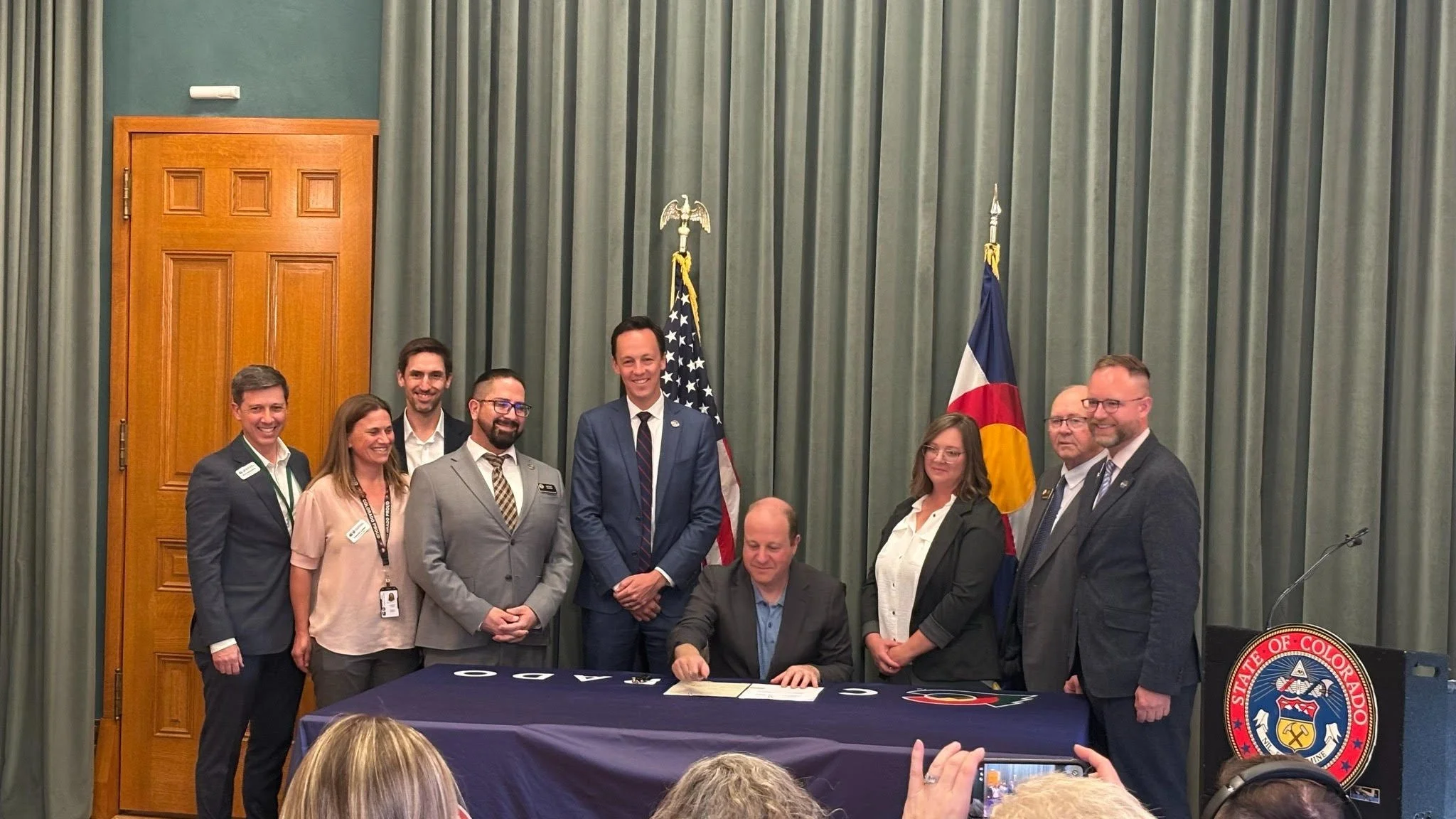
DENVER, CO - Governor Jared Polis today signed bipartisan legislation into law to support Colorado farmers and agriculture by strengthening consumer protections and safeguarding agricultural products grown in Colorado.
“From Trump’s tariffs to imported Argentinian beef, Colorado farmers are already facing considerable headwinds. This new law will help ensure that outsiders who falsely label their produce as Colorado-grown are held accountable for driving business away from hardworking Colorado farmers,” said Rep. Matthew Martinez, D-Monte Vista. “Pueblo green chile and San Luis Valley potatoes are renowned Colorado agricultural products, and it is important that we prevent bad actors from slapping ‘Colorado-grown’ labels on out-of-state goods. Our new bipartisan law makes false use of Colorado-grown marketing a deceptive trade practice to support local farmers and give consumers peace of mind.”
“Colorado is known for its delicious and high-quality agricultural products like Palisade peaches, Pueblo green chiles, and San Luis Valley potatoes – to name a few,” said Senator Dylan Roberts, D-Frisco. “Consumers want to purchase made-in-Colorado products and should be able to trust the Colorado Proud label. This new law is about supporting Colorado farmers and businesses who make the real deal, right here at home.”
HB26-1031 protects the integrity of Colorado-made products and ensures Colorado producers aren’t undercut by mislabeled products imported from out of state. The law prohibits identifying an agricultural product as being produced in Colorado when selling, marketing, advertising or distributing the product unless the product is grown in the state.
First approved by the interim Water Resources and Agriculture Review Committee, HB26-1031 helps ensure fairness for local producers by cracking down on deceptive trade practices that allow out-of-state products to carry Colorado-made labeling and take market share away from real Colorado-grown foods.
Also sponsored by Representative Matt Soper, R-Delta, and Senator Marc Catlin, R-Montrose, the law boosts consumer protections by reassuring Coloradans that their dollars are getting them the local, premium products they expect.
The Trump Administration’s tariffs have driven up costs for Colorado’s businesses, farmers, ranchers, and consumers and limited the available international markets for producers to sell their products. HB26-1031 aims to protect Colorado markets for farmers and ranchers to sell their locally-made products and food.
Bill to Expand Preventive Health Care Coverage and Save Lives Passes Committee Unanimously
DENVER, CO – The Senate Health and Human Services Committee today unanimously passed bipartisan legislation to expand preventive health care coverage to combat chronic kidney disease (CKD).
HB26-1019, sponsored by Senator Dylan Roberts, D-Frisco, would ensure early-stage kidney function screening services, including urine or blood tests, are considered preventive health care by insurance carriers.
“Improving access to early kidney function screenings saves lives and can lower the cost of health care for everyone,” said Roberts. “Chronic kidney disease impacts thousands of Coloradans, and finding it early means treatment is less expensive and more effective. Every Coloradan deserves access to preventive care that can improve their quality of life and keep them healthy for the long-haul.”
Also sponsored by Senator Janice Rich, R-Grand Junction, HB26-1019 would save patients money on health care and encourage early detection of CKD, especially for high-risk patients with hypertension or diabetes. It would require private health insurance companies, including large, small and individual employers, to cover early-stage kidney function screening services without cost-sharing with patients.
CDK affects more than one in seven adults, equating to an estimated 35.5 million Americans. Diabetes, high blood pressure and a family history of kidney disease can increase risk factors. Despite the prevalence of kidney disease, early-stage kidney disease often has little to no symptoms. Nine in 10 adults do not know they have CKD until the disease advances into the late stages. The cost of treatment in the late stages of CDK is significantly more expensive than if treated early on, often surprising patients with massive medical costs just as they begin to grapple with symptoms of the disease. In 2024, more than 8,700 Colorado residents were living with kidney failure, according to the American Kidney Fund.
HB26-1019 now heads to the Senate floor for further consideration. Track its progress HERE.
Trio of Bills to Prevent Gun Violence Pass Committee
DENVER, CO – Today, the Senate State, Veterans, and Military Affairs Committee passed three bills to prevent gun violence and save lives.
HB26-1265, sponsored by Senators Katie Wallace, D-Longmont, and William Lindstedt, D-Broomfield, would require each law enforcement agency in Colorado to register with eTrace and opt in to eTrace’s feature that allows for collaboration.
“We owe it to everyone affected by gun violence in Colorado to do all we can to prevent future tragedies,” Wallace said. “This legislation would ensure that state law enforcement agencies have every tool at their disposal to track trafficked guns and help stem the ensuing tide of gun violence.”
“Collaboration between law enforcement agencies allows for the quickest possible response and investigation after an incident involving firearms,” Lindstedt said. “Colorado Democrats are committed to making our communities safer. HB26-1265 is a critical piece of that commitment.”
Law enforcement agencies would be required to record information into eTrace when they:
Recover or confiscate firearms in connection with a criminal investigation,
Seize or forfeit firearms in connection with domestic violence crimes, and
Obtain an abandoned or discarded firearm.
eTrace is a bilingual service that allows for collaboration among all participating law enforcement agencies. Law enforcement can submit trace requests through eTrace to quickly determine the firearm’s origin, helping identify potential firearms traffickers and suspects in criminal investigations. Nearly 640,000 firearm trace requests were completed in fiscal year 2024.
Last year, the Trump Administration revoked a policy that prevented gun dealers from selling guns to criminals. Trump also proposed a $400 million cut to the Bureau of Alcohol, Tobacco, Firearms and Explosives, leaving more pressure on states to address firearm trafficking.
HB26-1126, sponsored by Senator Cathy Kipp, D-Fort Collins, would strengthen existing Colorado law to better prevent gun theft and illegal gun sales.
“Regulatory updates happen when we stand up a department of qualified individuals, send them to work, and listen to what they have to say – and these bills do exactly that,” Kipp said. “I’m proud to sponsor these two bills to optimize the use of our resources, shore up protections against firearm theft, and ultimately stop preventable acts of gun violence before they occur.”
Colorado law currently requires firearm dealers to hold a state permit to sell firearms and firearm components. HB26-1126 would also require an individual to hold a state permit to transfer firearms. Currently, firearm dealers are only required to keep a record of the sales, rentals or exchanges of pistols and revolvers. The bill strengthens record-keeping requirements by requiring firearm transactions to be recorded and requiring that these records be maintained electronically.
HB26-1126 would prevent firearm theft by requiring firearm dealers to secure large-capacity magazines behind a counter in a locked case or in a locked room that is not accessible to the public, except when showing these products to a customer who is eligible to purchase them or during a repair. Within 72 hours of learning of a loss or theft of a firearm, firearm dealers would be required to report it.
To help ensure compliance, this bill would impose fines for violations of the law before revoking a firearm dealer’s permit. Beginning January 1, 2027, a second or subsequent offense could result in a fine of up to $75,000.
Studies show that policies regulating firearm dealer licensing can lead to significant reductions in gun violence, including gun homicides and suicides. After Connecticut passed a similar law, its firearm homicide rate fell by 28 percent and firearm suicide rate decreased by 33 percent.
Additionally, the committee passed HB26-1302, also sponsored by Kipp, to allow the Colorado Bureau of Investigation’s (CBI) InstaCheck unit to set business hours that best suit business needs. Under current law, Instacheck must stay open for at least 12 hours daily, except on Thanksgiving and Christmas. Under the bill, CBI must consistently review certain statistics and data to determine appropriate hours of operation.
All three bills now move to the Senate floor for further consideration.
Kolker Bill to Strengthen Access to PERA Passes Committee Unanimously
SB26-151 would ensure teachers who move in or out of the DSST network have consistent access to retirement savings
DENVER, CO – The Senate Finance Committee today unanimously passed SB26-151, sponsored by Senator Chris Kolker, D-Centennial, to provide continuity for teachers by allowing DSST Public Schools to join PERA (the Public Employee's Retirement Association).
“Teachers who move schools should be able to seamlessly continue saving up for retirement and accruing benefits,” said Kolker. “This bill closes a gap to ensure consistent access to PERA benefits inside and outside the DSST network. The bill works in tandem with other legislation I’ve passed this year to strengthen PERA and deliver meaningful benefits to the teachers, educators, and staff who are educating Colorado’s future.”
DSST Public Schools, formerly known as Denver School of Science and Technology, is comprised of 16 schools in Denver and Aurora. Under current law, DSST schools in Denver are excluded from PERA while newer DSST-affiliated schools in Aurora must participate. The bill resolves that inconsistency by allowing DSST schools to join PERA, providing better continuity for teachers moving in or out of the network.
The bill would also allow DSST employees to purchase more than 10 years of service credit within a specified window for their years at DSST to allow long-term employees to transfer over to PERA without negative impacts to their retirement plans.
SB26-151 joins several other pieces of legislation sponsored by Senator Kolker to strengthen PERA, expand access to benefits, and support schools.
HB26-1146, also sponsored by Senator Cathy Kipp, D-Fort Collins, expands PERA benefits to educators and staff at facility schools, which serve students with behavioral or special education needs. This bill was signed into law on April 2.
HB26-1027 adds a retired Board of Cooperative (Educational) Services (BOCES) executive director to a list of specific education-related positions, including teachers, paraprofessionals, food service professionals, and bus drivers, who can fill vacant positions in local schools without the risk of losing their PERA benefits. This bill was signed into law on March 12.
Finally, HB26-1026 would increase flexibility and expand savings opportunities for PERA employees. It passed the Senate Finance Committee and is awaiting its hearing in the Senate Appropriations Committee.
SB26-151 now heads to the Senate Appropriations Committee for further consideration. Track its progress HERE.
Legislation to Rename the COYAC Review Committee to Honor Senator Faith Winter Advances
DENVER, CO – The Senate State, Veterans, and Military Affairs Committee today passed legislation to rename the Colorado Youth Advisory Council (COYAC) Review Committee to honor and memorialize the late Senator Faith Winter.
SB26-143, sponsored by Senate President James Coleman, D-Denver, and Senator Katie Wallace, D-Longmont, would rename it the Representative Hugh McKean and Senator Faith Winter COYAC Review Committee.
“Faith was dedicated to empowering young people to become passionate about the legislative process, represent their communities, and make a difference,” said Coleman. “She fought to save COYAC during tough budget cuts and was a tireless advocate for youth representation in the legislature. It is only fitting that her name and legacy be formally tied to this program.”
“Faith was an incredible advocate for youth involvement in the legislative process,” said Wallace. “COYAC was near and dear to her heart and I can think of no better way to honor her than to have her name on this program. The COYAC Review Committee ensures the powerful voices of young people are not just included but shape real legislation that has an impact on the lives of young people. This bill ensures that Faith’s name and legacy will always be tied to this work that meant so much to her.”
In 2008, lawmakers established COYAC to give Colorado’s youth a voice in the lawmaking process. Since its creation, COYAC members have worked to develop policy recommendations on issues of youth concern and promote civic engagement amongst Colorado’s youth. It consists of 40 youth members, ages 14-19, who serve two year terms.
The Representative Hugh McKean COYAC Review Committee was established in 2019 to review the work of COYAC and recommend legislation affecting Colorado youth. Alongside Representative McKean, Senator Winter was a staunch supporter of COYAC, a member of the review committee, and a champion for including youth voices in legislative decision-making.
SB26-143 now heads to the Senate floor for further consideration. Track its progress HERE.
JOINT RELEASE: Lawmakers Unveil Legislation to Make Property Insurance More Affordable
DENVER, CO – Today Senator Kyle Mullica, D-Thornton, Speaker Julie McCluskie, D-Dillon, and Representative Kyle Brown, D-Louisville, highlighted new legislation to stabilize Colorado’s homeowners insurance market and make property insurance more affordable through the creation of a grant program to fortify roofs against costly wind and hail damage.
"This bill is about saving Coloradans money and preventing costly hail and wind damage that raises prices for everyone," said Mullica. “Homeowners insurance premiums have skyrocketed in recent years, squeezing household budgets and costing families thousands each year. This bill is a commonsense approach to reduce costs and make Colorado homes more resilient and disaster-ready for years to come.”
“We’re taking action to lower property insurance premiums and make Colorado more affordable,” said McCluskie. “As climate change intensifies, extreme weather events will make it harder and harder for homeowners to find and afford property insurance coverage. The legislation we’re unveiling today would help homeowners protect their properties from hail damage to lower premiums for everyone, stabilize Colorado’s property insurance market and reduce housing costs for Coloradans. This bill will lower rates across the state, even in High Country communities that do not typically experience hailstorms, to save Coloradans money.”
“Hail risk makes up over half of the cost of homeowner premiums in Colorado, which is why we’re introducing legislation to increase fortified roof installations to reduce property damage and lower premiums,” said Brown. “Colorado is one of the most expensive states in the country for home insurance, with premium rates increasing 33 percent last year. This effort will help protect Colorado communities from large-scale natural disasters and lower property insurance costs for homeowners.”
“Homeowners have been struggling across Colorado with high homeowners insurance rates over the past several years,” said Colorado Insurance Commissioner Michael Conway. “We know that hail in particular is a huge contributor to rising premiums. This targeted approach of establishing a grant program for fortifying roofs against hail will help mitigate against increasing extreme weather events in our changing climate. This strategy has a proven track record in other states, and it’s time we bring that success to Colorado. I want to thank Senator Mullica and his team for all of the hard work that was put into this bill, and I urge the Colorado General Assembly to support it.”
Colorado homeowners insurance rates are some of the highest in the nation and have doubled from 2020 to 2025. The Division of Insurance recently found that hail damage accounts for an average of 26 percent to 54 percent of an annual homeowners insurance premium and that hail mitigation has the potential to save consumers an average of $82 to $387 per year.
The forthcoming legislation would create the Strengthen Colorado Homes Enterprise in the Division of Insurance to implement a grant program to help homeowners fortify their roofs against wind and hailstorms. The Enterprise would collect a fee from insurers that offer multiperil homeowners insurance policies and use the revenue to provide grants to homeowners to retrofit residential properties with resilient roof systems. The Enterprise would be governed by a seven member board that includes the Colorado Insurance Commissioner, experts in home hardening, and members to represent interests of insurers, consumers, and counties.
Beginning in 2027, the insurer fee imposed and collected by the Enterprise would be an amount equal to 0.5 percent of the total premium collected by an insurer on multiperil homeowners insurance policies in the preceding calendar year. The insurer may not surcharge the fee amount to policyholders. Under the bill, an insurer offering multiperil homeowners insurance in the state will be required to demonstrate in their rate filings that savings from the installation of resilient roof systems are passed through to homeowners through discounts or reduced premiums on their insurance policies.
Additionally, the bill would require the Enterprise and the Division of Insurance to conduct a study to analyze insurance risk in high-risk wildfire areas of the state. The study would include an analysis of market competition in high-risk wildfire areas, the impact of a high-risk program on potential losses, and the availability of homeowners insurance in those areas.
Legislation to Support Rural EMS Passes Senate
HB26-1238 would designate EMS as essential services to increase access in rural and frontier communities
DENVER, CO – Today, the Senate passed bipartisan legislation sponsored by Senator William Lindstedt, D-Broomfield, to designate Emergency Medical Services (EMS) as an essential component of Colorado’s health care system.
“EMS providers and technicians are often the first professionals to respond when Coloradans are facing an emergency, and the state should recognize their expertise and the importance of their work,” Lindstedt said. “This bill would uplift these essential health care workers and remove barriers so they can fulfill their duties to the best of their ability.”
HB26-1238, cosponsored by Senator Mark Baisley, R-Woodland Park, would designate EMS, including ambulance and air ambulance services, as essential to protecting public health and safety. Once designated as an essential service, EMS would see reduced barriers to performing their duties, similar to law enforcement and fire departments. This bill aims to improve planning and coordination across agencies, which will foster more reliable emergency response.
With the essential services designation, the bill would clarify operational expectations of EMS during disasters and closures and ensure that EMS providers are reimbursed for eligible travel. To improve system coordination, HB26-1238 would bolster the ability for licensed ambulance services to participate in telecommunications, mutual aid and interoperable communications systems and receive reimbursement. The bill would also provide protections to EMS providers by clarifying that off-duty EMS providers are not obligated to respond to an emergency.
HB26-1238 now moves to the Governor’s desk for his signature. Track its progress here.
JOINT RELEASE: Signed! Bill to Expand and Improve Colorado’s Red Flag Law
SB26-004 builds on past legislation to prevent gun violence and save lives
DENVER, CO – Today Governor Polis signed into law legislation to expand Colorado’s existing “Red Flag” law and proactively de-escalate violent situations and save lives.
SB26-004, sponsored by Senators Tom Sullivan, D-Centennial, and Julie Gonzales, D-Denver, and Representatives Meg Froelich, D-Englewood, and Jenny Willford, D-Northglenn, expands the list of community members eligible to petition for an Extreme Risk Protection Order (ERPO) to include health care and education institutions.
“In Colorado, our ‘Red Flag’ law has already helped prevent gun violence, but we can strengthen it to give more people the opportunity to save lives,” said Sullivan. “Adding health care and education facilities to the list of qualified petitioners for an ERPO helps ensure that trusted community members are able to reach those who are a danger to themselves or others sooner and stop more violence before it occurs.”
“Our law will help prevent gun crimes and suicides to save countless Colorado lives while safeguarding people’s rights through a proven process,” said Froelich. “Colorado Democrats created our Red Flag law in 2019 to keep guns out of the hands of dangerous individuals. We’re strengthening this gun violence prevention law to save more lives and make Colorado a safer place to live for all.”
“Colorado’s ‘Red Flag’ law exists to prevent gun violence so that families have the freedom to go to school, church, and the grocery store without fear,” said Gonzales. “Strengthening this already highly effective law will allow us to stop preventable acts of gun violence and save more Coloradans' lives.”
“This new law refines Colorado’s Red Flag law to expand the use of this life-saving tool,” said Willford. “Co-responders often have the most direct contact and information about someone who is experiencing a crisis, and allowing them to file an ERPO petition means that the judicial system can make a more informed decision to remove access to firearms from an individual in crisis. Colorado’s Red Flag law saves lives, and our law makes it an even stronger tool to prevent gun violence.”
SB26-004 adds co-responders and entities that employ or contract with specified community members to the list of those who may petition the court for an ERPO. It also adds health care facilities, behavioral health treatment facilities, K-12 schools, and higher education institutions as institutional petitioners that may petition a court for an ERPO.
Passed in 2019, Colorado Democrats’ original ERPO legislation allows qualified individuals to petition a judge to temporarily remove a firearm from a potentially dangerous individual and interrupt gun violence before it has a chance to occur. In 2023, lawmakers passed legislation to expand the list of qualified individuals eligible to petition for an ERPO to include DAs and other law enforcement officials, licensed health care professionals, educators, and mental health professionals.
In 2024, the most recent data available, there were 164 ERPO petitions filed in Colorado.
Bill to Boost Renewable Energy and Create Jobs Passes Committee
HB26-1268 would streamline permitting for renewable energy developments on underutilized land
DENVER, CO – The Senate Transportation and Energy Committee today passed legislation sponsored by Senator William Lindstedt, D-Broomfield, to streamline permitting for renewable energy developments on underutilized land for communities across the state.
“Colorado communities are ready to make investments in renewable energy to drive down utility costs, create jobs, and boost sustainability, but state regulatory barriers slow the process and limit where these investments can happen,” Lindstedt said. “This legislation would give municipalities more leeway and more options so they can make the best energy choices and investments for them.”
HB26-1268 would allow, not require, local governments to designate areas for renewable energy sites, specifically solar and energy storage system projects. To begin a renewable energy project, local governments would be required to hold at least one public hearing, engage in outreach to disproportionately impacted communities, and ensure that an eligible project may be permitted and constructed in accordance with state laws. Some examples of land could include decommissioned oil and gas sites, industrial sites, closed landfills, and previously mined areas.
This bill would empower local governments to utilize already disturbed land to attract and build renewable energy resources. Under HB26-1268, local governments would have more available tools to reach renewable energy goals and take advantage of tax increment financing, a tax financing tool, to reinvest in their communities.
HB26-1268 now moves to the Senate floor for further consideration. Track its progress here.