

Newsroom
Looking for something specific? Search through our press releases by keyword:
Find Releases by Date
- April 2026
- March 2026
- February 2026
- January 2026
- December 2025
- November 2025
- October 2025
- September 2025
- August 2025
- July 2025
- June 2025
- May 2025
- April 2025
- March 2025
- February 2025
- January 2025
- December 2024
- November 2024
- October 2024
- September 2024
- August 2024
- July 2024
- June 2024
- May 2024
- April 2024
- March 2024
- February 2024
- January 2024
- December 2023
- November 2023
- October 2023
- September 2023
- August 2023
- July 2023
- June 2023
- May 2023
- April 2023
- March 2023
- February 2023
- January 2023
- December 2022
- November 2022
- October 2022
- September 2022
- August 2022
- July 2022
- June 2022
- May 2022
- April 2022
- March 2022
- February 2022
- January 2022
- December 2021
- October 2021
- September 2021
- August 2021
- July 2021
- June 2021
- May 2021
- April 2021
- March 2021
- February 2021
- January 2021
- December 2020
- November 2020
- September 2020
- July 2020
- June 2020
- May 2020
- April 2020
- March 2020
- February 2020
- January 2020
- December 2019
- November 2019
- October 2019
- September 2019
- July 2019
- June 2019
- May 2019
- April 2019
- March 2019
- February 2019
- January 2019
- December 2018
- November 2018
- October 2018
- September 2018
- August 2018
- January 2018
- November 2017
- August 2017
Bill to Strengthen Maternal Health Equity Passes Senate
DENVER, CO – Legislation to strengthen Colorado’s response to maternal health inequities passed the Senate today.
HB26-1044, sponsored by Senators Tony Exum, D-Colorado Springs, and Adrienne Benavidez, D-Commerce City, would promote respectful, evidence-based maternity care and address racial inequities in childbirth.
“Black women deserve to be listened to and given high-quality care at all times, including during pregnancy and childbirth,” said Exum. “It is unacceptable that bias in our health care system frequently causes delayed care and worse outcomes for Black women and babies. This bill will give us more data to understand the problem and requires concrete steps to improve care for women of color.”
“We must do more to address the health inequities that cause preventable tragedies during pregnancy and childbirth,” said Benavidez. “Through strengthening education for providers and patients, centering respectful care, and improving data and reporting, this bill addresses maternal health inequities head-on to ensure Black women get the care they need.”
The bill builds upon previous legislation to improve maternal health care, especially for women of color. It would require the Colorado Department of Public Health & Environment (CDPHE) to report on maternal health outcomes for populations known to have the worst mortality outcomes. The bill would also ensure that CDPHE’s Maternal Health Task Force has at least one maternal health advocate that represents these communities.
To boost equity in maternal care, this bill would require licensing boards to consider including cultural competency training as part of the Continuing Medical Education (CME) requirements for health care providers. Birthing facilities would also be required to provide information to patients who request it about their rights, which include the right to culturally sensitive, evidence-based care and the right to have a birthing companion and family member during the birth.
In 2023, the maternal mortality rate for Black women was more than three times higher than white women. In addition, Black and American Indian and Alaska Native infants are at least two times more likely to die than white infants. Research also shows that pregnancy-related mortality of Black women persists across education and income levels, and Black women are at a significantly higher risk for severe maternal morbidity, which includes conditions such as preeclampsia.
HB26-1044 now heads back to the House for consideration of amendments. Track its progress HERE.
JOINT RELEASE: Willford, Wallace Statement Regarding Tina Peters Court of Appeals Decision
DENVER, CO – Chair of the House State, Civic, Military, & Veterans Affairs Committee Representative Jenny Willford and Chair of the Senate State, Veterans, and Military Affairs Committee Katie Wallace today released the following statement regarding the Colorado Court of Appeals decision to uphold Tina Peters' conviction and order that she be re-sentenced by a District Court:
Representative Jenny Willford, D-Northglenn, and Senator Katie Wallace, D-Longmont:
“We are grateful the Colorado Court of Appeals upheld Ms. Peter’s conviction. Ms. Peters was convicted by a jury of her peers on multiple felonies and has since shown no remorse for her crimes. She continues to push election-denial conspiracy theories that threaten the integrity of Colorado’s gold standard elections.
“We trust the District Court will keep the facts in mind as they consider Ms. Peters’ re-sentencing.
“Colorado Democrats will continue to push back against any attempt to undermine or threaten our election officials. Free and fair elections are the cornerstone of democracy, and that is worth safeguarding.”
Last month, Representative Willford and Senator Wallace spearheaded a letter urging Governor Jared Polis not to grant clemency, sentence commutation, or a federal transfer to Tina Peters. All House and Senate Democrats signed on in support of this letter.
Senate Approves Bill to Ensure Quality Drinking Water in Mobile Home Parks
HB26-1145 would strengthen Colorado water quality laws in mobile home parks
DENVER, CO – Today, legislation sponsored by Senator Lisa Cutter, D-Jefferson County, to improve water quality standards in mobile home parks passed the Senate.
“We’ve made significant progress over the past few years to ensure that Coloradans living in mobile home parks have access to safe drinking water. However, by clarifying some definitions in previous legislation, we are making it crystal clear that mobile home park residents deserve clean, safe water," Cutter said. “This legislation strengthens CDPHE's ability to implement the program to prevent water issues that can impact health and welfare. It's important to address issues before residents become sick, and this bill will do that."
“Growing up in a mobile home park in my district, I saw firsthand how much more difficult it can be to get access to the safe, clean water that every Coloradan deserves,” Mullica said. “This bill is another crucial step forward in ensuring that access by ensuring CDPHE can prevent water issues and advance the health and safety of all Colorado communities.”
HB26-1145 would strengthen water quality protections for Coloradans in mobile home parks. The bill expands the definition of “remediation” to include risks to welfare, which is defined as water quality that is not suitable for drinking, cooking, bathing, washing clothes, use with home appliances and other household uses. Negative impacts on the finances of the household are also considered a risk to welfare.
The bill would authorize the Colorado Department of Public Health and Environment (CDPHE) to enforce the requirement for mobile home park owners to notify residents of water quality test results without a complaint being filed first.
In 2023, Cutter passed the Mobile Home Park Water Quality Act to address water quality concerns in mobile home parks by establishing a water quality testing program and creating a path to remediation for mobile park owners to fix water quality issues discovered through the testing program.
According to CDPHE, as of March 1, 2026, over 600 community partners in over 200 mobile home parks had their water quality tested as a result of the framework created by the Mobile Home Park Water Quality Act. The department identified 28 parks where the water quality did not meet health-based standards. As of December 2025, 12 of those parks had remediated all issues, and the department is continuing to work with the remaining parks to address these issues.
HB26-1145 now moves to the Governor’s desk for signature. Track its progress HERE.
Senate Approves Bill to Allow Plug-In Solar Panels
HB26-1007 would save Coloradans money on their energy bills by expanding access to cost-saving solar
DENVER, CO – Legislation to remove barriers to plug-in solar panels and save Coloradans money on their utility bills passed the Senate today.
HB26-1007, sponsored by Senators Cathy Kipp, D-Fort Collins, and Matt Ball, D-Denver, would authorize access to plug-in solar panels, which can be plugged into a home electrical outlet and are more affordable than traditional rooftop solar.
“This bill reduces barriers and establishes safety standards so that Coloradans who want a reliable, affordable source of renewable energy can use plug-in solar panels,” said Kipp. “Coloradans are interested in plug-in solar for a variety of reasons like reducing their carbon footprint, lowering their utility bills, or ensuring a reliable back-up source of energy in the case of a power outage. No matter their reasoning, Coloradans should be able to pursue this technology without unnecessary barriers.”
“Plug-in solar panels expand access to solar energy for people who live in an apartment or can’t afford a full rooftop system,” said Ball. “The technology is safe, cost-efficient, and already widely used in other places. This bill gives Coloradans the option to use plug-in solar and connect to the grid through a meter collar to start saving money and producing their own clean energy.”
Plug-in solar, also referred to as balcony solar, can be plugged into a home electrical outlet and is more affordable than traditional rooftop solar. It consists of one to four solar panels plus an inverter and optional battery and is designed for simple, safe installation. Plug-in solar can be used to power household appliances and offer Coloradans an alternative, reliable energy source that can also reduce traditional utility costs.
The bill would establish protective guardrails on the types of plug-in solar products that can be used. Under this bill, all plug-in solar devices installed must meet the UL 3700 product safety standard.
HB26-1007 would also encourage the use of meter collars. Meter collars are devices installed between an electric meter socket and a utility billing meter to provide immediate interconnection of customer-owned solar devices to the grid. Meter collars eliminate the need for a costly electrical panel upgrade, saving Coloradans money and time on solar installation. This bill outlines a safe, consistent and repeatable solar installation process with minimal disruption and short installation times to benefit Coloradans.
Plug-in solar is common in Europe. For example, in Germany, approximately 4 million households have installed plug-in solar. If passed, Colorado would join Utah in becoming early adopters of safe, reliable, plug-in solar in the United States.
HB26-1007 now heads back to the House for consideration of amendments. Track its progress HERE.
Legislation to Support Rural EMS Unanimously Passes Committee
HB26-1238 would designate EMS as essential services to increase access in rural and frontier communities
DENVER, CO – Today, the Senate Health and Human Services Committee passed bipartisan legislation sponsored by Senator William Lindstedt, D-Broomfield, to designate Emergency Medical Services (EMS) as an essential component of Colorado’s health care system.
“EMS providers and technicians are often the first professionals to respond when Coloradans are facing an emergency, and the state should recognize their expertise and the importance of their work,” Lindstedt said. “This bill would uplift these essential health care workers and remove barriers so they can fulfill their duties to the best of their ability.”
HB26-1238, cosponsored by Senator Mark Baisley, R-Woodland Park, would designate EMS, including ambulance and air ambulance services, as essential to protecting public health and safety. Once designated as an essential service, EMS would see reduced barriers to performing their duties, similar to law enforcement and fire departments. This bill aims to improve planning and coordination across agencies, which will foster more reliable emergency response.
With the essential services designation, the bill would clarify operational expectations of EMS during disasters and closures and ensure that EMS providers are reimbursed for eligible travel. To improve system coordination, HB26-1238 would bolster the ability for licensed ambulance services to participate in telecommunications, mutual aid and interoperable communications systems and receive reimbursement. The bill would also provide protections to EMS providers by clarifying that off-duty EMS providers are not obligated to respond to an emergency.
HB26-1238 now moves to the Senate floor for further consideration. Track its progress here.
Bill to Strengthen Behavioral Health Care Workforce and Save Patients Money Passes Senate
DENVER, CO – The Senate today passed bipartisan legislation to expand access to behavioral health care by removing barriers for providers and patients.
HB26-1002, sponsored by Senator Matt Ball, D-Denver, would reduce administrative burdens for providers and patients, modernize licensing requirements, save patients money on out-of-pocket care, and reduce wait times for behavioral health care.
“Mental health care is still far too difficult for Coloradans to access, even when they have insurance,” said Ball. “Coloradans seeking help run into confusion over whether a provider is in-network, outdated contact information that leads to dead ends, and unnecessary barriers that keep qualified providers out of insurance networks. These administrative hurdles cost Coloradans time, money, and in some cases, life-saving care. This bill eliminates barriers so that more Coloradans can get care and more qualified providers can see patients.”
Coloradans are nearly eleven times more likely to be forced to rely on costly out-of-network providers when seeking behavioral health care than physical health care. In addition to confusing processes to find providers, insurance companies’ slow and inconsistent credentialing processes cause delays for providers eager to see patients and patients wait longer to receive care.
To increase the amount of in-network providers available to Coloradans, HB26-1002 would set timely standards for the credentialing of providers and ensure qualified, pre-licensed providers get the reimbursement they deserve. The bill, cosponsored by Senator Byron Pelton, R-Sterling, would also require insurance carriers to keep provider information up-to-date and remove misleading “ghost networks,” which show contact information for providers that are not actually covered in a patient’s plan.
Additionally, the bill would reduce the hours to obtain a licensed clinical social worker degree from 3,360 hours to 3,000 hours so that qualified social workers can start seeing patients sooner.
If signed into law, Colorado would join Oklahoma, New York, New Jersey and Illinois in taking similar action to boost their behavioral health care workforce and patients’ access to timely care.
HB26-1002 now heads back to the House for consideration of amendments. Track its progress HERE.
Legislation to Protect the Financial Security of “Kidfluencers” Passes Senate
HB26-1058 would ensure children featured in online content are paid for their work
DENVER, CO – Legislation sponsored by Senators Matt Ball, D-Denver, and Katie Wallace, D-Longmont, to protect the financial security and right to privacy of minors who appear in monetized online content passed the Senate today.
“Across Colorado, parents and guardians are increasingly creating content that generates real income, but the children they feature may reach adulthood with nothing, despite years of their image and likeness being used for profit,” Ball said. “In the early days of Hollywood, states stepped in to ensure that child actors were fairly compensated for their work in adulthood. This legislation would offer the same compensation and protections for children participating in the digital economy.”
“Kidfluencers have entertained social media users across Colorado for years, but current law doesn’t require any earnings to be saved or shared with the child,” Wallace said. “This new bill will make necessary updates to prevent exploitation of Colorado kids online, ensuring the earnings they make as kids will be available to them as adults.”
HB26-1058 would establish new protections and requirements for children featured in online content, also known as “kidfluencers.” To ensure children are paid for their work, parents would be required to establish a trust for their child if all three conditions are met:
The content creator earns at least $40,000 a year from online content;
The child is featured in 30-percent or more of monetized content in a 30 day period; and
The content earns at least $0.10 per view in total compensation, including from sponsorships.
This bill would also allow children featured in monetized online content to request that the videos, pictures or other content be removed from the internet when they reach adulthood. It would protect against the sexualization of children for financial gain and establish avenues to pursue civil action on behalf of children if they are featured in sexualized content. To further stop the sexualization of children online, the bill would require social media platforms to develop and implement risk-based strategies that keep children safe.
Similar laws to protect child actors are already in place. Established in the late 1930s, California’s Coogan Law requires the earnings of child performers be placed in a protected trust. If HB26-1058 is signed into law, Colorado would join Illinois, California, Minnesota and Utah in enacting kidfluencer protections.
HB26-1058 now moves back to the House for consideration of amendments. Track its progress HERE.
JOINT RELEASE: Willford and Wallace Joint Statement on Trump’s Attack on Vote-by-Mail
DENVER, CO – House State, Civic, Military and Veterans Affairs Chair Jenny Willford, D-Northglenn, and Senate State, Military and Veterans Affairs Chair Katie Wallace, D-Longmont, today released the following joint statement on President Trump’s Executive Order attacking vote-by-mail and aiming to exert federal control over states’ elections:
“There is bipartisan agreement in Colorado that county clerks conduct secure and trusted elections, and post-election audits leave no doubt that results are accurate. This unlawful executive order is a blatant attempt to disrupt voting in Colorado and is a direct attack on our democracy. We’ve passed critical legislation in recent years to safeguard our elections system from insider attacks and unprecedented federal threats. We will defend vote-by-mail in Colorado from Trump’s extreme federal overreach, and we will continue to fight back against disproven conspiracies that undermine faith in our elections and perpetuate threats against election officials.”
Willford and Wallace are advancing HB26-1113 alongside Representative Emily Sirota, D-Denver, and Senator Mike Weissman, D-Aurora. The legislation helps protect against election interference and attacks on the United States Postal Service by mailing ballots earlier, so there is more time to vote and return ballots if there are mail delays.
Bill to Increase Transparency, Modernize Regulatory Review Processes Passes Committee Unanimously
DENVER, CO – The Senate Finance Committee unanimously passed bipartisan legislation to improve government transparency and streamline regulations today.
SB26-137, sponsored by Senate President James Coleman, D-Denver, would require state departments to review their rules and regulations every five years and would add additional considerations to guide these reviews.
“Rules and regulations are important – they keep our air and water clean, our roads safe, and our families healthy,” said Coleman. “Part of governing responsibly is continually reviewing what regulations are working, where there are gaps, and what we need to update or streamline. This bill would ensure that Colorado agencies review their rules every five years to reduce redundancies and improve effectiveness.”
Under current law, departments are required to periodically review their rules to determine whether they are still necessary, efficient, and effective. There is no criteria for how regularly this review must happen.
Also sponsored by Senate Minority Leader Cleave Simpson, R-Alamosa, SB26-137 would add additional considerations during these reviews including: whether redundant rules can be eliminated, whether a rule is outdated or obsolete, whether funding levels are appropriate, and whether the rule can be more effective.
SB26-137 now heads to the Senate Appropriations Committee for further consideration. Track its progress HERE.
Legislation to Create More Affordable Home Ownership Opportunities Passes Senate
SB26-040 would modernize the Prop 123 Affordable Homeownership Program to better meet families’ needs
DENVER, CO – Bipartisan legislation to update the Affordable Homeownership Program created by voter-approved Proposition 123 passed the Senate today.
SB26-040, sponsored by Senator Judy Amabile, D-Boulder, would expand eligibility for qualified buyers and make practical updates to better serve every Colorado community and meet the reality of the 2026 housing market.
“The Affordable Homeownership Program was designed in 2022, for a 2022 market with low interest rates and lower construction costs than what we see today,” said Amabile. “This bill updates the program to reflect today’s reality and provide the flexibility that Coloradans need. We’re taking a practical approach to make sure this program works as intended so more Colorado families can put down roots and achieve their dream of homeownership.”
The bill, also sponsored by Senate Minority Leader Cleave Simpson, R-Alamosa, would increase the allowable income threshold to qualify for the program to less than or equal to 120 percent of statewide Area Median Income (AMI) or the local AMI. This would allow more people to qualify for the program, particularly in rural communities.
Rising interest rates and insurance costs have also made it harder for Coloradans to meet the requirement that combined housing costs cannot exceed 35 percent of their income. This bill would create a process to allow some homeowners to spend more than 35 percent of their income on housing when a qualified buyer is not found after six months of advertising.
Additionally, the bill would allow eligible organizations to temporarily rent units if they cannot be sold in a timely manner and create more flexibility in the program rules. These updates would help ensure that the program is working as intended and serving as many Coloradans as possible.
SB26-040 now heads to the House for further consideration. Track its progress HERE.
Legislation to Protect Children Online, Improve Public Safety Signed Into Law
SB26-011 will ensure timely, reliable compliance with search warrants
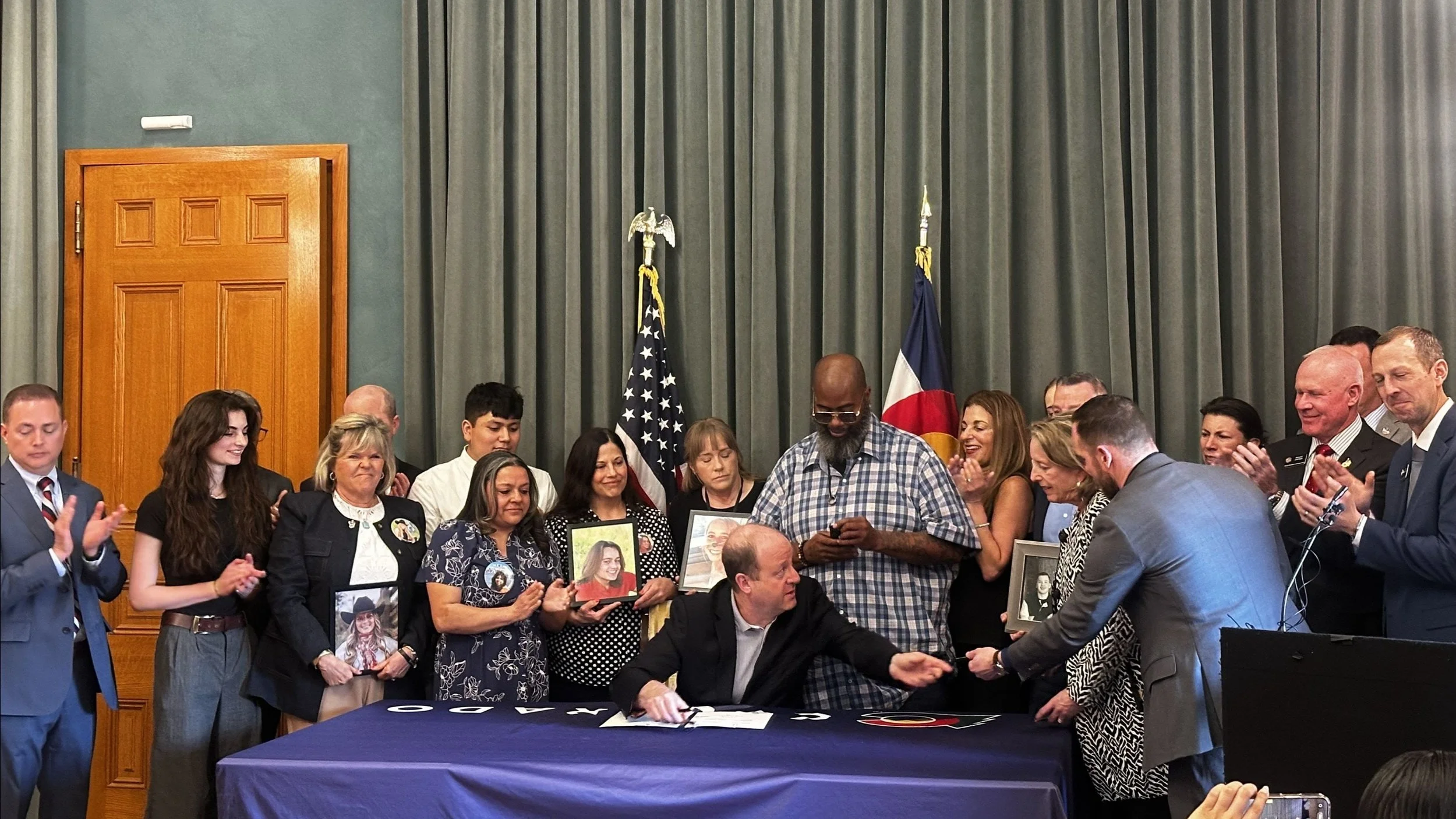
DENVER, CO – Bipartisan legislation to improve warrant response timelines for online platforms and keep communities safe was signed into law today.
SB26-011, sponsored by Senator Dylan Roberts, D-Frisco, and House Speaker Pro Tempore Andy Boesenecker, D-Fort Collins, establishes precise requirements for how large online social media platforms must receive, acknowledge, and respond to search warrants issued by Colorado courts.
“As a former Deputy District Attorney, I saw firsthand how critical digital evidence can be in serious criminal investigations,” said Roberts. “Increasingly, warrants are being disregarded or not treated with the seriousness they deserve by social media platforms, and delays in accessing evidence can have real consequences. SB26-011 helps ensure that court-approved warrants are respected so investigators can move quickly and responsibly.”
“Our legislation is about making sure families who have been harmed aren’t left waiting for justice,” said Boesenecker. “When a judge authorizes a lawful search warrant, law enforcement deserves timely access to evidence, whether it exists in a filing cabinet or with a social media platform. By requiring social media companies to respond to search warrants in a timely manner, we can improve pathways to justice and protect our communities from further harm.”
Also sponsored by Senator Lisa Frizell, R-Castle Rock, and House Minority Leader Jarvis Caldwell, R-Monument, the bill covers social media websites, online services, or mobile applications that have at least one million monthly users, allow users to create profiles, and allow users to create or share content.
Under the new law, these platforms must have a clear process for communication with law enforcement, provide a staffed hotline available to law enforcement 24/7, provide status updates on warrant compliance, and prominently post contact information for search warrant compliance on their homepage. They must also acknowledge receipt of a search warrant within eight hours and comply within 72 hours in most cases. These requirements will be enforced by the Attorney General or local district attorneys.
Bill to Prohibit 3D-Printing of Firearms Passes Senate
HB26-1144 would strengthen Colorado’s existing law to crack down on ghost guns
DENVER, CO – Legislation sponsored by Senators Tom Sullivan, D-Centennial, and Katie Wallace, D-Longmont, to prevent gun violence by prohibiting the three-dimensional printing of firearms, large-capacity magazines or other firearm components passed the Senate today.
“The rise in 3D-printer technology has introduced a new front in our fight to prevent gun violence in the United States,” Sullivan said. “It is imperative that we act right now to shore up existing law to prevent the at-home production of ghost guns, saving countless lives before they are threatened.”
"In Colorado, three lives are lost to gun violence every single day. This legislation is an intervention in that violence and in the growing threat of untraceable, 3D printed firearms," Wallace said. "The threat of 3D printed weapons is growing, but it is also preventable. This legislation would close loopholes in existing law to prevent gun violence and make Colorado safer.”
HB26-1144 would prohibit the use of a three-dimensional printer, or similar devices, to make a firearm or a firearm component. An initial violation of this provision would be a class 1 misdemeanor, and any subsequent violation would be a class 5 felony.
Since 2016, the number of ghost guns used in crimes throughout the country increased by 1000-percent, yet over 99-percent of those guns cannot be traced back to a user, owner or producer. Between 2016 and 2021, law enforcement reported recovering over 45,000 privately-made firearms, including in nearly 700 homicide or attempted homicide investigations. When an untraceable gun is used in a crime, it can be impossible for a gun violence victim and their family to seek accountability.
Colorado Democrats passed the original “ghost guns” law back in 2023, which prohibited the possession, sale or transfer of unserialized firearms, frames and receivers.
HB26-1144 now moves back to the House for consideration of amendments. Track its progress HERE.
JOINT RELEASE: Signed! Bill to Safeguard Science-Backed Vaccine Recommendations
SB26-032 protects consistent, science-backed state vaccine guidance
DENVER, CO – Legislation to protect Coloradans’ access to immunizations and science-backed decision making, regardless of changes to federal guidance, was signed into law today.
SB26-032, sponsored by Senators Kyle Mullica, D-Thornton, and Lindsey Daugherty, D-Arvada, and Representatives Lisa Feret, D-Arvada, and Kyle Brown, D-Louisville, allows Colorado’s Board of Health to continue using science-backed vaccine guidelines from reputable health professional organizations in addition to federal guidance. It also adds protections to ensure consistent vaccine access and coverage.
“As an ER nurse, I know that protecting Coloradans’ access to immunizations is a matter of life and death,” said Mullica. “Vaccines must continue to be widely available and given according to a schedule based on science and evidence. With this new law, we’re standing up to protect Coloradans’ health and safety and insulate Colorado from the dysfunction in Washington.”
“Vaccines fight disease, save lives and strengthen public health,” said Feret. “We’re taking action in Colorado to protect the health and safety of our community members, and this new law will standardize state-level vaccine guidance and information while expanding access to this critical health care tool.”
“Vaccines are medical miracles,” said Daugherty. “Adults, children, and infants used to die every day from diseases that we have all but eradicated because of immunizations. It is crucial that, regardless of the confusion spreading from RFK Jr. and the White House, Coloradans have access to evidence-based care and the vaccines that keep us and our children healthy.”
“Regardless of the dangerous misinformation and junk science touted by Washington and Secretary Kennedy, this law prioritizes data-driven information to protect the health and safety of Coloradans,” said Brown. “We will not allow the federal government’s misguided vaccine policies to put Coloradans at risk. SB26-032 builds upon our work to safeguard immunization access in Colorado and ensure it’s backed by trusted organizations that follow the science.”
The bill also codifies pharmacists’ authority to prescribe and administer vaccines and temporarily expands existing state liability protections to more qualified health professionals who provide immunizations. Under this new law, the Department of Health Care Policy and Financing (HCPF) will be permitted to purchase certain vaccines for children based on guidance from specified national medical professional organizations.
Colorado has traditionally relied on sound federal vaccine recommendations. However, recent shifts in federal vaccine guidance have created uncertainty and confusion, and more states are turning to trusted professional organizations for guidance. The trusted health organizations named in SB26-032 are the American Academy of Pediatrics, the American Academy of Family Physicians, the American College of Physicians, and the American College of Obstetricians and Gynecologists.
The legislation builds upon last year’s HB25-1027, sponsored by Senators Mullica and Iman Jodeh and Representatives Brown and Lindsay Gilchrist, which directed the state Board of Health to consider the recommendations of professional organizations when creating immunization requirements. SB26-032 does not create new vaccine mandates or change medical and non-medical exemptions under Colorado law.
Colorado recently joined a 15-state lawsuit against the Trump Administration, alleging the recent changes in childhood vaccine recommendations are not scientifically backed, and therefore could pose a community risk. The federal Centers for Disease Control and Prevention removed seven key childhood vaccine recommendations for children, including COVID-19, hepatitis A, and hepatitis B.
Bill to Ensure Quality Drinking Water in Mobile Home Parks Passes Committee
HB26-1145 would strengthen Colorado water quality laws in mobile home parks
DENVER, CO – Today, legislation sponsored by Senator Lisa Cutter, D-Jefferson County, to improve water quality standards in mobile home parks passed the Senate Local Government and Housing Committee.
“We’ve made significant progress over the past few years to ensure that Coloradans living in mobile home parks have access to safe drinking water. However by clarifying some definitions in previous legislation, we are making it crystal clear that mobile home park residents deserve clean, safe water," Cutter said. “This legislation strengthens CDPHE's ability to implement the program to prevent water issues that can impact health and welfare. It's important to address issues before residents become sick, and this bill will do that."
HB26-1145 would strengthen water quality protections for Coloradans in mobile home parks. The bill expands the definition of “remediation” to include risks to welfare, which is defined as water quality that is not suitable for drinking, cooking, bathing, washing clothes, use with home appliances and other household uses. Negative impacts on the finances of the household are also considered a risk to welfare.
The bill would authorize the Colorado Department of Public Health and Environment (CDPHE) to enforce the requirement for mobile home park owners to notify residents of water quality test results without a complaint being filed first.
In 2023, Cutter passed the Mobile Home Park Water Quality Act to address water quality concerns in mobile home parks by establishing a water quality testing program and creating a path to remediation for mobile park owners to fix water quality issues discovered through the testing program.
According to CDPHE, as of March 1, 2026, over 600 community partners in over 200 mobile home parks had their water quality tested as a result of the framework created by the Mobile Home Park Water Quality Act. The department identified 28 parks where the water quality did not meet health-based standards. As of December 2025, 12 of those parks had remediated all issues, and the department is continuing to work with the remaining parks to address these issues.
HB26-1145 now moves to the Senate floor for further consideration. Track its progress HERE.
Bill to Strengthen Maternal Health Equity Passes Committee
DENVER, CO – Legislation to strengthen Colorado’s response to maternal health inequities passed the Senate Health and Human Services Committee today.
HB26-1044, sponsored by Senators Tony Exum, D-Colorado Springs, and Adrienne Benavidez, D-Commerce City, would promote respectful, evidence-based maternity care and address racial inequities in childbirth.
“Black women deserve to be listened to and given high-quality care at all times, including during pregnancy and childbirth,” said Exum. “It is unacceptable that bias in our health care system frequently causes delayed care and worse outcomes for Black women and babies. This bill will give us more data to understand the problem and concrete steps to improve care for women of color.”
“We must do more to address the health inequities that cause preventable tragedies during pregnancy and childbirth,” said Benavidez. “Through strengthening education for providers and patients, centering respectful care, and improving data and reporting, this bill addresses maternal health inequities head-on to ensure Black women get the care they need.”
The bill builds upon previous legislation to improve maternal health care, especially for women of color. It would require the Colorado Department of Public Health & Environment (CDPHE) to report on maternal health outcomes for Black patients and known causes of any disparate outcomes. The bill would also ensure that CDPHE’s Maternal Health Task Force has at least one Black maternal health advocate.
To boost equity in maternal care, this bill would require licensing boards to consider including cultural competency training as part of the Continuing Medical Education (CME) requirements for health care providers. Birthing facilities would also be required to provide information to patients who request it about their rights, which include the right to culturally sensitive, evidence-based care and the right to have a birthing companion and family member during the birth.
In 2023, the maternal mortality rate for Black women was more than three times higher than white women. In addition, Black and American Indian and Alaska Native infants are at least two times more likely to die than white infants. Research also shows that pregnancy-related mortality of Black women persists across education and income levels, and Black women are at a significantly higher risk for severe maternal morbidity, which includes conditions such as preeclampsia.
HB26-1044 now heads to the Senate floor for further consideration. Track its progress HERE.
Committee Approves Bill to Bolster Outdoor Recreation
HB26-1008 would give Colorado Parks and Wildlife more flexibility to manage outdoor recreation
DENVER, CO – The Senate Agriculture and Natural Resources Committee today passed legislation sponsored by Senator Janice Marchman, D-Loveland, to strengthen Colorado Parks and Wildlife’s (CPW) capacity to manage outdoor visitor experiences while protecting natural resources and wildlife.
“No agency is better positioned to hold recreation and conservation together than Colorado Parks and Wildlife,” Marchman said. “This legislation gives them the coordinating capacity to engage partners, collaborate with tribal governments, and deliver the kind of strategic, integrated management that keeps Colorado’s outdoors from being loved to death.”
Colorado’s lands support a $65.8 billion outdoor recreation economy, and HB26-1008, cosponsored by Senator Janice Rich, R-Grand Junction, would direct stewards of our lands to collaborate with stakeholders from all different land-use backgrounds, from wildlife and natural resource advocates to agricultural communities and private landowners. Specifically, this bill formalizes CPW’s role in leading Colorado’s outdoors strategy to support conservation, outdoor recreation, and climate resilience in the state.
As the lead coordinator, CPW will ensure outdoor recreation needs are well-represented in its leadership and increase coordination to anticipate and respond to potential conflicts. The strategy prioritizes integrating data and metrics from existing efforts, partnering with local and federal agencies, and shoring up state capacity in this area.
The goal of HB26-1008 is to proactively streamline planning and management so that the state can continue to provide high-quality experiences to all outdoor users. CPW manages 43 state parks and over 350 wildlife areas, covering roughly 900,000 acres in Colorado.
HB26-1008 now moves to the Senate floor for further consideration. Track its progress HERE.
Bill to Strengthen Behavioral Health Care Workforce and Save Patients Money Passes Committee Unanimously
DENVER, CO – The Senate Health and Human Services Committee today unanimously passed bipartisan legislation to expand access to behavioral health care by removing barriers for providers and patients.
HB26-1002, sponsored by Senator Matt Ball, D-Denver, would reduce administrative burdens for providers and patients, modernize licensing requirements, save patients money on out-of-pocket care, and reduce wait times for behavioral health care.
“Mental health care is still far too difficult for Coloradans to access, even when they have insurance,” said Ball. “Coloradans seeking help run into confusion over whether a provider is in-network, outdated contact information that leads to dead ends, and unnecessary barriers that keep qualified providers out of insurance networks. These administrative hurdles cost Coloradans time, money, and in some cases, life-saving care. This bill eliminates barriers so that more Coloradans can get care and more qualified providers can see patients.”
Coloradans are nearly eleven times more likely to be forced to rely on costly out-of-network providers when seeking behavioral health care than physical health care. In addition to confusing processes to find providers, insurance companies’ slow and inconsistent credentialing processes cause delays for providers eager to see patients and patients wait longer to receive care.
To increase the amount of in-network providers available to Coloradans, HB26-1002 would set timely standards for the credentialing of providers and ensure qualified, pre-licensed providers get the reimbursement they deserve. The bill, cosponsored by Senator Byron Pelton, R-Sterling, would also require insurance carriers to keep provider information up-to-date and remove misleading “ghost networks,” which show contact information for providers that are not actually covered in a patient’s plan.
Additionally, the bill would reduce the hours to obtain a licensed clinical social worker degree from 3,360 hours to 3,000 hours so that qualified social workers can start seeing patients sooner.
If signed into law, Colorado would join Oklahoma, New York, New Jersey, and Illinois in taking similar action to boost their behavioral health care workforce and patients’ access to timely care.
HB26-1002 now heads to the Senate floor for further consideration. Track its progress HERE.
Roberts Bill to Improve Road Safety, Fund Wildlife Crossings Passes Committee
DENVER, CO – The Senate Transportation and Energy Committee today passed bipartisan legislation to prevent wildlife collisions.
SB26-141, sponsored by Senator Dylan Roberts, D-Frisco, would create an optional $5 collision prevention fee during annual vehicle registration, creating reliable and dedicated funding for wildlife crossing infrastructure.
“There’s very little that we can do in government that is over 90% effective – but wildlife crossings are that rare solution,” said Roberts. “This infrastructure is proven to reduce collisions with wildlife, protect humans and animals, and save drivers money. I’m proud to sponsor this bipartisan solution to create a sustainable, voluntary funding source that will make our roads safer, especially in rural Colorado.”
Also sponsored by Senate Minority Leader Cleave Simpson, R-Alamosa, the bill aims to dramatically reduce motor vehicle crashes with wildlife by authorizing an optional $5 fee that will be collected during annual vehicle registration beginning in 2027. The fund would be used to construct wildlife collision prevention infrastructure including overpasses, underpasses, jump-outs, and fencing, and would also allow Colorado to leverage federal matching funds for these projects. A portion of the funds would also benefit the Wildlife Cash Fund, administered by Colorado Parks and Wildlife, to conserve habitat on either side of the crossings.
Collisions with wildlife can be fatal, damage property, and create financial burdens. In 2024, at least 3,500 crashes with animals occurred on Colorado roads. From 2010-2025, these tragic accidents resulted in 52 motorist fatalities and over 400 serious injuries. The total estimated annual cost of wildlife-vehicle collisions in Colorado is over $300 million. Wildlife crossings have been shown to reduce these collisions by more than 90 percent.
SB26-141 now heads to the Senate Finance Committee for further consideration. Track its progress HERE.
Ball’s Legislation to Protect the Financial Security of “Kidfluencers” Passes Committee
HB26-1058 would ensure children featured in online content are paid for their work
DENVER, CO – Legislation sponsored by Senator Matt Ball, D-Denver, to protect the financial security and right to privacy of minors who appear in monetized online content passed the Senate Judiciary Committee today.
“Across Colorado, parents and guardians are increasingly creating content that generates real income, but the children they feature may reach adulthood with nothing, despite years of their image and likeness being used for profit,” Ball said. “In the early days of Hollywood, states stepped in to ensure that child actors were fairly compensated for their work in adulthood. This legislation would offer the same compensation and protections for children participating in the digital economy.”
HB26-1058 would establish new protections and requirements for children featured in online content, also known as “kidfluencers.” To ensure children are paid for their work, parents would be required to establish a trust for their child if all three conditions are met:
The content creator earns at least $40,000 a year from online content;
The child is featured in 30-percent or more of monetized content in a 30 day period; and
The content earns at least $0.10 per view in total compensation, including from sponsorships.
This bill would also allow children featured in monetized online content to request that the videos, pictures or other content be removed from the internet when they reach adulthood. It would protect against the sexualization of children for financial gain and establish avenues to pursue civil action on behalf of children if they are featured in sexualized content. To further stop the sexualization of children online, the bill would require social media platforms to develop and implement risk-based strategies that keep children safe.
Similar laws to protect child actors are already in place. Established in the late 1930s, California’s Coogan Law requires the earnings of child performers be placed in a protected trust. If HB26-1058 is signed into law, Colorado would join Illinois, California, Minnesota and Utah in enacting kidfluencer protections.
HB26-1058 now moves to the Senate floor for further consideration. Track its progress HERE.
JOINT RELEASE: Breakthrough Bills Signed Into Law to Build More Housing Now, Make Housing More Affordable
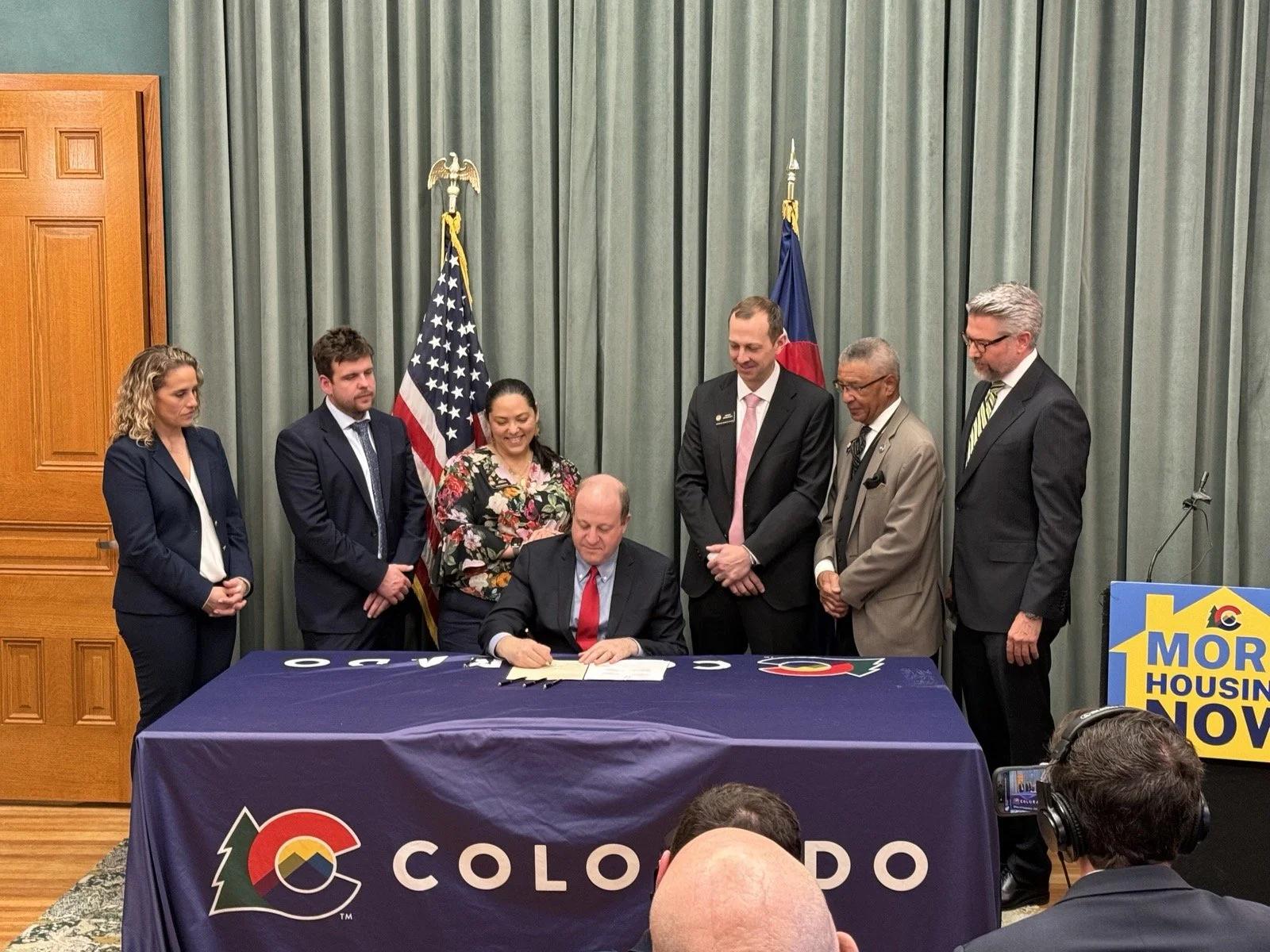
DENVER, CO – Governor Jared Polis today signed two bills into law to create more affordable housing opportunities and address the housing shortage. HB26-1001, the Housing Opportunities Made Easier (HOME) Act, will streamline the process for many non-profits, schools and transit districts to build housing on their land and SB26-001 gives local governments additional flexibility to address housing shortages.
“These laws are some of many breakthrough efforts that Colorado Democrats have passed this year, and in recent legislative sessions, to save Coloradans money on housing,” said Speaker Pro Tempore Andy Boesenecker, D-Fort Collins, sponsor of HB26-1001 and SB26-001. “The HOME Act and SB26-001 remove barriers to getting affordable housing built and create more flexibility for local governments and communities to use existing tools to be responsive to the housing needs of their communities. We’re working to create housing options that work for all Coloradans’ budgets. These new laws will help deliver housing that hardworking people can afford.”
“Too many families in Colorado Springs are afraid of being priced out of the place they call home,” said Sen. Tony Exum, D-Colorado Springs, sponsor of HB26-1001. “If we’re serious about solving the housing crisis in Colorado, we need to open up every available option to get our neighbors secure and affordable housing. The HOME Act will help our communities build the housing that is so desperately needed in our state.”
“Colorado Democrats are making it easier to build more housing now to reduce housing costs for Coloradans,” said Rep. Javier Mabrey, D-Denver, sponsor of HB26-1001. “In Denver, we’re already seeing rents drop significantly due to an increase in the housing supply. Our new law gives communities throughout Colorado another tool to get affordable housing projects approved and built to deliver more affordable housing.”
“Access to affordable and secure housing is the reason I am able to serve my community at all,” said Sen. Julie Gonzales, D-Denver, sponsor of HB26-1001. “We have a housing crisis in this state, and Coloradans who work multiple jobs to make ends meet still can’t afford to buy a home and plant roots in their communities. This bill will allow community organizations more flexibility to give their neighbors that gift of stable, affordable housing.”
Beginning December 31, 2027, HB26-1001 will streamline the process for building housing by allowing non-profit organizations, housing authorities, school districts, state colleges, Board of Cooperative Educational Services or universities and transit districts to build on their land.
Under the “Housing Opportunities Made Easier Act” (HOME Act), local governments cannot reject the construction of a residential development due to height, as long as the development is no taller than three stories, 45 feet or adheres to the height standards of the zoning district. These residential developments could also include childcare centers and facilities that provide recreational, social, or educational services to residents.
HB26-1001 applies to land up to five acres. Exemptions include land that is not connected to water and sewage treatment systems, land where state or federal regulations restrict residential housing, conservation easements and municipalities that have already implemented similar process standards.
In 2022, Colorado voters approved Proposition 123 to create and fund new housing affordability programs for low- and middle-income Coloradans. This law provides an additional incentive to build affordable housing by counting each unit of affordable housing built on these qualifying properties as 1.1 units, boosting eligibility for Proposition 123 funding.
A 2022 report found that removing bureaucratic barriers in the permitting process can expedite the approval process by 28-percent.
SB26-001 allows counties to use existing resources to support workforce and affordable housing, removing outdated restrictions that limit their ability to respond to local housing needs.
“I’m proud that the first bill introduced in the Senate this year is one to unlock local governments’ ability to meet their own housing needs,” said Sen. Dylan Roberts, D-Frisco, sponsor of SB26-001. “This bill will cut red tape and give counties, municipalities, and housing authorities more tools to help them build and maintain housing for more working families and individuals. This means more opportunities for Coloradans to stay in their communities and stable housing for the workers who keep our rural and mountain towns running.”
“Local governments know their housing needs, and the state shouldn't artificially limit the tools they can use to ensure their residents have a place they can afford to live,” said Sen. Jeff Bridges, D-Arapahoe County, sponsor of SB26-001. “This bill removes barriers for counties and municipalities to invest in affordable and workforce housing and accelerates development. It’s a commonsense approach that lets local communities address their housing shortages.”
Also sponsored by Representative Chris Richardson, R-Elbert County, the law allows local governments to sell, lease, or acquire property for the purpose of workforce or affordable housing and create a tax exemption for construction materials used for workforce housing projects. Additionally, SB26-001 updates Colorado’s Middle-Income Housing Tax Credit to help projects secure financing by allowing the credits to be transferred to individuals, firms, or corporations that do not own a project interest.
In 2024, Colorado Democrats created the first Middle-Income Housing Tax Credit Pilot Program in the nation. This pilot program offers tax credits to support affordable rental housing projects for middle-income Coloradans. In 2025, nearly $5 million was allocated to projects in the Denver Metro Area and the Western Slope.