

JOINT RELEASE: Breakthrough Bills Signed Into Law to Build More Housing Now, Make Housing More Affordable
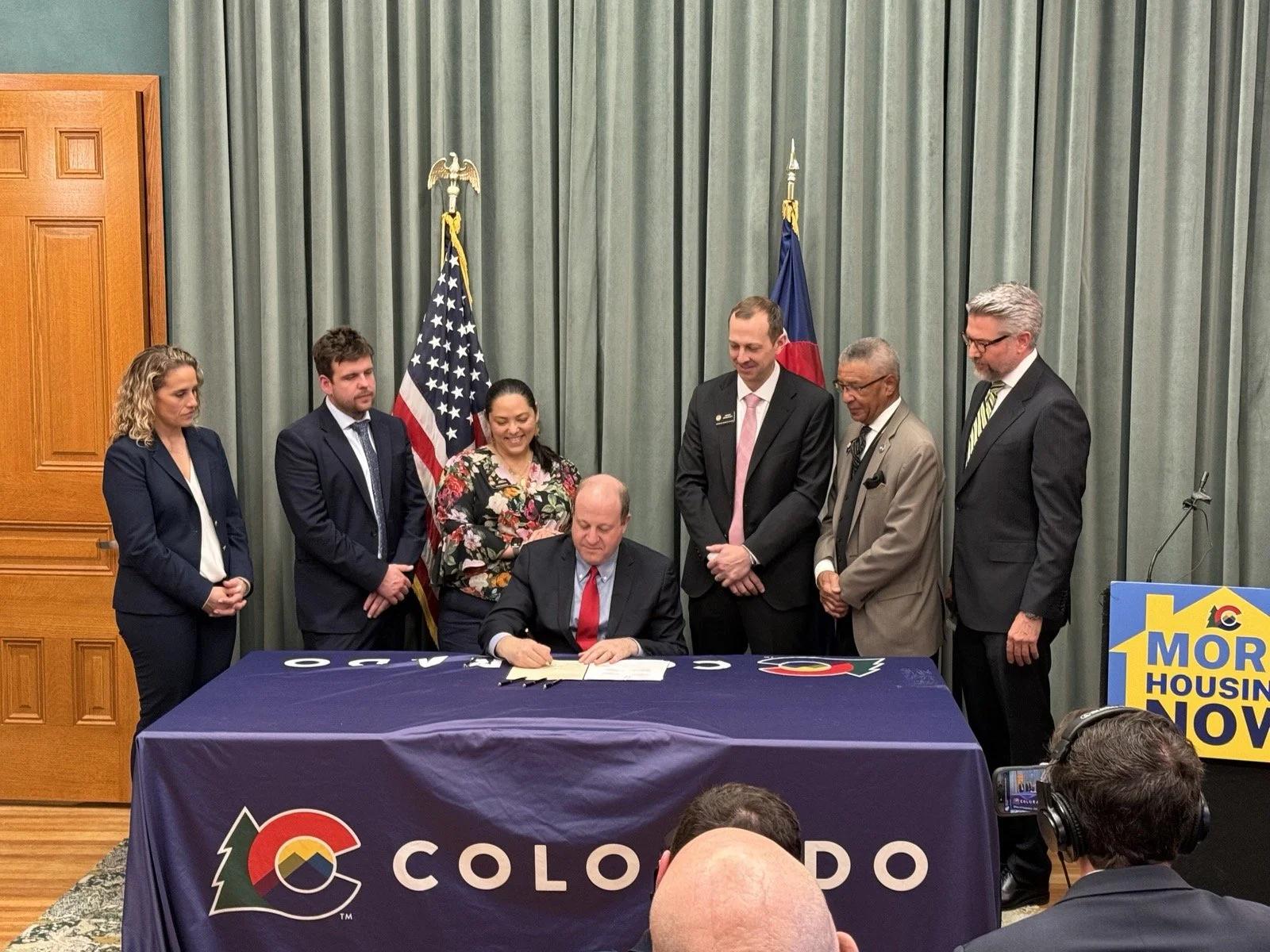
DENVER, CO – Governor Jared Polis today signed two bills into law to create more affordable housing opportunities and address the housing shortage. HB26-1001, the Housing Opportunities Made Easier (HOME) Act, will streamline the process for many non-profits, schools and transit districts to build housing on their land and SB26-001 gives local governments additional flexibility to address housing shortages.
“These laws are some of many breakthrough efforts that Colorado Democrats have passed this year, and in recent legislative sessions, to save Coloradans money on housing,” said Speaker Pro Tempore Andy Boesenecker, D-Fort Collins, sponsor of HB26-1001 and SB26-001. “The HOME Act and SB26-001 remove barriers to getting affordable housing built and create more flexibility for local governments and communities to use existing tools to be responsive to the housing needs of their communities. We’re working to create housing options that work for all Coloradans’ budgets. These new laws will help deliver housing that hardworking people can afford.”
“Too many families in Colorado Springs are afraid of being priced out of the place they call home,” said Sen. Tony Exum, D-Colorado Springs, sponsor of HB26-1001. “If we’re serious about solving the housing crisis in Colorado, we need to open up every available option to get our neighbors secure and affordable housing. The HOME Act will help our communities build the housing that is so desperately needed in our state.”
“Colorado Democrats are making it easier to build more housing now to reduce housing costs for Coloradans,” said Rep. Javier Mabrey, D-Denver, sponsor of HB26-1001. “In Denver, we’re already seeing rents drop significantly due to an increase in the housing supply. Our new law gives communities throughout Colorado another tool to get affordable housing projects approved and built to deliver more affordable housing.”
“Access to affordable and secure housing is the reason I am able to serve my community at all,” said Sen. Julie Gonzales, D-Denver, sponsor of HB26-1001. “We have a housing crisis in this state, and Coloradans who work multiple jobs to make ends meet still can’t afford to buy a home and plant roots in their communities. This bill will allow community organizations more flexibility to give their neighbors that gift of stable, affordable housing.”
Beginning December 31, 2027, HB26-1001 will streamline the process for building housing by allowing non-profit organizations, housing authorities, school districts, state colleges, Board of Cooperative Educational Services or universities and transit districts to build on their land.
Under the “Housing Opportunities Made Easier Act” (HOME Act), local governments cannot reject the construction of a residential development due to height, as long as the development is no taller than three stories, 45 feet or adheres to the height standards of the zoning district. These residential developments could also include childcare centers and facilities that provide recreational, social, or educational services to residents.
HB26-1001 applies to land up to five acres. Exemptions include land that is not connected to water and sewage treatment systems, land where state or federal regulations restrict residential housing, conservation easements and municipalities that have already implemented similar process standards.
In 2022, Colorado voters approved Proposition 123 to create and fund new housing affordability programs for low- and middle-income Coloradans. This law provides an additional incentive to build affordable housing by counting each unit of affordable housing built on these qualifying properties as 1.1 units, boosting eligibility for Proposition 123 funding.
A 2022 report found that removing bureaucratic barriers in the permitting process can expedite the approval process by 28-percent.
SB26-001 allows counties to use existing resources to support workforce and affordable housing, removing outdated restrictions that limit their ability to respond to local housing needs.
“I’m proud that the first bill introduced in the Senate this year is one to unlock local governments’ ability to meet their own housing needs,” said Sen. Dylan Roberts, D-Frisco, sponsor of SB26-001. “This bill will cut red tape and give counties, municipalities, and housing authorities more tools to help them build and maintain housing for more working families and individuals. This means more opportunities for Coloradans to stay in their communities and stable housing for the workers who keep our rural and mountain towns running.”
“Local governments know their housing needs, and the state shouldn't artificially limit the tools they can use to ensure their residents have a place they can afford to live,” said Sen. Jeff Bridges, D-Arapahoe County, sponsor of SB26-001. “This bill removes barriers for counties and municipalities to invest in affordable and workforce housing and accelerates development. It’s a commonsense approach that lets local communities address their housing shortages.”
Also sponsored by Representative Chris Richardson, R-Elbert County, the law allows local governments to sell, lease, or acquire property for the purpose of workforce or affordable housing and create a tax exemption for construction materials used for workforce housing projects. Additionally, SB26-001 updates Colorado’s Middle-Income Housing Tax Credit to help projects secure financing by allowing the credits to be transferred to individuals, firms, or corporations that do not own a project interest.
In 2024, Colorado Democrats created the first Middle-Income Housing Tax Credit Pilot Program in the nation. This pilot program offers tax credits to support affordable rental housing projects for middle-income Coloradans. In 2025, nearly $5 million was allocated to projects in the Denver Metro Area and the Western Slope.