

Newsroom
Looking for something specific? Search through our press releases by keyword:
Find Releases by Date
- August 2026
- July 2026
- June 2026
- May 2026
- April 2026
- March 2026
- February 2026
- January 2026
- December 2025
- November 2025
- October 2025
- September 2025
- August 2025
- July 2025
- June 2025
- May 2025
- April 2025
- March 2025
- February 2025
- January 2025
- December 2024
- November 2024
- October 2024
- September 2024
- August 2024
- July 2024
- June 2024
- May 2024
- April 2024
- March 2024
- February 2024
- January 2024
- December 2023
- November 2023
- October 2023
- September 2023
- August 2023
- July 2023
- June 2023
- May 2023
- April 2023
- March 2023
- February 2023
- January 2023
- December 2022
- November 2022
- October 2022
- September 2022
- August 2022
- July 2022
- June 2022
- May 2022
- April 2022
- March 2022
- February 2022
- January 2022
- December 2021
- October 2021
- September 2021
- August 2021
- July 2021
- June 2021
- May 2021
- April 2021
- March 2021
- February 2021
- January 2021
- December 2020
- November 2020
- September 2020
- July 2020
- June 2020
- May 2020
- April 2020
- March 2020
- February 2020
- January 2020
- December 2019
- November 2019
- October 2019
- September 2019
- July 2019
- June 2019
- May 2019
- April 2019
- March 2019
- February 2019
- January 2019
- December 2018
- November 2018
- October 2018
- September 2018
- August 2018
- January 2018
- November 2017
- August 2017
Committee Approves Mullica Bill to Provide Safe, Reliable Transportation for Patients
HB26-1328 would strengthen HCPF oversight on non-emergency medical transportation
DENVER, CO – Today, the Senate Health and Human Services Committee passed legislation sponsored by Senator Kyle Mullica, D-Thornton, to improve patient experience and strengthen oversight in the Department of Healthcare Policy and Financing (HCPF).
“After significant fraud was reported within the NEMT program at HCPF, we’re stepping up to ensure patient and provider safety, as well as efficient use of the state dollars we put into Medicaid,” Mullica said. “This bill would ensure proper accountability and oversight of programs that are crucial to patients receiving timely, effective care.”
HB26-1328, cosponsored by Senator Barbara Kirkmeyer, R-Weld County, would create a new advisory board that would be required to collaborate with non-emergency medical transportation (NEMT) brokers to establish rules and processes that prioritize patient and driver safety.
To strengthen patient safety, NEMT transportation providers would be required to maintain auditable electronic trip records, including patient pick-up and drop-off locations, GPS location data with time stamps, mileage traveled, and driver and vehicle identification. Video camera footage may be used for auditing purposes.
The bill also helps NEMT transportation providers by requiring changes in billing procedures to be clear, limited, and communicated to drivers. Brokers will be allowed to work with patients to schedule rides in advance and with adequate accommodation. To make ride scheduling seamless for patients, this bill allows patients to schedule both one-time and recurring rides, request a specific transportation provider, and have their preferences documented for auditing purposes.
To ensure ambulances can continue responding quickly to emergencies, they would be exempt from the new requirements of this bill. Rideshare companies that choose to participate in NEMT would be required to follow the guidelines.
HB26-1328 now moves to the Appropriations Committee for further consideration. Track its progress here.
JOINT RELEASE: Bill to Allow Plug-In Solar Panels Signed Into Law
HB26-1007 saves Coloradans money on their energy bills by expanding access to cost-saving solar
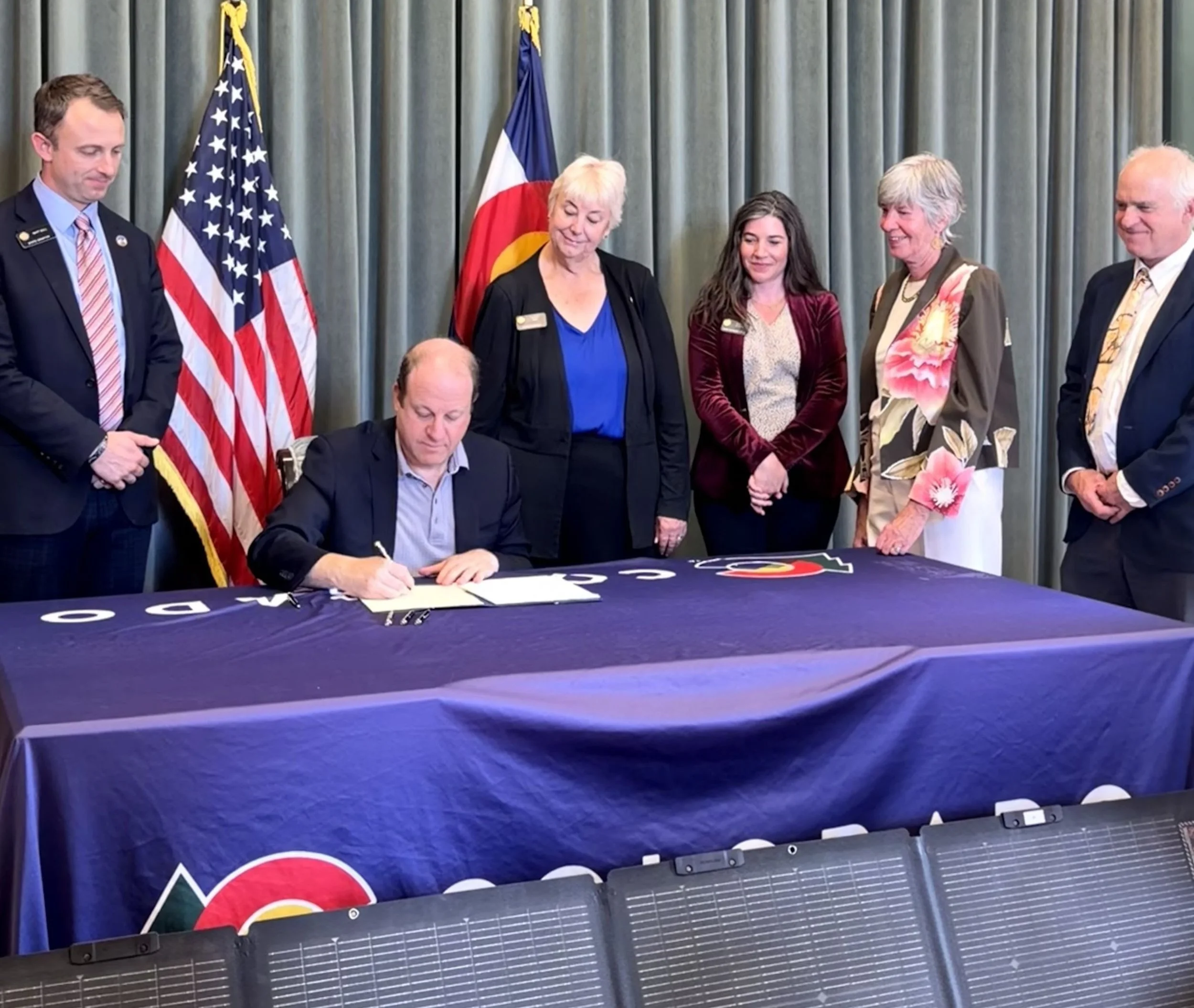
DENVER, CO – Legislation to remove barriers to plug-in solar panels and save Coloradans money on their utility bills was signed into law today.
HB26-1007, sponsored by Senators Cathy Kipp, D-Fort Collins, and Matt Ball, D-Denver, and Representatives Lesley Smith, D-Boulder, and Rebekah Stewart, D-Lakewood, authorizes access to plug-in solar panels, which can be plugged into a home electrical outlet and are more affordable than traditional rooftop solar.
“This new law reduces barriers and establishes safety standards so that Coloradans who want a reliable, affordable source of renewable energy can use plug-in solar panels,” said Kipp. “Coloradans are interested in plug-in solar for a variety of reasons like reducing their carbon footprint, lowering their utility bills, or ensuring a reliable back-up source of energy in the case of a power outage. No matter their reasoning, Coloradans should be able to pursue this technology without unnecessary barriers.”
“We’re thrilled our plug-in solar bill is getting signed into law today because it means Coloradans will soon have access to safe, affordable solar energy,” said Smith. “Our law removes unnecessary barriers and establishes safety standards to ensure Coloradans can take advantage of our 300 days of sunshine to generate solar energy. HB26-1007 makes plug-in solar a reality so more Coloradans can save money on their utility bill, especially those living in shared spaces or apartments.”
“Plug-in solar panels expand access to solar energy for people who live in an apartment or can’t afford a full rooftop system,” said Ball. “The technology is safe, cost-efficient, and already widely used in other places. This law gives Coloradans the option to use plug-in solar and connect to the grid through a meter collar to start saving money and producing their own clean energy.”
“We know plug-in solar can lower your utility bill, and soon Coloradans will have access to this cost-saving, reliable energy source,” said Stewart. “To keep Coloradans safe, this law establishes important safety standards for plug-in solar and meter collars. Together, we’re making it possible for Coloradans who are interested in solar to try it out at an affordable price point.”
Plug-in solar, also referred to as balcony solar, can be plugged into a home electrical outlet and is more affordable than traditional rooftop solar. It consists of one to four solar panels plus an inverter and optional battery and is designed for simple, safe installation. Plug-in solar can be used to power household appliances and offer Coloradans an alternative, reliable energy source that can also reduce traditional utility costs.
The bill establishes protective guardrails on the types of plug-in solar products that can be used. All plug-in solar devices installed must meet the UL 3700 product safety standard.
HB26-1007 also encourages the use of meter collars. Meter collars are devices installed between an electric meter socket and a utility billing meter to provide immediate interconnection of customer-owned solar devices to the grid. Meter collars eliminate the need for a costly electrical panel upgrade, saving Coloradans money and time on solar installation. The bill outlines a safe, consistent and repeatable solar installation process with minimal disruption and short installation times to benefit Coloradans.
Plug-in solar is common in Europe. For example, in Germany, approximately 4 million households have installed plug-in solar. With this law, Colorado joins Utah in becoming early adopters of safe, reliable, plug-in solar in the United States.
Senate Approves Legislation to Establish Colorado’s Regulatory Framework on Automated Decision-Making Technology
DENVER, CO – Today the Senate approved Senate Majority Leader Robert Rodriguez, D-Denver, and Senate President James Coleman’s, D-Denver, legislation to establish Colorado’s regulatory framework on automated decision-making technology (ADMT) when it is used to make consequential decisions about an individual.
“Even in the few years since I have been working on AI policy, we have seen it grow from a nascent industry to something that impacts every aspect of our lives,” said Rodriguez. “As AI becomes more widespread, our laws must keep up to ensure transparency and protections against discrimination. If someone is denied housing or a job, loses their healthcare, or sees their insurance rates mysteriously skyrocket at the hands of automated technology, they deserve to know what criteria went into that decision and to have an opportunity to correct mistakes. This bill strikes an appropriate balance of protecting consumers while not being onerous on developers or the businesses who use AI technology.”
“Colorado is leading the way on creating necessary guardrails on AI to protect Coloradans from harm while fostering a vibrant business environment,” said Coleman. “This bill reflects years of work to find the right policy framework for Colorado that protects consumers, requires transparency so that we know how important decisions are being made, and is reasonable for businesses to comply with.”
SB26-189 would update the regulatory framework on ADMT – defined as technology that automatically processes personal data and generates an output used to make, guide, or assist a decision concerning an individual – when such technology is used to make consequential decisions. “Consequential decisions” are defined in the bill as decisions that relate to an individual's access to, eligibility for, or compensation related to education, employment, housing, financial or lending services, insurance, healthcare services, or essential government services.
Securing consumer protections
To protect consumers, SB26-189 would require deployers – entities that use an ADMT – to provide a clear notice to consumers when they are interacting with an ADMT covered by the bill. If an ADMT makes a consequential decision that results in an adverse outcome for a consumer, the deployer would be required to provide the consumer with a plain-language description of the technology’s role in the decision and a process to request additional information about the decision within 30 days. In the case of an adverse outcome, consumers would have the right to request correction of factually inaccurate personal data and the right to request meaningful human review.
Implementing and enforcing the new framework
Beginning January 1, 2027, the bill would require ADMT developers to provide a deployer with a description of the technology’s intended uses, categories of data used to train the ADMT, known limitations and risks, and instructions for appropriate use and human review, as well as updates or modifications to the ADMT as they are made.
The legislation requires the Attorney General (AG) to adopt rules that clarify disclosure requirements after an adverse outcome by December 31, 2026. The AG would have exclusive authority to enforce the bill through the "Colorado Consumer Protection Act" and a violation of the bill would be deemed a deceptive trade practice. In the case of an alleged violation, the AG would be required to provide the developer or deployer with a 60 day notice and an opportunity to cure the violation, if a cure is deemed possible. The bill does not create a new private right of action.
Ensuring balanced responsibility and liability
Under the bill, a developer or deployer of an ADMT may be liable for a violation of existing anti-discrimination law, including the Colorado Anti-Discrimination Act (CADA). It further specifies that any fault in a violation of anti-discrimination law should be allocated based on the relative fault shared between the developer and deployer.
The liability section of SB26-189 establishes that a contract between a developer and deployer cannot indemnify against any liability under the CADA that arises solely from their own actions. The bill is structured to ensure that developers and deployers only have responsibility and liability with regards to the intended use of an ADMT in a consequential decision.
In 2024, Rodriguez passed first-of-its-kind legislation to implement consumer protections in interactions with high-risk artificial intelligence systems. Over the past six months, a task force convened by the governor met to develop and publish a new policy framework. SB26-189 would repeal the 2024 legislation and enact many of the recommendations developed by the task force.
SB26-189 now moves to the House for further consideration. Track its progress here.
Bill to Modernize, Improve Higher Education Funding Formula Passes Committee Unanimously
HB26-1345 would make updates to the performance model funding to capture Colorado’s entire student body, including part-time and transfer students
DENVER, CO – The Senate Education Committee yesterday unanimously passed bipartisan legislation to modernize Colorado’s higher education funding model to meet the needs of Colorado students, including those from diverse and underserved backgrounds and non-traditional students.
HB26-1345, sponsored by Senate President James Coleman, D-Denver, would implement changes to higher education funding as recommended by the Colorado Commission on Higher Education’s 2025 Report on the Higher Education Funding Allocation Formula.
“Higher education looks different today than it has in years past, with more students taking a nontraditional path, transferring between schools, and going to school part-time,” said Coleman. “Schools are adapting to this new reality and our funding model should adapt too. Coloradans of all ages and backgrounds deserve a higher education system that works for them, and that includes part time and transfer students.”
Also sponsored by Senate Minority Leader Cleave Simpson, R-Alamosa, the bill aims to streamline and modernize higher education data systems and definitions to better meet the needs of Colorado’s student body, including part-time and transfer students.
One component of higher education funding uses a results-informed funding model, and beginning in fiscal year 2027-2028, HB26-1345 would make modifications to this model by:
Expanding qualified transfers: The current formula does not recognize four-year transfers as a successful touchpoint, despite 45 percent of Colorado students transferring between schools at least one time. This bill would expand qualifying transfers to include those from four-year institutions who transfer to another higher education institution with at least 18 credits earned at the previous institution. Without this modification, only students who earn 18 credits and transfer out of a community college would be counted in the credential completion weights.
Prioritizing part-time students: 55 percent of Colorado’s higher education students attend classes part-time, but they are not included in any outcome measurements. This bill would create an inclusive retention rate that measures both part-time and full-time students.
Modernizing graduation calculations: Collaborative programs, including the Bridge and Partnership programs, allow students to complete their degree in a field of study that is not offered by their home institution. However, this can skew the graduation calculations at their home campus. This bill would exclude students who are enrolled in a co-located degree partnership to ensure this population does not negatively impact the graduation calculations of their home campus.
Streamlining formula definitions and data sources: The bill would clean up language and definitions in the current formula to make it more streamlined and clear for higher education institutions and policymakers. Specifically, HB26-1345 would make formula “levers” consistent, predictable, and focused on student-centered performance. Additionally, this bill would standardize data sources by transitioning the calculation of retention and graduation rates to the Department of Higher Education’s data system. To respond to shifts at the federal level, this bill would also change the definition of “Pell-eligible” student to “Pell-recipient” to ensure that this metric remains consistent.
HB26-1345 now heads to the Senate floor for further consideration. Track its progress HERE.
Committee Approves Bill to Expand Access to Abortion Care for College Students
HB26-1335 would require college student health centers to provide on-site abortion medication services
DENVER, CO – The Senate Health and Human Services Committee yesterday advanced legislation sponsored by Senators Katie Wallace, D-Longmont, and Jeff Bridges, D-Arapahoe County, to expand access to abortion care for college students.
“College students are navigating a nation that continues to undermine their right to abortion care, but Colorado is and will remain a safe haven for reproductive rights,” Wallace said. “This bill would ensure that students who rely on campus health centers are able to access the healthcare they need, when they need it, where they are.”
“Abortion care is healthcare, and college students in Colorado deserve access to that care despite national efforts to deny it,” Bridges said. “Colorado voters enshrined the right to abortion in the constitution, and with this bill, we’re leveling the playing field so students have equal access to that right.”
HB26-1335 would expand college students’ access to reproductive healthcare by requiring public and private higher education institutions with student health centers to provide on-site abortion medication.
If the college has an on-campus pharmacy, abortion medication must be available to enrolled students. If the college does not have a pharmacy on campus, healthcare providers would be required to submit a prescription for abortion medication to a pharmacy or other prescription drug outlet located off campus. The bill would also add privacy protections by requiring institutions to comply with preexisting personally identifying information maintenance and disclosure protections in state law. The bill would exempt higher education institutions from the requirement to stock or dispense abortion medication if doing so would conflict with their religious beliefs or practices or if it would jeopardize an institution’s federal grant participation.
Colorado Democrats have championed multiple laws to expand and safeguard abortion access in Colorado. This includes legislation to strengthen Colorado's shield laws, protecting patients and providers from hostile out-of-state actions. Last year, Colorado Democrats implemented the will of the voters by enshrining abortion rights into the state constitution.
HB26-1335 now moves to the Senate floor for further consideration. Track its progress here.
Legislation to Establish Guardrails for AI in Healthcare Passes Committee
DENVER, CO – Today, the Senate Health and Human Services Committee passed legislation sponsored by Senators Kyle Mullica, D-Thornton, and Judy Amabile, D-Boulder, to ensure patients’ continued access to mental healthcare provided by a human, licensed professional.
“No AI-generated algorithm can replace the expertise, nuance, and connection that human healthcare professionals utilize to treat their patients,” Mullica said. “With this bill, we’re establishing necessary guardrails to ensure proper access to quality care for those who need it most.”
“As policymakers, we cannot let chatbots, several of which are currently facing major lawsuits due to wrongful and horrifying deaths, replace certified mental health providers,” Amabile said. “Some AI models serve as bad actors claiming to offer low-cost care – but this bill puts guardrails in place to ensure patients receive the quality, human care they deserve.”
HB26-1195 would set standards in clinical settings, limiting the use of artificial intelligence (AI) to administrative tasks with oversight by a licensed professional. To ensure patients receive legitimate behavioral health care, this bill makes sure that psychotherapy is human-delivered by a licensed professional, such as a social worker, psychologist or addiction counselor.
To protect consumers and ensure access to quality care, this legislation would prohibit AI chatbots from being marketed to patients as providing the same level of care as a licensed psychotherapist or counselor. AI chatbots would also be barred from implying their responses or suggestions are equivalent to psychotherapy services. Providers must disclose the use of AI for supplementary support, such as recording or transcribing meetings.
In 2025, researchers at Stanford University recommended that Large Language Models (LLMs), which power AI chatbots, “should not replace therapists.” Additionally, researchers concluded that “LLMs express stigma toward those with mental health conditions and respond inappropriately to certain common (and critical) conditions.”
Top AI companies, including OpenAI, Google, and Character.AI, are all facing lawsuits from families after AI chatbots recommended suicide to a person seeking behavioral health advice or support. Last year, parents of children who committed suicide testified before Congress, stating AI chatbots discouraged their teens from seeking help.
HB26-1195 now moves to the Senate floor for further consideration. Track its progress here.
Legislation to Create More Affordable Home Ownership Opportunities Signed Into Law
SB26-040 will modernize the Prop 123 Affordable Homeownership Program to better meet families’ needs
DENVER, CO – Bipartisan legislation to update the Affordable Homeownership Program created by voter-approved Proposition 123 was signed into law today.
SB26-040, sponsored by Senator Judy Amabile, D-Boulder, and Representatives Katie Stewart, D-Durango, and Lesley Smith, D-Boulder, will expand eligibility for qualified buyers and make practical updates to better serve every Colorado community and meet the reality of the 2026 housing market.
“The Affordable Homeownership Program was designed in 2022, for a 2022 market with low interest rates and lower construction costs than what we see today,” said Amabile. “This new law updates the program to reflect today’s reality and provide the flexibility that Coloradans need. We’re taking a practical approach to make sure this program works as intended so more Colorado families can put down roots and achieve their dream of homeownership.”
“This bipartisan law makes the Prop 123 Affordable Homeownership Program more responsive to the needs of our communities, especially in Colorado mountain towns like mine,” said Stewart. “When Colorado voters approved Prop 123, it created the Affordable Home Ownership Program to help first-time homebuyers with down payments and other financial assistance. This new law will make crucial updates to the program to help more low- and middle-income Coloradans in rural areas qualify for homebuying assistance.”
“We’re expanding eligibility and flexibility for this Prop 123 program to deliver more housing assistance for hardworking Coloradans,” said Smith. “The Affordable Homeownership Program was created to help first-time homebuyers secure down payments. Unfortunately, interest rates and construction costs are higher than they were when the program was created. Our law makes necessary adjustments to the program so it can support Coloradans as intended and make homeownership a reality for more hardworking people.”
The new law, also sponsored by Senate Minority Leader Cleave Simpson, R-Alamosa, will increase the allowable income threshold to qualify for the program to less than or equal to 120 percent of statewide Area Median Income (AMI) or the local AMI. This will allow more people to qualify for the program, particularly in rural communities.
Rising interest rates and insurance costs have also made it harder for Coloradans to meet the requirement that combined housing costs cannot exceed 35 percent of their income. The law raises that threshold to 38 percent for homebuyers receiving direct down-payment assistance, and also creates a process to allow eligible organizations to seek a waiver of the housing cost limit entirely when a qualified buyer is not found after six months of advertising.
Additionally, the law will allow eligible organizations to temporarily rent units if they cannot be sold in a timely manner and create more flexibility in the program rules. These updates will help ensure that the program is working as intended and serving as many Coloradans as possible.
Senate Advances Bill to Explore a Sustainable Future for Colorado’s Medicaid Program
H.R. 1 and skyrocketing Medicaid costs are threatening the sustainability of Colorado’s Medicaid program
DENVER, CO – Today the Senate gave initial signoff on legislation to establish the Commission on Medicaid, tasked with exploring solutions to implement a sustainable Medicaid program in Colorado.
H.R. 1 and skyrocketing Medicaid costs are threatening the sustainability of Colorado’s Medicaid program. Sponsored by Senators Judy Amabile, D-Boulder, and Jeff Bridges, D-Arapahoe County, SB26-187 would establish the Commission on Medicaid in the Legislative Department to identify and recommend policy changes to implement a sustainable Medicaid program.
“Medicaid saves lives. We have to find a path forward so that instead of moving from one budget crisis to another, we have a real plan to ensure the people most in need get the care they deserve,” said Amabile. “Over the coming months, I’m committed to digging into the data, finding cost savings, and making informed decisions to preserve lifesaving care. This work won't be easy, but I will keep fighting for Colorado families like mine who rely on Medicaid.”
“Every year we are constitutionally required to pass a balanced budget. This year, it is clearer than ever that TABOR’s rationing limit, Trump’s cuts, and the rising cost of Medicaid are crushing Colorado’s finances and families,” said Bridges. “With this bill, we are creating a plan to preserve lifesaving care, responsibly manage public funds, and build a sustainable future for Medicaid in Colorado.”
Between May 23, 2026 and December 11, 2026, the commission would be required to meet between six and 12 times to engage and collaborate with representatives of state agencies, Medicaid members, disability advocates, healthcare providers, community-based organizations, and national experts.
The commission would consist of ten legislators including members of the Joint Budget Committee, chairs of the House and Senate Health and Human Services Committee, and members of the minority party.
The commission would be tasked with:
Reviewing the state Medicaid program’s administrative structures;
Analyzing current enrollment, eligibility, services, benefits, and payment rates;
Exploring Medicaid financing and evaluating federal funding optimization; and
Preparing insights and policies regarding the impacts of the federal H.R. 1 on Colorado’s Medicaid program.
Last year, H.R. 1 created enormous new tax cuts for the wealthiest corporations and slashed revenue for core state services. Once fully implemented, this will mark the largest cut to Medicaid in American history. Meanwhile, Medicaid costs are exploding year over year, far beyond what was forecast by nonpartisan legislative staff. Medicaid is growing at nearly nine percent per year, while TABOR constrains how much more the state can spend each year (about 3.2 percent for next year’s budget).
Medicaid spending is increasing primarily due to inflation and higher costs for existing benefits, higher utilization of services, and higher provider rates, not new benefits or services. The largest growth has been in long-term care, prescription drug coverage, and pediatric behavioral health.
To close the $1.2 billion budget deficit and deliver this year’s balanced, bipartisan budget, lawmakers reduced healthcare spending, including a $270 million reduction in Medicaid reimbursement rates and some services. This is in addition to the $90 million lawmakers previously cut from Medicaid this year.
SB26-187 is expected to be heard on third and final reading tomorrow.
Bill to Lower Costs, Boost Wages Passes Senate
HB26-1210 would crack down on surveillance pricing
DENVER, CO – The Senate today passed legislation sponsored by Senators Mike Weissman, D-Aurora, and Iman Jodeh, D-Aurora, to prohibit corporations from using consumers’ personal data to charge them more or pay them less.
HB26-1210 would prohibit the use of a price or wage-setting algorithm that uses artificial intelligence and other data processing techniques to strategically set prices or wages based on surveillance of an individual’s data, including browsing and purchase history, financial status, habits, and affiliations.
“Large corporations stack the deck against hardworking Coloradans far more than most of us are aware,” said Weissman. “They’re now using artificial intelligence to set prices as high as they think an individual will pay, and wages as low as they think someone will accept. Colorado families deserve better. I’m proud to sponsor legislation to tackle these unfair pricing practices, protect consumers and workers, and bring down costs.”
“Coloradans deserve to know they’re paying a fair price and have the opportunity to negotiate for a good wage,” said Jodeh. “We all lose when large corporations can set different prices for different people based on sensitive data they’ve collected. This bill stands up for workers and families to ensure that your personal data – like where you live and what you’ve bought in the past – is not used against you to raise prices or keep your wages low.”
Corporations have increasingly weaponized price and wage setting to set prices at the highest amount someone is willing to pay and wages at the lowest amount that someone is willing to accept, based on data that is not publicly accessible and often collected without an individual’s knowledge or consent.
For example, if someone searches for funeral homes online and then goes to book a plane ticket, an algorithm may judge that they are traveling for a funeral and would be willing to pay more for the flight. Under the bill, engaging in these price or wage-setting practices would be considered a deceptive trade practice and could result in a civil penalty.
A 2025 Federal Trade Commission report found that individualized pricing tools are being used to target specific consumers with artificially-inflated prices for goods and services based on surveillance data, such as a person’s location or the motion of a computer mouse.
HB26-1210 now heads back to the House for consideration of amendments. Track its progress HERE.
Mobile Home Park Protections Bill Passes Senate
DENVER, CO – The Senate today passed legislation to make mobile home park sales more fair and transparent.
HB26-1224, sponsored by Senate Assistant Majority Leader Lisa Cutter, D-Jefferson County, and Senator Dylan Roberts, D-Frisco, would strengthen Colorado’s Mobile Home Park Act (MHPA) to ensure that residents have a fair chance to purchase the land underneath their mobile home.
“This legislation builds upon years of work to level the playing field for mobile home park residents who often own their home but not the land beneath it,” said Cutter. “We’ve implemented laws to help residents join together to purchase their parks, keeping costs down and creating opportunities for stability and ownership. This bill adds additional measures to facilitate residents’ ability to purchase their park when it goes up for sale.”
“I've seen firsthand the opportunity for residents to purchase their mobile home park in action in my district – and it's transformational for preserving affordable, local housing,” said Roberts. “This bill ensures that more residents in our state will have the time and information they need to make that decision, including operating costs and financial disclosures, and adds new protections to prevent families from losing their home. This bill continues upon years of work to keep mobile home parks – which provide essential affordable housing – in the hands of our communities.”
Beginning January 1, 2027, the bill would give residents at least 90 days to conduct inspections and protect residents who negotiate in good faith. The bill would ban anti-competitive practices that inflate prices above market value to make it harder for residents to purchase the mobile home park.
HB26-1224 would improve transparency by requiring a landlord to disclose documentation to justify the list price of the property, the age and history of major infrastructure on the property, rental information and operating expenses. Upon request, the bill would also require a landlord to disclose any financial ties to potential buyers of the property and any agreements between the landlord and the potential buyer.
To prevent evictions and keep housing costs down, the bill would:
Ensure that residents receive notice when a park owner is temporarily prohibited from raising lot rents;
Require evictions to be based on an official government finding of a violated law, ordinance, or rule, not just an informal claim; and
Limit the amount of the annual MHPA registration fee that can be passed onto homeowners to keep housing costs down.
In 2020, the legislature passed a law to create a pathway for mobile home park residents to join together to purchase the land under their communities. Democrats have also passed laws to improve water quality in mobile home parks, strengthen tenant protections, improve language accessibility for important park notices and meetings and clarify the conditions of a sale of mobile homes and parks. The legislature also passed a bill this session, sponsored by Cutter and Senator Kyle Mullica, D-Thornton, to strengthen water quality protections for Coloradans in mobile home parks.
The bill now heads to the Governor’s desk for his signature. Track its progress HERE.
Bill to Lower Emergency Healthcare Costs, Sustain Rural EMS Passes Senate Unanimously
DENVER, CO – Legislation to strengthen Emergency Medical Services (EMS), especially in rural communities, passed the Senate unanimously today.
HB26-1069, sponsored by Senator Kyle Mullica, D-Thornton, would streamline funding for EMS in Colorado by expanding the services eligible for Medicaid reimbursement to include on-site treatment and certain telehealth care.
“As an emergency healthcare provider, I know that our EMS workers must have every tool at their disposal to provide care in-the-moment, and they should be reimbursed for that care,” said Mullica. “This bill will lower costs for patients, reduce overall healthcare spending, and close funding gaps so EMS can continue providing the life-saving care Colorado communities rely on.”
EMS providers regularly provide essential on-site treatment, also known as treatment in place (TIP), which costs significantly less than a trip to the emergency room. However, EMS providers are only reimbursed if they transport a patient to an emergency room, even when that transport is not necessary. This bill would require Medicaid to reimburse EMS for TIP. It would also improve access to care by allowing Medicaid to reimburse for certain telehealth care involving EMS.
To save patients and the state money on healthcare and sustain EMS in rural communities, this bill would also permit reimbursement when an individual experiencing a behavioral health crisis is transported to a crisis stabilization facility.
TIP limits the need for costly emergency room visits, saving the state and patients money on healthcare. For example, a federal TIP pilot program showed a 193-percent cost-to-savings ratio for Medicare members receiving TIP services instead of emergency room visits. On the Western Slope, a 2022 analysis of 911 calls in Eagle County revealed that TIP reimbursement accounted for a preliminary cost savings of $1,285.40 to the state per TIP call.
Lastly, HB26-1069 ensures that social workers who co-respond in emergency settings are classified as first responders and receive the same benefits as EMS providers, which will strengthen workforce recruitment and retention, especially in rural or underserved areas.
The bill now heads back to the House for consideration of amendments. Track its progress HERE.
Senate Approves Bipartisan Bills to Save Students Money, Connect Coloradans to Good-Paying Jobs
DENVER, CO – The Senate today passed two bills to support students and Colorado’s workforce.
HB26-1317, sponsored by Senator Jeff Bridges, D-Arapahoe County, would better connect students and workers with the resources they need to secure good-paying jobs.
“The programs we’ve built to help people find jobs just don’t connect the way they should. This fragmentation makes them less effective for the very people they’re supposed to serve,” Bridges said. “This bill starts to fix that by reworking how we think about post-secondary pathways so more Coloradans can find real opportunities, contribute in their communities, and earn wages that actually pay the bills.”
The bill, which is cosponsored by Senator Lisa Frizell, R-Castle Rock, would lay the foundation for a new, unified system and department for post-secondary education development. With a focus on a thoughtful, inclusive stakeholder process, this bill would establish a Transition Advisory Committee (TAC) of 27 members, including representatives from state agencies, institutions of higher education, apprenticeship programs, organized labor, local workforce centers, local government, non-profit associations and the business community. The TAC’s recommendations will serve as the structural outline for the new department.
This bill would also begin the process to unite several programs, including the Divisions of Employment and Training, Regional Talent Summit Initiatives, Plans and Opportunity Now Grants and Adult Education and Literacy Programs, among others, under one new agency. Last year, Governor Polis shared a new report outlining a robust roadmap to streamline and strengthen the way Coloradans access education, training and career support.
Research shows that in the next six years, nearly three in four job openings will require some type of post-secondary credential. However, there is an attainment gap between the need for credentials and the number of Coloradans earning these skills, which is a challenge for Colorado’s economy and workforce. HB26-1317 would begin the process to streamline more than 20 divisions, offices and units across seven state entities that deliver more than 100 programs and initiatives to create a one-stop-shop for Coloradans’ access to post-secondary education, training and employment.
HB26-1078, sponsored by Senator Janice Marchman, D-Loveland, would expand access to low- and no-cost college-level courses for high school students.
“Concurrent enrollment classes accelerate student learning and prepare them for future careers, whether it be public service, private sector jobs, or technical training,” Marchman said. “I’m proud to sponsor this legislation that would expand these effective and low-cost programs and create more opportunities for Colorado students to excel.”
Cosponsored by Senator Barbara Kirkmeyer, R-Weld County, HB26-1078 would extend concurrent enrollment in Colorado to include off-campus courses offered by higher education institutions. Concurrent enrollment allows high school students to take college-level courses, saving them money and time while accelerating their degree completion. Students can typically earn high school and college credits simultaneously for certain courses.
Under current law, most off-campus courses are excluded from concurrent enrollment programs. This often means only those provided in high school classrooms or on a college campus meet the concurrent enrollment course requirements. This bill would modify the narrow requirement by allowing higher education institutions to offer off-campus courses that qualify as concurrent enrollment courses provided the courses meet state and federal requirements and accreditation guidelines.
This bill also applies to post-secondary technical and career education courses offered through area technical colleges, which are non-traditional, hands-on courses such as workshops, certificate classes, and skilled trades.
Both HB26-1317 and HB26-1078 now move back to the House for consideration of amendments.
Bills to Establish Guardrails for AI Chatbots, AI in Healthcare Pass Committee
DENVER, CO – Two bills to establish protections for kids and patients in interactions with artificial intelligence (AI) passed the Senate Business, Labor, and Technology Committee yesterday.
HB26-1263, sponsored by Senator Iman Jodeh, D-Aurora, would implement safeguards around AI chatbots, particularly as they interact with children, beginning January 1, 2027. The bill would require AI developers to provide a clear and visible disclosure to the minor that the AI chatbot is artificially generated and not human, and prohibit the use of rewards to encourage engagement.
“The cases we’ve seen in recent years where AI chatbots encourage children to commit suicide are horrifying and unnecessary,” Jodeh said. “We must step up as policymakers to ensure our children, especially those who are struggling, are safe. This bill would take the first step toward establishing commonsense guardrails so that our children are encouraged to turn to trusted adults, not to AI chatbots, in times of need.”
AI developers would be required to take reasonable steps to prevent AI chatbots from generating sexually explicit content or generating conversations that encourage or engage in sexually explicit interactions with minors. These developers would also be required to prevent AI chatbots from creating an emotional dependence through false claims that the chatbot is human, generating conversations that are romantic or sexual or role-playing with a minor.
The bill, which is cosponsored by Senator John Carson, R-Douglas County, would require AI developers to allow for parental controls if their chatbots are accessible to children under the age of 13.
It would also require AI chatbots to provide suicide-prevention resources to users who express suicidal thoughts or interest in self-harm, and platforms would be required to file reports on how often a chatbot flags suicidal or self-harm behaviors.
The American Psychological Associationhas warned that, while AI chatbots are low-cost and accessible, they lack necessary regulations to guarantee that they are being used safely.
When a 16-year-old told an AI chatbot about his suicidal thoughts and plans last year, the chatbot discouraged him from telling his parents and offered to write his suicide note. A 14-year-old also died by suicide after his AI chatbot engaged in sexual role play and falsely claimed to be a psychotherapist.
The committee also approved HB26-1139, sponsored by Senate Assistant Majority Leader Lisa Cutter, D-Jefferson County, and Senator Lindsey Daugherty, D-Arvada, which would establish guardrails for AI systems in healthcare to ensure insurance coverage decisions are transparent, accountable and subject to human oversight.
"Coloradans are being denied coverage for life-saving healthcare by AI without human oversight. Healthcare is a deeply personal, subjective matter, and it is inhumane to allow machine intelligence to make decisions that can dramatically impact a person's life," Cutter said. "HB26-1136 ensures that a real person is involved in these critical decisions."
“Healthcare and coverage decisions should be made by patients and their doctors, not algorithms,” Daugherty said. “This bill is an important step toward ensuring fairness and transparency in important and sensitive healthcare contexts.”
Under this bill, if an AI system recommends denying coverage for a patient, the final decision must come from a qualified human after review. To protect patients against algorithmic bias, decisions to deny healthcare coverage must be based on an individual’s medical history and clinical circumstances, not solely on group data that falls short of an individual’s unique needs.
Both HB26-1263 and HB26-1139 now move to the Senate floor for further consideration.
Committee Passes Bills to Save Families Money on Childcare, Create More Good-Paying Jobs
HB26-1004 and HB26-1014 would extend tax credits that make life more affordable for working Coloradans
DENVER, CO – The Senate Finance Committee yesterday passed two pieces of legislation that would spur the creation of more high-quality and affordable childcare facilities in our communities and help create more jobs by incentivizing businesses to expand or relocate to Colorado.
HB26-1004, sponsored by Senate President James Coleman, D-Denver, would continue the Child Care Contribution Tax Credit, which allows taxpayers who donate money to a licensed childcare facility in Colorado to receive an income tax credit of 50 percent of their contribution, until 2037.
“Colorado’s families, communities, and economy are all stronger when we have a vibrant childcare ecosystem,” said Coleman. “This bill drives donations toward childcare facilities, which means more good jobs and more options for hardworking families at all price points. For many Colorado families, childcare is their number one expense every month. This bill is about taking action to make childcare more available and affordable.”
These childcare facilities could include qualifying childcare centers, homeless youth shelters and residential treatment centers. These donations can be used to create or maintain a childcare facility, fund childcare financial assistance programs for families and train childcare providers. In tax year 2023, around $33 million in credits were claimed by almost 16,000 taxpayers, generating a total of $66 million for the childcare ecosystem.
In January, the Trump administration attempted to freeze over $300 million of funding for childcare and social services that thousands of Colorado families rely on. As a result, Colorado Democrats are stepping up to create more avenues to fund affordable care.
The committee also approved HB26-1014, sponsored by Senator Matt Ball, D-Denver, and cosponsored by Senator Lisa Frizell, R-Castle Rock, that would extend the Job Growth Incentive Tax Credit through tax year 2034. The Job Growth Incentive Tax Credit was created in 2009 to help create new jobs by offering a state income tax credit of 50 percent of the Federal Insurance Contributions Act (Social Security and Medicare payroll taxes) contributions paid by the business for each new job.
“The Job Growth Incentive Tax Credit has been hugely successful in creating opportunities for workers to thrive and grow in good-paying careers,” Ball said. “This legislation would continue to create good new local jobs and opportunities for Colorado families across our state.”
To qualify for this state income tax credit, businesses must create at least 20 new jobs during the credit period, or at least five new jobs if the project is within an Enhanced Rural Enterprise Zone. These jobs must pay at least 100 percent of the county’s average annual wage and be maintained for at least one year.
The following projects were announced as recent recipients of the Job Growth Incentive Tax Credit:
Neon, a company in the quantum industry, that is expected to create 150 new jobs at 172-percent of the average annual wage in Boulder County,
Project Elevate, a real estate investment and modular home manufacturing company, which is expected to create nearly 100 jobs at 135-percent of the average annual wage in Mesa County, and
Frontera, a construction company, which is expected to create 40 new jobs at 104-percent of the average annual wage in Montrose County.
Both HB26-1004 and HB26-1014 now move to the Senate Appropriations Committee for further consideration.
Legislation to Support Victims’ Families After Deadly Use of Force by Law Enforcement Passes Committee
DENVER, CO – Yesterday Senate President James Coleman, D-Denver, and Senator Mike Weissman’s, D-Aurora, bill to support victims’ families after deadly use of force by law enforcement passed the Senate State, Veterans, and Military Affairs Committee.
“In the immediate aftermath of a loss caused by deadly use of force, families are often left trying to understand what happened and who is responsible for answering their questions,” said Coleman. “This bill is about how we respond in those moments, both in how we inform families and how we communicate with the public. This legislation is a step toward clarity in moments that are often defined by confusion. It ensures that families are informed, that information is accessible, and that communication is responsible.”
“Senate Bill 190 establishes baseline requirements for how information must be shared with impacted family members when they have lost a loved one in a police use of force incident,” said Weissman. “This bill ensures that families navigating an extremely complicated system during an acutely painful time in their lives are provided with clear information about an investigation before it becomes broadly available for public access. At its core, this legislation is about responding to community concerns, supporting victims' families and providing clarification in moments that are often defined by confusion.”
Currently, video and audio recordings depicting incidents of peace officer misconduct that result in death must be provided upon request to a victim’s family. SB26-190 would establish a clear, consistent framework for how information is shared following a peace officer’s use of force that results in death, regardless of whether the incident received a complaint of misconduct.
The bill would require law enforcement to make an effort to identify a victim’s immediate family and notify known family members within 24 hours of agencies involved in an investigation as well as the status of an investigation.
SB26-190 would also ensure that family members have the right to obtain video and audio recordings of an incident within a 21 day timeframe and that victims’ families receive video and audio recordings before they are available for public access.
SB26-190 now moves to the Senate floor for further consideration. Track its progress here.
Legislation to Increase Firefighter Cancer Benefits Passes Senate Committee
DENVER, CO – The Senate Business, Labor, and Technology Committee today passed legislation to expand cancer coverage for firefighters.
SB26-184, sponsored by Senate Majority Leader Robert Rodriguez, D-Denver, and Senator Matt Ball, D-Denver, would expand the types of cancer and other illnesses that are considered occupational diseases eligible for worker’s compensation and increase claim approvals.
“Firefighters save lives – often by entering burning buildings full of toxins and cancer-causing substances,” said Rodriguez. “Gaps in existing law lead to denied claims and leave firefighters without the coverage they need. We must ensure they receive care if diagnosed with cancer or a neurological disorder that they very likely got due to their work as a firefighter.”
“It’s unacceptable that firefighters who put everything on the line are being denied care for diseases contracted because of their life-saving work,” said Ball. “After years of protecting our communities, they deserve access to care, financial relief, and the chance to focus on healing and time with their loved ones. It’s just the right thing to do.”
Firefighters are routinely exposed to carcinogens, heavy metals, neurotoxins, and combustion by-products and experience elevated risks of cancer and Parkinson’s disease as compared to the general public. Current law, as established by HB07-1008, considers some types of cancer as occupational diseases presumed to be caused by employment as a firefighter. An employer or insurer may rebut this presumption by showing a “preponderance of the medical evidence” that the cancer did not occur on the job.
SB26-184 would expand the types of cancer that are presumed to be occupational diseases under worker’s compensation law, add Parkinson’s Disease to the presumption, and strengthen the presumption to require an employer to show “clear and convincing evidence” that the cancer did not occur on the job in order to deny a claim.
The bill would apply to currently employed firefighters with at least five years of employment. Retired firefighters would be covered in retirement for every year that they served, capped at 10 years. The bill would not apply to wildland firefighters.
SB26-184 now heads to the Senate floor for further consideration. Track its progress HERE.
Committee Unanimously Approves Legislation to Establish Colorado’s Regulatory Framework on Automated Decision-Making Technology
DENVER, CO – Today the Senate Business, Labor, and Technology Committee unanimously approved Senate Majority Leader Robert Rodriguez, D-Denver, and Senate President James Coleman’s, D-Denver, legislation to establish Colorado’s regulatory framework on automated decision-making technology (ADMT) when it is used to make consequential decisions about an individual.
“Even in the few years since I have been working on AI policy, we have seen it grow from a nascent industry to something that impacts every aspect of our lives,” said Rodriguez. “As AI becomes more widespread, our laws must keep up to ensure transparency and protections against discrimination. If someone is denied housing or a job, loses their healthcare, or sees their insurance rates mysteriously skyrocket at the hands of automated technology, they deserve to know what criteria went into that decision and to have an opportunity to correct mistakes. This bill strikes an appropriate balance of protecting consumers while not being onerous on developers or the businesses who use AI technology.”
“Colorado is leading the way on creating necessary guardrails on AI to protect Coloradans from harm while fostering a vibrant business environment,” said Coleman. “This bill reflects years of work to find the right policy framework for Colorado that protects consumers, requires transparency so that we know how important decisions are being made, and is reasonable for businesses to comply with.”
SB26-189 would update the regulatory framework on ADMT – defined as technology that automatically processes personal data and generates an output used to make, guide, or assist a decision concerning an individual – when such technology is used to make consequential decisions. “Consequential decisions” are defined in the bill as decisions that relate to an individual's access to, eligibility for, or compensation related to education, employment, housing, financial or lending services, insurance, healthcare services, or essential government services.
Securing consumer protections
To protect consumers, SB26-189 would require deployers – entities that use an ADMT – to provide a clear notice to consumers when they are interacting with an ADMT covered by the bill. If an ADMT makes a consequential decision that results in an adverse outcome for a consumer, the deployer would be required to provide the consumer with a plain-language description of the technology’s role in the decision and a process to request additional information about the decision within 30 days. In the case of an adverse outcome, consumers would have the right to request correction of factually inaccurate personal data and the right to request meaningful human review.
Implementing and enforcing the new framework
Beginning January 1, 2027, the bill would require ADMT developers to provide a deployer with a description of the technology’s intended uses, categories of data used to train the ADMT, known limitations and risks, and instructions for appropriate use and human review, as well as updates or modifications to the ADMT as they are made.
The legislation requires the Attorney General (AG) to adopt rules that clarify disclosure requirements after an adverse outcome by December 31, 2026. The AG would have exclusive authority to enforce the bill through the "Colorado Consumer Protection Act" and a violation of the bill would be deemed a deceptive trade practice. In the case of an alleged violation, the AG would be required to provide the developer or deployer with a 60 day notice and an opportunity to cure the violation, if a cure is deemed possible. The bill does not create a new private right of action.
Ensuring balanced responsibility and liability
Under the bill, a developer or deployer of an ADMT may be liable for a violation of existing anti-discrimination law, including the Colorado Anti-Discrimination Act (CADA). It further specifies that any fault in a violation of anti-discrimination law should be allocated based on the relative fault shared between the developer and deployer.
The liability section of SB26-189 establishes that a contract between a developer and deployer cannot indemnify against any liability under the CADA that arises solely from their own actions. The bill is structured to ensure that developers and deployers only have responsibility and liability with regards to the intended use of an ADMT in a consequential decision.
In 2024, Rodriguez passed first-of-its-kind legislation to implement consumer protections in interactions with high-risk artificial intelligence systems. Over the past six months, a task force convened by the governor met to develop and publish a new policy framework. SB26-189 would repeal the 2024 legislation and enact many of the recommendations developed by the task force.
SB26-189 now moves to the Senate Appropriations Committee for further consideration. Track its progress here.
Senate Approves “Conversion Therapy” Accountability Bill
HB26-1322 would create a civil cause of action for harm done by “conversion therapy”
DENVER, CO – Legislation sponsored by Senate Assistant Majority Leader Lisa Cutter, D-Jefferson County, and Senator Kyle Mullica, D-Thornton, to allow Coloradans to pursue a civil cause of action for damages related to “conversion therapy” passed the Senate today.
"Mental health is crucial to our overall health and wellbeing. A licensed therapist should not inflict harm on a child or young person by steering them in any predetermined direction," said Cutter. "This bill recognizes that real harm can be inflicted in the name of therapy, and that this harm might not be fully understood for many years. We are simply allowing people to have the time to process and understand the trauma that might have been inflicted, and seek the remedies already available to them under Colorado law."
“It is critical that we as policymakers listen to trusted scientific organizations when they tell us a practice is harmful. For over a decade, we’ve known that ‘conversion therapy’ increases suicidality and exacerbates depression and anxiety for LGBTQ+ Coloradans,” Mullica said. “In light of the Supreme Court’s recent ruling, it’s vital that we create avenues for those who have been subjected to ‘conversion therapy’ to get some justice.”
Beginning July 1, 2026, HB26-1322 would allow an individual who was subject to “conversion therapy” to bring a civil cause of action against certain professionals who cause damages from efforts to change their sexual orientation or gender identity. The bill defines conversion therapy as any practice by a licensed mental health professional that seeks to direct a patient toward a predetermined sexual orientation or gender identity outcome, or to eliminate or reduce attractions toward individuals of a particular sex or gender. The definition excludes counseling that provides acceptance and support without directing toward a predetermined outcome, therapy neutral with respect to sexual orientation and gender identity, and therapy related to a patient's sexual behaviors or relationships that does not seek to direct the patient toward a predetermined outcome.
Currently, Colorado law requires these claims to be filed within two years. The bill would remove this time restriction, and if the impacted individual has passed away, their representative could bring a survival action within five years of the individual’s death.
A 2024 report from the Trevor Project found that 14 percent of LGBTQ+ youth in Colorado have been threatened with or subjected to “conversion therapy.”
In 2009, the American Psychological Association Task Force on Appropriate Therapeutic Responses to Sexual Orientation concluded that “conversion therapy” is not likely to be successful and increases the risk of depression, suicidality and anxiety. The American Psychological Association, the American Psychiatric Association, the American Medical Association, the National Association of Social Workers, and many other mental health and medical organizations believe that “conversion therapy” is harmful and ineffective.
In 2019, Colorado Democrats passed a law to ban state-licensed medical or mental health care providers from providing “conversion therapy” to minors. The U.S. Supreme Court recently ruled against this law, making it vitally important to create new protections for people who are harmed by “conversion therapy.”
HB26-1332 now moves back to the House for consideration of amendments. Track its progress here.
Legislation to Prevent Sexual Abuse in Jails Passes Senate
DENVER, CO – The Senate today passed legislation to close gaps in jail safety standard requirements to protect incarcerated Coloradans from sexual exploitation.
HB26-1123, sponsored by Senators Mike Weissman, D-Aurora, and Judy Amabile, D-Boulder, would strengthen jail safety policies regarding strip searches, sexual assault prevention, and whistleblower protections.
“Recent incidents in Colorado jails have revealed serious failures to keep people in custody safe from sexual misconduct. This abuse cannot continue unchecked,” said Weissman. “This bill establishes clear standards for when strip searches can occur, restricts access to footage, and requires strict reporting. It also ensures real accountability for any officer who commits sexual misconduct. This bill is about restoring trust, safety, and accountability.”
“It is our responsibility to ensure that people in jail are safe from harm, especially at the hands of the officials who are supposed to keep them safe,” said Amabile. “Unfortunately, sexual abuse in jail is all too common. This bill establishes basic protections against sexual misconduct, increases access to sexual assault advocacy services, and prevents abusive staff from moving to another facility where they can cause further harm.”
This bill would require detention centers to create sexual assault prevention policies and inform inmates of their rights under the Prison Rape Elimination Act (PREA). If a peace officer commits a sexual assault in a detention facility, their POST certification would be permanently revoked.
Under the bill, a strip search could only be conducted if:
Two authorized personnel independently determine that there is a reasonable suspicion that an individual is concealing a weapon, a controlled substance, or contraband;
There has been a documented prior incident of possession of a weapon, controlled substance, or contraband in similar circumstances and there is substantial likelihood that an incident may occur again; or
The individual is being transferred from an outside facility and the local facility has a policy that dictates strip searches upon intake from an outside facility.
Under the bill, detention facility staff would document their decision to conduct a strip search and would record the search using their body-worn camera. Detention facilities would submit an annual report for the total number of strip searches that occurred in their facilities, as well as the reasons and the results of the searches, to the Colorado legislature and the Attorney General.
HB26-1123 would only allow a peace officer to review a video recording of a strip search for a legitimate law enforcement purpose. Personnel would be required to document the reason for seeking access and obtain approval from the sheriff, municipal jail head, or their designee to access strip search footage. These recordings could not be viewed remotely. Each local detention facility would be required to have a written policy regarding when strip searches are authorized and body camera footage restrictions.
The bill also includes whistleblower protections for staff who report suspected, alleged, or witnessed sexual assault and would create a private right of action for whistleblowers.
The PREA was passed by Congress in 2003 to prevent sexual assaults in prison. Inconsistent implementation and enforcement of PREA standards have left significant gaps that leave individuals vulnerable to sexual misconduct in jails and prisons. Last year, investigators found that a La Plata County Jail commander watched strip search videos of at least 117 female inmates over 3,000 times between 2019 and 2024. He was charged with 117 counts of invasion of privacy and one count of official misconduct.
The bill now heads back to the House for consideration of amendments. Track its progress HERE.
Senate Passes Bill to Fight Back Against Federal Coal Mandates
DENVER, CO – The Senate today passed legislation to fight back against federal mandates that force aging coal plants to stay operational, which will drive up costs to ratepayers and hinder Colorado’s clean energy future.
HB26-1226, sponsored by Senate Assistant Majority Leader Lisa Cutter, D-Jefferson County, and Senator Mike Weissman, D-Aurora, would help to mitigate the impacts of federal interference in Colorado’s energy future, ensure energy reliability, and implement modern standards for coal plant pollution.
“Colorado is a leader in climate policy, and we should be able to continue planning our own energy future,” said Cutter. “While the Trump Administration is busy propping up outdated, highly polluting, ready-to-retire coal plants, we’ve made considerable progress in bringing Colorado into a sustainable future with clean air, good jobs, and affordable energy. This legislation will mitigate harm caused by misguided federal mandates while protecting ratepayers and maintaining clean air standards.”
“The Trump Administration is trying to force expensive, polluting coal plants to stay open against the will of our communities, ignoring years of thoughtful planning,” said Weissman. “This bill pushes back by requiring transparency and pollution safeguards if some coal plants are required to stay open, ensuring Colorado can continue to chart our own path forward.”
If coal-fired plants are permitted to operate past 2034, this bill would:
Mandate that consumers and regulators are given information on the costs of keeping those coal plants open, and give the Public Utilities Commission (PUC) financing tools to manage operating costs, minimizing the impact on ratepayers.
Ensure the PUC approves new resources for Colorado’s largest electric utilities to help Colorado reach our carbon reduction targets and retire coal plants on schedule.
Require that coal plants still in operation use modern pollution controls to reduce emissions and help Colorado reach clean energy targets
In addition to informing consumers about the cost impacts of keeping coal plants open past their retirement date, this bill would also allow utility companies to use securitization as a financing tool if it lowers costs for ratepayers. This would include refinanced debt or long-term, low-interest bonds on large-scale projects to help lower costs for ratepayers now.
To reduce pollution, this bill would require the Air Quality Control Commission to issue a rule to set limits on the emission of NOx and SO2 from coal-fired power plants, unless those plants have retired or converted to burn a fuel other than coal. HB26-1226 would also require operators to submit quarterly emissions reports showing compliance and the associated costs beginning in 2034.
Last December, the Trump Administration issued a 202(c) emergency order to keep an aging coal-fired power plant in Craig operating, despite the plant's scheduled retirement in late 2025. This unprecedented order was challenged by the Colorado Attorney General and environmental groups.
Additionally, the owners of the coal power plant, Tri-State Generation and Transmission Association, and the Platte River Power Authority filed a formal petition asking the U.S. Department of Energy to reconsider to “find a more effective and affordable path forward, one that will not delay retirement of Craig Unit 1.” In March, the Trump administration issued a second order, further extending coal burning at Craig until at least June, which is estimated to cost almost $80 million annually.
The bill now heads back to the House for consideration of amendments. Track its progress HERE.