

Newsroom
Looking for something specific? Search through our press releases by keyword:
Find Releases by Date
- September 2026
- August 2026
- July 2026
- June 2026
- May 2026
- April 2026
- March 2026
- February 2026
- January 2026
- December 2025
- November 2025
- October 2025
- September 2025
- August 2025
- July 2025
- June 2025
- May 2025
- April 2025
- March 2025
- February 2025
- January 2025
- December 2024
- November 2024
- October 2024
- September 2024
- August 2024
- July 2024
- June 2024
- May 2024
- April 2024
- March 2024
- February 2024
- January 2024
- December 2023
- November 2023
- October 2023
- September 2023
- August 2023
- July 2023
- June 2023
- May 2023
- April 2023
- March 2023
- February 2023
- January 2023
- December 2022
- November 2022
- October 2022
- September 2022
- August 2022
- July 2022
- June 2022
- May 2022
- April 2022
- March 2022
- February 2022
- January 2022
- December 2021
- October 2021
- September 2021
- August 2021
- July 2021
- June 2021
- May 2021
- April 2021
- March 2021
- February 2021
- January 2021
- December 2020
- November 2020
- September 2020
- July 2020
- June 2020
- May 2020
- April 2020
- March 2020
- February 2020
- January 2020
- December 2019
- November 2019
- October 2019
- September 2019
- July 2019
- June 2019
- May 2019
- April 2019
- March 2019
- February 2019
- January 2019
- December 2018
- November 2018
- October 2018
- September 2018
- August 2018
- January 2018
- November 2017
- August 2017
SIGNED! Bills to Increase Health Care Transparency, Improve Community Health Services Become Law
Governor Polis today signed two bills that would increase transparency of health care services and bolster community-based health care services across the state.
DENVER, CO - Governor Polis today signed two bills that would increase transparency of health care services and bolster community-based health care services across the state.
“It’s essential that health care providers are transparent about the services they can provide to patients,” said Rep. Kyle Brown, D-Louisville. "Receiving health care usually requires people to take time off work, secure child care, and find reliable transportation. With this bill becoming law today, everyday Coloradans can have peace of mind that their chosen provider fits their health care needs, saving them time and money.”
“Every Coloradan deserves quality care that meets their needs and allows them to thrive,” Senator Sonya Jaquez Lewis, D-Longmont, said. “Shining a light on which health care services Colorado hospitals provide - and which services they deny - will help Coloradans make more informed choices about where they receive their health care.”
“Too many times, LGBTQ+ Coloradans have shown up to a doctor's appointment only to be told that the provider would not provide the care they needed,” said Rep. Brianna Titone, D-Arvada. “From abortion to gender-affirming care, Coloradans deserve transparency of the services their health care provider can offer. I’m proud that this bill is being signed into law today so Coloradans can compare services across providers and receive the care that they need.”
HB23-1218 requires certain health care facilities to share details with the Colorado Department of Public Health and Environment (CDPHE) of the health care services they provide. The CDPHE will create forms to compile a list of services that a health care facility may deny for non-medical reasons, like abortion and gender-affirming care. The forms will be updated biannually and shared on a public facing website so they have a better understanding of facilities that meet their specific health care needs. Providers must also make their forms available to their patients to disclose the care they offer due to the informed consent process
By February 1, 2024, the CDPHE must publish the forms on their website so consumers can easily compare services across health care facilities.
“Community-based health programs can greatly uplift the health and safety of Colorado communities, but to have maximum efficacy, we must include the voices of vulnerable communities that benefit from these programs,” said Rep. Judy Amabile, D-Boulder. “Now, non-profit hospitals will be required to incorporate community feedback and will be held accountable for how they allocate funding to improve public health.”
“Non-profit hospitals have the opportunity to provide much needed benefits back to their community,” Senate Majority Leader Dominick Moreno, D-Commerce City, said. “House Bill 1243 works to ensure the public’s concerns are heard when hospitals are determining what benefits to provide to their community. This bill requires greater transparency from hospitals about what benefits are being funded and how community feedback is being implemented, ensuring Coloradans have access to the unique services they need.”
HB23-1243 centers hospitals’ community benefit spending around local under-privileged communities by incorporating community feedback into the community benefit implementation plan and restricting the amount of out-of-state spending that can be counted as “community benefit” spending. The bill would also require each reporting hospital to seek feedback from their community during its annual proposed community benefit implementation plan, submit a detailed report about any discussions or decisions at the annual meeting, make the report public, present priority areas that were identified through the hospital’s community needs assessment, and execute a community benefit plan that addresses the needs of the community as discussed in the annual meeting to better understand the impact that hospital spending has on the health of Coloradans.
Under the bill, the Department of Health Care Policy and Financing (HCPF) would be required to hold stakeholder meetings to ensure low-income residents, people of color, people with disabilities, people with serious mental illness, and others experiencing disproportionate health outcomes are fairly represented and meaningfully engaged in the hospital’s community benefit spending plan. HCPF would also create an annual report that summarizes the estimated federal and state tax exemptions of each reporting hospital, a summary of the reporting hospital’s investments that have been effective in improving community health outcomes, and sets compliance requirements for hospitals. HCPF would be able to apply corrective action or fines for reporting hospitals that do not abide by the guidelines set by this bill. Additionally, the bill enhances existing public meeting requirements and ensures representation from the tribal council and Urban Indian Organization who have hospitals within their communities. Institutions of higher learning will also be represented to help bring meaningful input into discussions on spending.
Legislature Adjourns with Dems Delivering Real Results on the Issues that Matter Most for Coloradans
2023 legislation will prevent gun violence, protect reproductive rights, provide record public school funding, improve air quality and reduce the cost of housing, health care and prescription drugs
2023 legislation will prevent gun violence, protect reproductive rights, provide record public school funding, improve air quality and reduce the cost of housing, health care and prescription drugs
Legislature Adjourns with Dems Delivering Real Results on the Issues that Matter Most for Coloradans
2023 legislation will prevent gun violence, protect reproductive rights, provide record public school funding, improve air quality and reduce the cost of housing, health care and prescription drugs
DENVER, CO – The First Session of the 74th General Assembly adjourned today. Democratic lawmakers passed legislation that focused on the issues that matter for Coloradans: addressing the cost of living, protecting reproductive rights, reducing gun violence and improving public schools.
“From improving public education with a record investment in our schools, teachers and students, to reducing the cost of health care and prescription drugs, this session delivered real results on the issues that matter most to Coloradans,” said Speaker Julie McCluskie, D-Dillon. “The legislation we passed will protect access to abortion, support our workforce and save people money on housing. I’m proud of our work to boost rural economies, protect our water future, and pass bipartisan legislation that will uplift people all across our state and help everyone reach their Colorado dream.”
“Coloradans demanded bold action on the issues that matter most to them, and this session we delivered,” Senate President Steve Fenberg, D-Boulder, said. “From passing landmark gun violence prevention laws and working to lower your energy bills, to improving our gold standard elections and taking action to lower property tax bills for families and businesses, we fought tirelessly this session to make a real difference in our communities and for the people who make this state great.”
“This session, we worked to address the most pressing needs in Colorado and did what we told voters we’d do when they elected the largest Democratic majority since the 1930s,” said House Majority Leader Monica Duran, D-Wheat Ridge. “Democrats passed a landmark package of commonsense gun violence prevention laws, increased funding for crime victim services, and worked across the aisle to protect our freedoms, support working families, and improve public safety. We rejected the GOP’s extreme abortion bans, bills that would upend our gold standard election system, and anti-science climate denialism that threatens our future and our Colorado way of life.”
“Democrats delivered real results for Coloradans this session that meet the needs of our growing state and position us well for the future,” Senate Majority Leader Dominick Moreno, D-Commerce City, said. “We remained laser-focused on the issues that matter most to Colorado families: making Colorado a more affordable place to live, building safer, healthier communities, and setting students, teachers, and our workforce up for success. I’m proud of the progress we made this year, and I look forward to building a better Colorado for generations to come.”
This year, the General Assembly passed packages of legislation to make housing more affordable, reduce health care costs, advance affordable clean energy, cut property taxes, prevent gun violence, increase access to protected health care, improve public education, and boost Colorado’s workforce.
Reducing Housing Costs
Building Homes for Every Colorado Budget: Lawmakers encouraged affordable housing development by making it possible to build housing on state-owned property through public-private partnerships (SB23-001). Democrats also passed legislation to eliminate arbitrary local caps on new housing that restrict supply and drive up costs for families, thereby increasing our housing supply, saving people money on housing, improving our environment, and allowing people to live where they work (HB23-1255). Lawmakers also passed first in the nation legislation that will give local governments a right of first refusal r on a multifamily or mixed-use rental property, if they commit to maintaining the property as affordable housing for at least 100 years (HB23-1190).
Proposition HH, which will appear on the ballot in November, would reduce property taxes, help seniors and veterans on fixed incomes stay in their homes, and boost TABOR refunds for everyone making under $100,000 to help renters, lower and middle income Coloradans, and put more money back into the pockets of the people who need it the most (SB23-303; HB23-1311).
Creating New Renter Protections and Saving Renters Money: Democrats passed landmark laws to protect renters. New legislation will limit security deposit amounts, cap income requirements, and reduce barriers to housing eligibility (SB23-184). Lawmakers saved Coloradans money on rental applications by allowing potential renters to reuse a rental application for up to 30 days without paying additional fees (HB23-1099). Democrats also strengthened residential lease agreements to protect renters against leases with hidden language that negate legal protections for excessive fees and legal rights (HB23-1095).
Lawmakers protected lower-income Coloradans and Coloradans living with disabilities who rely on critical safety net programs from unjust evictions by providing for mandatory mediation prior to an eviction being filed (HB23-1120). Lawmakers also passed a bill to allow Coloradans to participate in eviction proceedings remotely, so renters can avoid a default judgment from not being able to attend in person (HB23-1186).
Saving People Money on Health Care
Saving People Money on Prescription Drugs: Democrats strengthened the Prescription Drug Affordability Board (PDAB) to lower out-of-pocket prescription drug costs (HB23-1225), held pharmacy benefit managers (PBMs) accountable for cost saving requirements (HB23-1227), and made it an unfair business practice for PBMs to charge employers more for a drug than what they pay pharmacies for the same drug (HB23-1201). With the cost of critical drugs skyrocketing, lawmakers also tackled the high price of EpiPens so that Colorado residents can better afford this life-saving medication (HB23-1002).
Lowering Premiums, Reducing Costs and Increasing Transparency: Democrats passed laws to lower insurance premiums and make it easier for consumers to shop for high value health plans that work for them and their families (HB23-1224), expanded access to affordable community health service workers in health-care settings (SB23-002), ensured hospitals are reinvesting in their communities in ways that align with community needs (HB23-1243), and improved hospital transparency requirements to identify ways to reduce costs for patients (HB23-1226).
Enhancing Medical Consumer Protections: Democrats created additional consumer protections from high interest rates for medical debt and confusing debt collection practices that lead to long-lasting financial instability (SB23-093; HB23-1126) and protected patients, doctors, and hospitals from exorbitant costs in the case that a health insurance company becomes insolvent (HB23-1303).
Improving Access to Behavioral Health for Colorado Youth: Lawmakers passed bills to support the mental well-being of Colorado’s students by offering mental health screenings in schools (HB23-1003) and by streamlining the hiring process for licensed mental health professionals and expanding access to mental health resources and support in schools (SB23-004). New legislation will require insurance to cover multiple types of therapy and treatment planning services for Medicaid members who are under the age of 21 (SB23-174).
Investing in Education and Workforce
Providing Record K-12 Public Schools Funding, Boosting Math Achievement, Increasing Special Education Resources: Democrats put more money into classrooms to increase teacher pay, reduce class sizes and set up students to thrive by increasing public school funding by $660 million next year– increasing per pupil funding to $10,614 per student on average. Lawmakers provided $30 million to rural schools and committed to fully eliminating the Budget Stabilization Factor for the 2024-2025 school year (SB23-287). Bipartisan legislation will ensure students get the support they need to improve their math skills by increasing access to affordable programs inside and outside of the classroom (HB23-1231). The General Assembly also significantly increased funding for special education programs (SB23-099).
Boosting Colorado’s Workforce: Democrats invested $45 million over two years for aspiring professionals in high-demand fields to receive free training toward certificates and degrees in fields such as elementary and early childhood education, firefighting, law enforcement, forest management, nursing, and construction trades (HB23-1246). Bipartisan legislation will provide qualifying students with a scholarship up to $1,500 for an apprenticeship or on-the-job training at a trade school, community college, or college and university (SB23-205).
To help working families, the legislature increased the Earned Income Tax Credit and Child Tax Credit by over $170 million, putting hundreds of dollars directly into the pockets of hundreds of thousands of Coloradans (HB23-1112).
Addressing the Teacher Shortage: Lawmakers passed legislation to get more teachers into classrooms through the creation of an apprenticeship program as an alternative route to teacher licensure (SB23-087), and created new pathways for qualified out-of-state teachers to more quickly gain professional licensure in Colorado and start teaching in our schools (HB23-1064). A new law will save educators money by expanding the pool of student educators who qualify for stipend programs (HB23-1001).
Preventing Gun Violence
Expanding the ‘Red Flag’ Law: Democrats expanded who can file an Extreme Risk Protection Order (ERPO) to now include district attorneys and other law enforcement officials, health care providers, mental health professionals, and educators (SB23-170).
Creating a Three Day Waiting Period: A new law will require a gun seller to wait for an approved background check or three days from the initiation of the background check - whichever is later - to deliver a firearm. Creating a waiting period delays immediate access to firearms and can help prevent suicides and impulsive acts of violence (HB23-1219).
Raising the Minimum Age to Purchase a Firearm to 21: Under current federal law, individuals must be 21 years old to purchase a handgun but only need to be 18 years old to purchase long guns. To reduce youth access to firearms and prevent gun violence, this law raises the age limit to purchase any firearm to 21, with limited exceptions (SB23-169).
Cracking Down on Ghost Guns: This bill prohibits the possession, sale, or transfer of an unserialized firearm, frame or receiver. It also prohibits manufacturing a frame or receiver, including via a 3D printer, unless done by a federally licensed firearm manufacturer (SB23-279).
Improving Gun Violence Survivors’ Access to Justice: Previously, gun sellers and manufacturers enjoyed broad protections under the federal PLCAA law from most types of civil lawsuits - and Colorado law had a punitive provision that forced survivors of gun violence to pay legal fees in dismissed cases. This law removes Colorado’s overly-broad immunity protections to allow for legitimate lawsuits to move forward to hold bad actors in the firearm industry accountable (SB23-168).
Taking Bold Climate Action and Wildfire Mitigation
Lowering the Cost of Clean Energy, Electric Vehicles and E-Bikes: This legislation will save Coloradans money and help meet our climate goals with approximately $60 million in annual tax incentives to businesses and consumers for electric vehicles, e-bikes, and investments in clean energy and industrial emissions reductions (HB23-1272). Other laws will reduce the cost of energy bills by aligning utility company incentives with consumer interests (SB23-291) and making electric vehicles more accessible (HB23-1233).
Reducing Emissions From Energy Sources: Democrats passed legislation to reduce the time and cost of residential solar installation and permitting to save Coloradans money on their energy bills (HB23-1234), and lower Colorado’s greenhouse gas emissions through new reduction targets, electrification incentives, and climate-aware investments (SB23-016).
Conserving and Protecting Water Resources: Conserves fresh water by requiring oil and gas operators to reduce, reuse and recycle water in their drilling operations (HB23-1242) and allows all homeowners in HOAs to pursue water-wise landscaping (SB23-178). Invests $12.6 million towards the implementation of the state Water Plan to support the Colorado River, outdoor recreation and agriculture (SB23-237).
Protecting Against Wildfires: Supports local governments to better investigate and prevent the causes of wildfires (SB23-013), and invests in Colorado’s forestry and wildfire mitigation workforce and tree nursery to more effectively mitigate and recover from wildfire destruction (SB23-005, HB23-1060). Helps restore natural stream systems and freshwater resources to mitigate floods and wildfires (SB23-270), and secures a second Firehawk helicopter, the most technologically advanced firefighting aircraft available (SB23-161).
Protecting Our Freedoms and Access to Reproductive Health Care
Protecting Reproductive Health Care Patients and Providers: Establishes a shield law to protect those receiving, providing, or assisting with legally-protected health care – including abortion and gender-affirming care – from criminal prosecutions. Prevents Colorado state employees from assisting with interstate investigations in order to protect patients traveling to Colorado from other states to access protected health care (SB23-188).
Increasing Access to Reproductive Health Care: Limits surprise medical billing and removes patient cost sharing for reproductive health care services and treatment, including but not limited to sterilization, sexually transmitted infections (STI) and abortion care. Modernizes a 1971 law to expand access to contraception for all Coloradans, increases family-planning related services, and prioritizes access to life-saving HIV medication (SB23-189).
Cracking Down on Deceptive Practices by Anti-Abortion Centers: Protects Coloradans seeking reproductive health care by making it a deceptive trade practice to advertise providing abortion care, emergency contraceptives or referrals of either of these services when the service is not actually provided. Clarifies that it is unprofessional for health care providers to administer or prescribe a “medication abortion reversal” (SB23-190).
Expanding Access to Contraceptive Care: Improves access to the single dispensing of 12 months of contraception and ensures health insurance plans and PBMs are providing coverage in compliance with current law (SB23-284).
Defeating Dangerous Bills to Criminalize Abortion: Democrats in the House defeated dangerous Republican bills that would have criminalized abortion in Colorado and spread harmful disinformation about so-called “medication abortion reversals”. The efforts would have eliminated access to safe, legal reproductive health care in Colorado (HB23-1150; HB23-1119; HB23-1097).
Senate Approves Bill to Provide Flat TABOR Rebates
HB23-1311 is part of legislative package to reduce property taxes; would send $661 TABOR rebates for single filers or $1,322 for joint filers if Prop HH is approved by voters in November
HB23-1311 is part of legislative package to reduce property taxes; would send $661 TABOR rebates for single filers or $1,322 for joint filers if Prop HH is approved by voters in November
DENVER, CO – The Senate today approved one part of a legislative package to reduce property taxes and create a flat TABOR refund mechanism that will increase refunds for more than two-thirds of Coloradans, including all those making under $100,000.
If Colorado voters adopt Prop HH in November, HB23-1311 would require the TABOR surplus for FY 2022-2023 to be refunded equally to qualifying taxpayers. Colorado taxpayers could expect to receive a refund of $661 for single filers, and $1,322 for joint filers.
“We’ve worked hard to provide Coloradans immediate property tax relief through Prop HH that will save families across our state more than a billion dollars each year - but not everyone owns property, which is why we’re working to get them relief, too,” Hansen said. “This proposal will make TABOR refunds more equitable and directly benefit Coloradans by getting them bigger refunds when they’re needed most.”
“TABOR refunds should be equitable,” Hinrichsen said. “Flat TABOR refunds will ensure that hardworking Coloradans from all walks of life are supported fairly. We’re taking care of property owners through Prop HH, and this proposal will help give folks more financial freedom to fill up their tank, put food on the table, buy school supplies, and pay their bills.”
HB23-1311 is contingent upon the passage of Proposition HH, the measure referred to the voters by SB23-303. This legislative package lowers property taxes for homeowners and businesses, increases TABOR refunds for those making under $100,000, and protects funding for critical community services. Under the package, even after accounting for the portion of refunds that will backfill property tax reductions, Coloradans who make less than $100,000 can expect to see an increase in their TABOR refund if Prop HH passes.
Without this legislation, the FY 2022-2023 TABOR refund would be refunded by the six-tier sales tax refund mechanism, giving lower earners smaller refunds than higher earners. If voters do not approve of Prop HH in the November 2023 election, the six-tier mechanism will be applied to TABOR refunds; single filers that make under $50,000 per year would receive a TABOR refund of $454, while single filers that make over $270,000 would receive a TABOR refund of $1,434.
SB23-303 creates a long-term solution to prevent rapidly growing home values from causing sharp rises in property taxes, and creates limits that protect homeowners and businesses from steep unexpected increases in their property taxes.
Coloradans will vote on this package in November, and if approved, the proposal will provide major long-term reductions to property tax rates while delivering immediate savings on property taxes this year. Combined with property tax reductions the legislature previously enacted via SB22-238, this proposal will cut the average homeowner’s tax increase in half, saving $1,264 on average over the next two years. In total, this package would provide between $900 million and $1.6 billion annually in property tax relief for homeowners and businesses in Colorado.
Other property tax relief and protections proposed in this plan include:
Reducing the residential assessment rate from 7.15 percent to 6.7 percent in 2023 and 2024, and continuing this reduction for primary residences.
Incrementally reducing the business property assessment rate from 29 percent to at least 26.9 percent by 2032.
Reducing the taxable value of residences by $40,000 in 2023 and 2024, and continuing this reduction for primary residences (not second homes or investment properties) in future years.
Capping the growth in district property tax collections excluding school districts at inflation and allowing local governments to override the cap after giving notice to property owners.
Protecting funding for public education and backfilling revenue to fire districts, water districts, ambulance, and hospital districts in areas of the state that aren’t growing as fast by dedicating a portion of the state TABOR surplus to backfill.
Providing seniors who currently receive the Homestead Exemption a larger reduction of $140,000 and allowing them to continue to receive this reduction if they move.
HB23-1311 now moves to the Governor’s desk for approval. Track the bill’s progress HERE.
Winter, Gonzales Bill to Protect Communities from Pollution Clears Senate
HB23-1294 seeks solutions for ozone air pollution, strengthens pathways for victims to seek justice for illegal pollution
DENVER, CO – Legislation sponsored by Senators Faith Winter D-Westminster, and Julie Gonzales, D-Denver, bill to protect Coloradans from pollution cleared the Senate today.
HB23-1294 proposes short and long-term solutions to Front Range air pollution. It strengthens procedures for community members to report illegal polluting, requiring that citizen evidence of pollution be admissible in investigations, and making regulators keep people up to date on the status of ensuing investigations. It directs regulators to consider cumulative impacts of pollution when issuing new oil and gas permits. Lastly, the bill creates an interim committee of 12 legislators to meet this summer and develop additional long-term solutions to our air quality problems.
“Colorado experiences some of the worst air quality in the nation, especially for ozone air pollution,” Winter said. “I am excited to see what policy recommendations the interim committee makes so that we can improve public health and reduce air pollution in communities throughout the state.”
“Poor air quality disproportionately affects marginalized communities across the Front Range,” said Gonzales. “While we still have a long way to go in reducing environmental discrimination, this bill will help those communities to seek justice for illegal polluting.”
The American Lung Association named Denver and Fort Collins among the cities in the United States with the most polluted air, and the Environmental Protection Agency downgraded Denver’s air quality ranking last fall, highlighting the need for further action. Common sources of ozone pollution include fossil fuel power plants, oil refineries, lawn equipment, and transportation.
HB23-1294 will now move back to the House for consideration of amendments. You can follow the bill’s progress HERE.
ICYMI: Senate Passes Winter & Jaquez Lewis Bill to Increase and Retain Affordable Housing Stock
HB23-1190 would create opportunities for local governments to increase and preserve affordable housing stock
DENVER, CO – Yesterday the Senate passed Senators Faith Winter’s, D-Westminster, and Sonya Jaquez Lewis, D-Longmont, bill to increase and retain affordable housing stock.
HB23-1190 would give local governments the chance to match an offer on a multifamily or mixed-use property, if they commit to maintaining the property as affordable housing for at least 100 years. To qualify under the bill, properties must be 30 years or older and consist of fifteen or more residential units in urban counties and five or more residential units in rural or rural resort counties.
“Whether it’s Broomfield or Berthoud, housing is a top concern for Coloradans,” Winter said. “This year we’re taking bold action to tackle Colorado’s housing crisis from all angles. By giving cities and towns an additional tool to preserve the affordable housing stock we already have and create new stock, Coloradans will be better positioned to find housing options that fit their budget.”
“Colorado is in the midst of a housing crisis. We must do everything we can to help renters and homeowners,” said Jaquez Lewis. “By opening up opportunities for local governments to acquire properties they can use for affordable housing, we’re ensuring more Coloradans – especially lower income families – have a place they can call home.”
The bill requires sellers to notify their municipality or county of their intent to sell or a potential sale. The local government would then have seven calendar days to retain their right to first refusal, 30 calendar days to make an offer, and 90 calendar days to close on the property.
Colorado has 168,752 extremely low-income renter households with only 43,763 rental homes affordable and available for extremely low-income renters.
HB23-1190 now returns to the House for consideration of amendments. You can track its progress HERE.
Senate Committee Advances Bill to Provide Flat TABOR Rebates
HB23-1311 is part of legislative package to reduce property taxes; would send $661 TABOR rebates for single filers or $1,322 for joint filers if Prop HH is approved by voters in November
HB23-1311 is part of legislative package to reduce property taxes; would send $661 TABOR rebates for single filers or $1,322 for joint filers if Prop HH is approved by voters in November
DENVER, CO – The Senate Appropriations Committee today advanced one part of a legislative package to reduce property taxes and create a flat TABOR refund mechanism that will increase refunds for Coloradans making under $100,000.
If Colorado voters adopt Prop HH in November, HB23-1311 would require the TABOR surplus for FY 2022-2023 to be refunded equally to qualifying taxpayers. Colorado taxpayers could expect to receive a refund of $661 for single filers, and $1,322 for joint filers.
“We’ve worked hard to provide Coloradans immediate property tax relief through Prop HH that will save families across our state more than a billion dollars each year - but not everyone owns property, which is why we’re working to get them relief, too,” Hansen said. “This proposal will make TABOR refunds more equitable and directly benefit Coloradans by getting them bigger refunds when they’re needed most.”
“TABOR refunds should be equitable,” Hinrichsen said. “Flat TABOR refunds will ensure that hardworking Coloradans from all walks of life are supported fairly. We’re taking care of property owners through Prop HH, and this proposal will help give folks more financial freedom to fill up their tank, put food on the table, buy school supplies, and pay their bills.”
HB23-1311 is contingent upon the passage of Proposition HH, the measure referred to the voters by SB23-303. This legislative package lowers property taxes for homeowners and businesses, increases TABOR refunds for those making under $100,000, and protects funding for critical community services. Under the package, after accounting for the portion of refunds that will backfill property tax reductions, Coloradans who make less than $100,000 can expect to see an increase in their TABOR refund if Prop HH passes.
Without this legislation, the FY 2022-2023 TABOR refund would be refunded by the six-tier sales tax refund mechanism, giving lower earners smaller refunds than higher earners. If voters do not approve of Prop HH in the November 2023 election, the six-tier mechanism will be applied to TABOR refunds; single filers that make under $50,000 per year would receive a TABOR refund of $454, while single filers that make over $270,000 would receive a TABOR refund of $1,434.
SB23-303 creates a long-term solution to prevent rapidly growing home values from causing sharp rises in property taxes, and creates limits that protect homeowners and businesses from steep unexpected increases in their property taxes.
Coloradans will vote on this package in November, and if approved, the proposal will provide major long-term reductions to property tax rates while delivering immediate savings on property taxes this year. Combined with property tax reductions the legislature previously enacted via SB22-238, this proposal will cut the average homeowner’s tax increase in half, saving $1,264 on average over the next two years. In total, this package would provide between $900 million and $1.6 billion annually in property tax relief for homeowners and businesses in Colorado.
Other property tax relief and protections proposed in this plan include:
Reducing the residential assessment rate from 7.15 percent to 6.7 percent in 2023 and 2024, and continuing this reduction for primary residences.
Incrementally reducing the business property assessment rate from 29 percent to at least 26.9 percent by 2032.
Reducing the taxable value of residences by $40,000 in 2023 and 2024, and continuing this reduction for primary residences (not second homes or investment properties) in future years.
Capping the growth in district property tax collections excluding school districts at inflation and allowing local governments to override the cap after giving notice to property owners.
Protecting funding for public education and backfilling revenue to fire districts, water districts, ambulance, and hospital districts in areas of the state that aren’t growing as fast by dedicating a portion of the state TABOR surplus to backfill.
Providing seniors who currently receive the Homestead Exemption a larger reduction of $140,000 and allowing them to continue to receive this reduction if they move.
HB23-1311 will now move to consideration before the full Senate. Track the bill's progressHERE.
Property Tax Reduction Package Will Include Flat TABOR Rebates
If Prop HH passes, Coloradans will receive a $661 TABOR rebate for single filers or $1,322 for joint filers, an increase for everyone making under $100,000
If Prop HH passes, Coloradans will receive a $661 TABOR rebate for single filers or $1,322 for joint filers, an increase for everyone making under $100,000
The House Appropriations Committee today passed a legislative package to lower property taxes for homeowners and businesses and create a flat TABOR refund mechanism that will increase refunds for Coloradans making under $100,000, while simultaneously protecting funding for critical community services.
The package is sponsored by Representatives Chris deGruy Kennedy and Mike Weissman and Senators Stephen Fenberg, Chris Hansen, and Nick Hinrichsen.
“Everyone deserves to benefit from lower property taxes. If Prop HH passes, Coloradans will all receive the same TABOR refund, putting more money back into the pockets of everyone making under $100,000 while saving homeowners over $1,000 on average on their property taxes,” said Rep. Chris deGruy Kennedy, D-Lakewood, sponsor of SB23-303 and HB23-1311. “While Colorado has some of the lowest residential property tax rates in the country, increases in home values will deeply impact homeowners and renters alike. With Prop HH, we’re proposing over $1 billion in savings for homeowners over the next two years and making TABOR refunds more equitable so middle and lower income Coloradans will see a larger refund.”
“We’ve worked hard to provide Coloradans immediate property tax relief through Prop HH that will save families across our state more than a billion dollar each year - but not everyone owns property, which is why we’re working to get them relief, too,” Senator Chris Hansen, D-Denver, said. “This proposal will make TABOR refunds more equitable and directly benefit Coloradans by getting them bigger refunds when they’re needed most.”
“Property taxes fund vital community services, from K-12 schools and fire departments to water districts and child welfare,” said Rep. Mike Weissman, D-Aurora, sponsor of SB23-303 and HB23-1311. “Our property tax proposal will reduce taxes on homeowners, with the bulk of the savings going to people who own homes valued under $600,000, seniors on fixed incomes and veterans. As part of this proposal, Coloradans will receive the same flat TABOR refund they did last year, offering help to Coloradans who don’t own a home and who are facing significant rent increases.”
“TABOR refunds should be equitable,” Senator Nick Hinrichsen, D-Pueblo, said. “Flat TABOR refunds will ensure that hardworking Coloradans from all walks of life are supported fairly. We’re taking care of property owners through Prop HH, and this proposal will help give folks more financial freedom to fill up their tank, put food on the table, buy school supplies, and pay their bills.”
SB23-303 creates a long-term solution to prevent growing home values from raising property taxes, and creates limits that protect homeowners and businesses from steep unexpected increases in their property taxes.
Coloradans will vote on this package in November, and if approved these measures will provide sustainable, long-term reductions to property tax rates while delivering immediate savings on property taxes this year. Combined with property tax reductions the legislature previously enacted via SB22-238, this proposal will cut the average homeowner’s tax increase in half, saving $1,264 on average over the next two years. In total, this package would provide between $900 million and $1.6 billion annually in property tax reductions for homeowners and businesses in Colorado.
Other property tax reductions and protections proposed in this plan include:
Reducing the residential assessment rate from 7.15 percent to 6.7 percent in 2023 and 2024, and continuing this reduction for primary residences.
Incrementally reducing the business property assessment rate from 29 percent to at least 26.9 percent by 2032.
Reducing the taxable value of residences by $40,000 in 2023 and 2024, and continuing this reduction for primary residences in future years.
Capping the growth in district property tax collections excluding school districts at inflation and allowing local governments to override the cap after giving notice to property owners.
Protecting funding for public education and backfilling revenue to fire districts, water districts, ambulance and hospital districts in areas of the state that aren’t growing as fast by dedicating a portion of the state TABOR surplus to backfill them.
Providing seniors who currently receive the Homestead Exemption a larger reduction of $140,000 and allowing them to continue to receive this reduction if they move.
If Colorado voters adopt Prop HH, HB23-1311 would require the TABOR surplus for FY 2022-2023 to be refunded equally to qualifying taxpayers. Without this legislation, the FY 2022-2023 TABOR refund would be refunded by the six-tier sales tax refund mechanism, giving lower earners smaller refunds than higher earners. If voters do not approve of Prop HH in the November 2023 election, the six-tier mechanism will be applied to TABOR refunds; single filers that make under $50,000 per year would receive a TABOR refund of $454, while single filers that make over $270,000 would receive a TABOR refund of $1,434.
Under HB23-1311, Colorado taxpayers could expect to receive a refund of $661 for single filers, and $1,322 for joint filers. This will return more money to everyone making under $100,000 than under the current six tier refund mechanism. Final refund amounts will be determined based on updated revenue statistics. Further, after accounting for the portion of refunds that will backfill property tax reductions, Coloradans who make less than $100,000 can expect to see an increase in their TABOR refund if Prop HH passes.
This legislation creates a more equitable TABOR refund mechanism for FY 2022-2023 and supports hardworking Coloradans better afford everyday necessities.
SB23-303 passed House Appropriations by a vote of 7 to 4. HB23-1311 passed House Appropriations by a vote of 6 to 4.
Legislation to Bolster Tax Credits, Better Support Colorado Families Clears Senate
HB23-1112 would increase the Earned Income and Child Tax Credit by nearly $75 million
HB23-1112 would increase the Earned Income and Child Tax Credit by nearly $75 million
Legislation sponsored by Senators Chris Hansen, D-Denver, and Chris Kolker, D-Centennial, that would bolster critical credits for working families cleared the Senate today.
HB23-1112 would expand the state Earned Income Tax Credit (EITC) and the Child Tax Credit (CTC), returning nearly $75 million to hardworking families.
“Colorado’s working families deserve a break,” Hansen said. “These critical tax credits will put more money in their pockets, and make it easier to pay for necessities like groceries and rent. I’m proud to champion this legislation that will lift folks out of poverty and will make life easier for Colorado families.”
“Boosting tax credits for hardworking Colorado families just makes sense,” Kolker said. “This bill eases the burden people across our state face, and will help them build better futures for themselves and their families.”
For the 2024 tax year, the Colorado EITC would increase from 25 percent to 40 percent of the federal EITC. A refundable tax credit available to certain families with children under the age of 6, the Colorado CTC would increase by 10 percent in the 2024 tax year, with the tax credit ranging from 20 to 70 percent of the federal CTC depending on marital status, number of qualifying children, and federal adjusted gross income.
The federal Child Tax Credit has lifted over 57,000 Colorado kids out of poverty and helped over 630,000 families across the state, while the federal Earned Income Tax Credit has helped cut the national poverty rate in half.
HB23-1112 will now move to consideration before the Senate Appropriations Committee. Track the bill’s progress HERE.
Senate Approves Fields & Winter Bill Securing Eviction Protections
Legislation would require tenant-landlord mediation in certain eviction proceedings
Legislation would require tenant-landlord mediation in certain eviction proceedings
Senators Rhonda Fields, D-Aurora, and Faith Winter’s, D-Westminster, bill to require mediation in eviction proceedings for tenants qualifying for certain financial assistance cleared the Senate today.
HB23-1120 would require tenant-landlord mediation prior to eviction proceedings if a tenant receives supplemental security income, federal social security disability insurance, or financial assistance from the Colorado Works program, at no cost to the tenant. The bill would require lease agreements to contain a notice that qualified individuals are entitled to mediation, and does not allow an agreement to waive mandatory mediation.
“As rents skyrocket, so do evictions,” Fields said. “Too often, Coloradans are forced to choose between feeding their families and paying rent. When it comes down to it, these difficult choices result in more evictions and more displacement. This important bill will help facilitate honest, productive conversations between tenants and landlords, and ultimately keep more Coloradans housed.”
“Colorado’s eviction rates have recently risen to pre-pandemic levels,” said Winter. “We must do more to keep Coloradans in safe, stable housing. Combined with many other pro-tenant bills I’m sponsoring this year, HB 1120 will help balance the scales between tenants and landlords, ensuring Coloradans are given a fair shake when navigating difficult housing circumstances.”
If mediation fails and a tenant covered under the bill is evicted, the bill requires that law enforcement wait 30 days before executing the eviction, up from 10 days under current law, except in cases of substantial violation or if the landlord has less than five single family rental homes and less than five total rental units. Those landlords are also exempt from the mandatory mediation.
In March, 1,195 tenants faced eviction in court in Denver, a 69 percent increase from 708 in March of 2019.
HB23-1120 now moves back to the House for consideration of amendments. You can follow the bill’s progress HERE.
JOINT RELEASE: Property Tax Reduction Package Will Include Flat TABOR Rebates
If Prop HH passes, Coloradans will receive a $661 TABOR rebate for single filers or $1,322 for joint filers, an increase for everyone making under $100,000
DENVER, CO - The House Appropriations Committee today passed a legislative package to lower property taxes for homeowners and businesses and create a flat TABOR refund mechanism that will increase refunds for Coloradans making under $100,000, while simultaneously protecting funding for critical community services.
The package is sponsored by Representatives Chris deGruy Kennedy and Mike Weissman and Senators Stephen Fenberg, Chris Hansen, and Nick Hinrichsen.
“Everyone deserves to benefit from lower property taxes. If Prop HH passes, Coloradans will all receive the same TABOR refund, putting more money back into the pockets of everyone making under $100,000 while saving homeowners over $1,000 on average on their property taxes,” said Rep. Chris deGruy Kennedy, D-Lakewood, sponsor of SB23-303 and HB23-1311. “While Colorado has some of the lowest residential property tax rates in the country, increases in home values will deeply impact homeowners and renters alike. With Prop HH, we’re proposing over $1 billion in savings for homeowners over the next two years and making TABOR refunds more equitable so middle and lower income Coloradans will see a larger refund.”
“We’ve worked hard to provide Coloradans immediate property tax relief through Prop HH that will save families across our state more than a billion dollar each year - but not everyone owns property, which is why we’re working to get them relief, too,” Senator Chris Hansen, D-Denver, said. “This proposal will make TABOR refunds more equitable and directly benefit Coloradans by getting them bigger refunds when they’re needed most.”
“Property taxes fund vital community services, from K-12 schools and fire departments to water districts and child welfare,” said Rep. Mike Weissman, D-Aurora, sponsor of SB23-303 and HB23-1311. “Our property tax proposal will reduce taxes on homeowners, with the bulk of the savings going to people who own homes valued under $600,000, seniors on fixed incomes and veterans. As part of this proposal, Coloradans will receive the same flat TABOR refund they did last year, offering help to Coloradans who don’t own a home and who are facing significant rent increases.”
“TABOR refunds should be equitable,” Senator Nick Hinrichsen, D-Pueblo, said. “Flat TABOR refunds will ensure that hardworking Coloradans from all walks of life are supported fairly. We’re taking care of property owners through Prop HH, and this proposal will help give folks more financial freedom to fill up their tank, put food on the table, buy school supplies, and pay their bills.”
SB23-303 creates a long-term solution to prevent growing home values from raising property taxes, and creates limits that protect homeowners and businesses from steep unexpected increases in their property taxes.
Coloradans will vote on this package in November, and if approved these measures will provide sustainable, long-term reductions to property tax rates while delivering immediate savings on property taxes this year. Combined with property tax reductions the legislature previously enacted via SB22-238, this proposal will cut the average homeowner’s tax increase in half, saving $1,264 on average over the next two years. In total, this package would provide between $900 million and $1.6 billion annually in property tax reductions for homeowners and businesses in Colorado.
Other property tax reductions and protections proposed in this plan include:
· Reducing the residential assessment rate from 7.15 percent to 6.7 percent in 2023 and 2024, and continuing this reduction for primary residences.
· Incrementally reducing the business property assessment rate from 29 percent to at least 26.9 percent by 2032.
· Reducing the taxable value of residences by $40,000 in 2023 and 2024, and continuing this reduction for primary residences in future years.
· Capping the growth in district property tax collections excluding school districts at inflation and allowing local governments to override the cap after giving notice to property owners.
· Protecting funding for public education and backfilling revenue to fire districts, water districts, ambulance and hospital districts in areas of the state that aren’t growing as fast by dedicating a portion of the state TABOR surplus to backfill them.
· Providing seniors who currently receive the Homestead Exemption a larger reduction of $140,000 and allowing them to continue to receive this reduction if they move.
If Colorado voters adopt Prop HH, HB23-1311 would require the TABOR surplus for FY 2022-2023 to be refunded equally to qualifying taxpayers. Without this legislation, the FY 2022-2023 TABOR refund would be refunded by the six-tier sales tax refund mechanism, giving lower earners smaller refunds than higher earners. If voters do not approve of Prop HH in the November 2023 election, the six-tier mechanism will be applied to TABOR refunds; single filers that make under $50,000 per year would receive a TABOR refund of $454, while single filers that make over $270,000 would receive a TABOR refund of $1,434.
Under HB23-1311, Colorado taxpayers could expect to receive a refund of $661 for single filers, and $1,322 for joint filers. This will return more money to everyone making under $100,000 than under the current six tier refund mechanism. Final refund amounts will be determined based on updated revenue statistics. Further, after accounting for the portion of refunds that will backfill property tax reductions, Coloradans who make less than $100,000 can expect to see an increase in their TABOR refund if Prop HH passes.
This legislation creates a more equitable TABOR refund mechanism for FY 2022-2023 and supports hardworking Coloradans better afford everyday necessities.
SB23-303 passed House Appropriations by a vote of 7 to 4. HB23-1311 passed House Appropriations by a vote of 6 to 4.
ICYMI: Winter, Gonzales Bill to Protect Communities from Pollution Clears Committee
Yesterday, Senator Faith Winter D-Westminster, and, Senator Julie Gonzales’, D-Denver, bill to protect Coloradans from pollution cleared the Senate Transportation and Energy Committee.
HB23-1294 seeks solutions for ozone air pollution, strengthens pathways for victims to seek justice for illegal pollution
DENVER, CO – Yesterday, Senator Faith Winter D-Westminster, and, Senator Julie Gonzales’, D-Denver, bill to protect Coloradans from pollution cleared the Senate Transportation and Energy Committee.
HB23-1294 proposes short and long-term solutions to Front Range air pollution. It strengthens procedures for community members to report illegal polluting, by requiring that citizen evidence of pollution be admissible as evidence in a court, and making regulators keep people up to date on the status of ensuing investigations. The bill also creates an interim committee of 12 legislators to meet this summer and craft future legislation on pollutants that have been difficult to reduce so far.
“Colorado experiences some of the worst air quality in the nation, especially for ozone air pollution,” Winter said. “I am excited to see what policy recommendations the interim committee makes so that we can improve public health and reduce air pollution in communities throughout the state.”
“Poor air quality disproportionately affects marginalized communities across the Front Range,” said Gonzales. “While we still have a long way to go in reducing environmental discrimination, this bill will help those communities to seek justice for illegal polluting.”
The American Lung Association named Denver and Fort Collins among the cities in the United States with the most polluted air, and the Environmental Protection Agency downgraded Denver’s air quality ranking last fall, highlighting the need for further action. Common sources of ozone pollution include fossil fuel power plants, oil refineries, lawn equipment, and transportation.
HB23-1294 will now move to consideration on the Senate floor. You can follow the bill’s progress HERE.
Senate Approves Bill To Support Universal Preschool Program
Senate Majority Leader Dominick Moreno, D-Commerce City, and Senator Rhonda Fields’, D-Aurora, bill to support and maintain Colorado’s Universal Preschool Program (UPK) passed the Senate today.
Legislation would refer a measure to the November 2023 ballot to retain excess revenue collected from Proposition EE
DENVER, CO – Senate Majority Leader Dominick Moreno, D-Commerce City, and Senator Rhonda Fields’, D-Aurora, bill to support and maintain Colorado’s Universal Preschool Program (UPK) passed the Senate today.
HB23-1290 would refer a measure to the November 2023 ballot asking voters to allow the state to keep the excess revenue collected on tobacco and other tobacco products to fund UPK in Colorado. If approved by voters, the measure would allow the state to direct the nearly $24 million in excess revenue to support Colorado’s early childhood learners, instead of refunding that amount to the tobacco industry.
"Preschool programs play a vital role in Colorado's communities by laying a strong foundation for children and providing essential child care services for working parents," Moreno said. "This bill presents an opportunity for voters to redirect much-needed funds towards Colorado's early education system, instead of returning them to tobacco distributors and wholesalers. With the potential to infuse nearly $24 million into preschool programs, HB23-1290 represents a wise investment in the future of our children and our state."
“In 2020, voters overwhelmingly supported taxing tobacco and nicotine products to fund Colorado’s transformational Universal Preschool Program and boost learning opportunities for our youngest Coloradans,” said Fields. “This bill gives voters the chance to build on that progress and utilize existing funding to support even more families seeking preschool programs.”
In 2020 Colorado voters approved Proposition EE, which created new excise taxes on cigarettes, tobacco and nicotine products to fund a number of priorities, including UPK. The new tax rates are designed to phase in over the next few fiscal years through 2027. When originally approved by voters, it was estimated that this measure would raise $186.5 million in new tax revenue in its first year. Actual revenues from the new tobacco taxes exceeded that predicted amount by nearly $24 million.
HB23-1290 now heads to the Governor’s desk for signature. You can follow the bill’s progress HERE.
Senate Approves Jaquez Lewis’ Bill to Expand Access to Non-Gendered Restrooms in Public Buildings
Today, Senator Sonya Jaquez Lewis’, D-Longmont, bill to make restroom amenities more accessible in government buildings for people of any gender identity, those who have an infant, and those who require accessible restrooms, was approved by the full Senate.
HB23-1057 would require non-gendered facilities, infant changing stations on most floors of government owned buildings
DENVER, CO – Today, Senator Sonya Jaquez Lewis’, D-Longmont, bill to make restroom amenities more accessible in government buildings for people of any gender identity, those who have an infant, and those who require accessible restrooms, was approved by the full Senate.
HB23-1057 would require any new construction or restroom renovation of a qualifying public building to include a non-gendered restroom and baby changing station that is accessible to the general public on each floor that contains restroom facilities.
“Colorado has been a national leader when it comes to advancing equality for LGBTQ+, seniors, and the differently-abled folk,” said Jaquez Lewis. “This is basic human decency and respect to make government buildings more comfortable and safe, no matter who you are. This bill will also make child care easier for new parents.”
The bill would also require non-gendered facilities to have updated signage with non-gendered pictograms. Buildings would also be required to implement signage to direct people toward infant changing tables.
HB23-1057 will now move to the Governor’s desk to be signed into law. You can follow the bill’s progress HERE.
Legislation to Bolster Tax Credits, Better Support Colorado Families Clears Committee
Legislation sponsored by Senators Chris Hansen, D-Denver, and Chris Kolker, D-Centennial, that would bolster critical credits for working families cleared the Senate Finance Committee today.
HB23-1112 would increase the Earned Income and Child Tax Credits by nearly $75 million
DENVER, CO – Legislation sponsored by Senators Chris Hansen, D-Denver, and Chris Kolker, D-Centennial, that would bolster critical credits for working families cleared the Senate Finance Committee today.
HB23-1112 would expand the state Earned Income Tax Credit (EITC) and the Child Tax Credit (CTC), returning nearly $75 million to hardworking families.
“Colorado’s working families deserve a break,” Hansen said. “These critical tax credits will put more money in their pockets, and make it easier to pay for necessities like groceries and rent. I’m proud to champion this legislation that will lift folks out of poverty and will make life easier for Colorado families.”
“Boosting tax credits for hardworking Colorado families just makes sense,” Kolker said. “This bill eases the burden people across our state face, and will help them build better futures for themselves and their families.”
For the 2024 tax year, the Colorado EITC would increase from 25 percent to 40 percent of the federal EITC. A refundable tax credit available to certain families with children under the age of 6, the Colorado CTC would increase by 10 percent in the 2024 tax year, with the tax credit ranging from 20 to 70 percent of the federal CTC depending on marital status, number of qualifying children, and federal adjusted gross income.
The federal Child Tax Credit has lifted over 57,000 Colorado kids out of poverty and helped over 630,000 families across the state, while the federal Earned Income Tax Credit has helped cut the national poverty rate in half.
HB23-1112 will now move to consideration before the Senate Appropriations Committee. Track the bill’s progress HERE.
Senate Approves Landmark Plan to Provide Urgent Property Tax Relief
The Senate today approved landmark legislation that would provide historic property tax relief for homeowners and businesses while ensuring funding for schools and other local governments is protected.
SB23-303 will save taxpayers more than $1 billion on their property taxes
DENVER, CO – The Senate today approved landmark legislation that would provide historic property tax relief for homeowners and businesses while ensuring funding for schools and other local governments is protected.
SB23-303, sponsored by Senate President Steve Fenberg, D-Boulder, and Senator Chris Hansen, D-Denver, creates a long-term solution to prevent growing home values from raising property taxes, and creates limits that protect homeowners and businesses from steep unexpected increases in their property taxes.
"Coloradans are about to get hit with painful property tax spikes, which is why we're taking action now to meet the moment and provide real relief for Colorado families," Fenberg said. "This transformative proposal delivers long-term reductions in property tax rates while providing immediate savings on this year’s property taxes, so we can better support our schools and our communities and build a Colorado everyone can afford to love."
“The cost of housing in Colorado is incredibly high, and if we don't act, Coloradans will suffer record increases on their property taxes. This would be especially difficult for working families, and would hit folks on fixed incomes incredibly hard," said Hansen. "That's why we’re working to provide immediate property tax relief that will save families across our state millions of dollars and keep people in their homes. This proposal will also give voters an opportunity to protect sustainable funding for our schools and local services like hospitals and firefighters while addressing the urgent property tax situation. I'm proud to champion this legislation that will provide immediate relief and protect the critical services Coloradans depend on to thrive."
Coloradans will vote on this package in November, and if approved the proposal will provide major long-term reductions to property tax rates while delivering immediate savings on property taxes this year. Combined with property tax reductions the legislature previously enacted via SB22-238, this proposal will cut the average homeowner’s tax increase in half, saving $1,264 on average over the next two years. In total, this package would provide between $900 million and $1.6 billion annually in property tax relief for homeowners and businesses in Colorado.
Other property tax relief and protections proposed in this plan include:
Reducing the residential assessment rate from 7.15 percent to 6.7 percent in 2023 and 2024, and continuing this reduction for primary residences.
Incrementally reducing the business property assessment rate from 29 percent to at least 26.9 percent by 2032.
Reducing the taxable value of residences by $40,000 in 2023 and 2024, and continuing this reduction for primary residences (not second homes or investment properties) in future years.
Capping the growth in district property tax collections excluding school districts at inflation and allowing local governments to override the cap after giving notice to property owners.
Protecting funding for public education and backfilling revenue to fire districts, water districts, ambulance, and hospital districts in areas of the state that aren’t growing as fast by dedicating a portion of the state TABOR surplus to backfill.
Providing seniors who currently receive the Homestead Exemption a larger reduction of $140,000 and allowing them to continue to receive this reduction if they move.
SB23-303 will now move to the House for further consideration. Track the bill’s progress HERE.
Senate Approves Bill To Save Coloradans Money on Hospital Costs
Today the Senate approved Senators Lisa Cutter, D-Jefferson County, and Kyle Mullica’s, D-Thornton, bill to prohibit certain facility fees.
HB23-1215 would prohibit hospitals from charging certain hidden facility fees
DENVER, CO – Today the Senate approved Senators Lisa Cutter, D-Jefferson County, and Kyle Mullica’s, D-Thornton, bill to prohibit certain facility fees.
HB23-1215 would prohibit certain health care providers from charging hidden facility fees on top of the operating costs for health care services they are already being charged to cover. Providers would also be required to disclose information about facility fees to consumers and post this information in their facilities. The bill would make it a deceptive trade practice to not share facility fee information to patients.
“Medical debt is already a leading cause of bankruptcy in the United States; it is not acceptable that Coloradans are being burdened with unnecessary costs they should not be responsible for,” said Cutter. “Facility fees can range from hundreds to thousands of dollars and are impossible for families to plan for, since they are often unexpected. Further examining and addressing facility fees, and requiring additional transparency, will help save Coloradans money and allow them to better plan and budget for necessary medical care."
“Most Coloradans are unable to afford hundreds or thousands of dollars of surprise hidden fees,” Mullica said. “Surprise fees make it difficult for Coloradans to budget for health care services, deterring people from seeking the care they need altogether. Prohibiting certain facility fees will help protect patients and provide much needed relief for Colorado families.”
HB23-1215 would require the Department of Health Care Policy and Financing (HCPF) to produce a report by December 1, 2023 that outlines the impacts of facility fees to better understand what these fees cover and how these fees impact patient cost and patient health. HCPF would also be required to produce an annual report to improve data collection on facility fees and to increase transparency on the effects of these added costs.
HB23-1215 now returns to the House for consideration of amendments. You can follow the bill’s progress HERE.
Gonzales Bill to Prohibit Most Growth Caps Clears Senate
Senator Julie Gonzales’, D-Denver, bill to prohibit local governments from enacting and enforcing growth caps in order to build more housing faster cleared the Senate today.
HB23-1255 would prohibit most growth caps to build more housing faster
DENVER, CO – Senator Julie Gonzales’, D-Denver, bill to prohibit local governments from enacting and enforcing growth caps in order to build more housing faster cleared the Senate today.
HB23-1255 would prevent local governments from enacting and enforcing housing growth restrictions that limit housing development to a certain number of building permits or approvals without a transparent process and fair consideration of a proposal’s merits. Under the bill, local governments would not be required to approve specific developments or projects, but they would not be able to reject a proposal simply due to an arbitrary growth cap.
"Colorado needs more housing," Gonzales said. "Eliminating arbitrary growth caps will increase supply and allow more Coloradans to remain in the communities they currently live and work in. I’m proud to champion policy that will help communities keep up with ongoing growth, ease displacement, and help us meet our housing needs."
The bill includes exceptions in cases of a declared disaster emergency, for developing or amending residential land use laws, or to acquire or expand public infrastructure like wastewater treatment.
HB23-1255 now returns to the House for consideration of amendments. You can follow the bill’s progress HERE.
Roberts Bill to Create Property Insurance of Last Resort Clears Senate
Legislation sponsored by Senator Dylan Roberts, D-Avon, that would create a program to offer property insurance of last resort to Colorado homeowners in wildfire prone areas cleared the Senate today.
Roberts: “The FAIR Insurance Plan will help protect vulnerable Coloradans and allow folks to insure their homes, businesses, and property against potential disasters."
DENVER, CO – Legislation sponsored by Senator Dylan Roberts, D-Avon, that would create a program to offer property insurance of last resort to Colorado homeowners in wildfire prone areas cleared the Senate today.
HB23-1288 would create the Fair Access to Insurance Requirements (FAIR) Plan Association, a nonprofit, unincorporated legal entity to ensure Coloradans with homes and commercial properties located in wildfire zones can receive homeowners or commercial insurance.
“Wildfires are becoming increasingly destructive, and it’s making it difficult or sometimes impossible for folks who live in rural communities like mine to purchase homeowners insurance,” Roberts said. “The FAIR Insurance Plan will help protect vulnerable Coloradans and allow folks to insure their homes, businesses, and property against potential disasters.”
The program will be operated at no cost to the state — income and losses will be shared proportionally among insurance companies operating in Colorado. FAIR plans will not be issued directly through the state, but rather through participating insurance companies. Insurance under the FAIR plan would be required to include rates that:
Are not excessive, inadequate, or unfairly discriminatory;
Are actuarially sound so that revenue generated from premiums is adequate to pay for expected losses, expenses, and taxes and the cost of reinsurance;
Reflect the investment income of the FAIR plan; and
Reflect the cost of reinsurance or to other capital risk transfer markets.
HB23-1288 will now move to the Governor’s desk. Track the bill’s progress HERE.
Senate Approves Roberts’ Bill to Increase Local Oversight over Short Term Rentals
Senator Dylan Roberts’, D-Avon, bipartisan bill to enhance existing procedures and increase transparency for short term rental regulations cleared the Senate today.
HB23-1287 would increase local oversight over Airbnb and other online listings of short term rentals, clarify procedures for compliance
DENVER, CO – Senator Dylan Roberts’, D-Avon, bipartisan bill to enhance existing procedures and increase transparency for short term rental regulations cleared the Senate today.
Cosponsored by Senator Perry Will, R-New Castle, and Speaker Julie McCluskie, D-Dillon, HB23-1287 gives counties the legal backing to require a property owner or agent to include a rental license or permit in any online listing for a short term property. Additionally, the bill would allow counties to require that online platforms like Airbnb and VRBO remove listings if the owner of a unit has had their license or permit suspended, revoked, or if local rules do not permit the property to be listed as a short term rental.
“Short term rentals are an important part of our tourism economies but local residents also deserve protection from their unintended consequences,” said Roberts. “This bill enhances counties’ authority to enforce existing licensing rules, so that local governments can protect communities from bad actors in the short term rental market.”
County governments are currently authorized to regulate short term rental units; HB23-1287 would clarify the definition of a short term rental and outline county authority to assure compliance on digital platforms. Currently, over 40 percent of homes in Summit County are used as either short term rentals or secondary residences, and resort communities across the state have seen a surge in short term rental conversion since the onset of the pandemic.
HB23-1287 will now move to the Governor's desk. You can follow the bill’s progress HERE.
SIGNED! Legislation to Protect Native American Children and Graduates
Today, Governor Jared Polis signed into law two pieces of legislation to ensure protections for Native American children and students at graduation ceremonies.
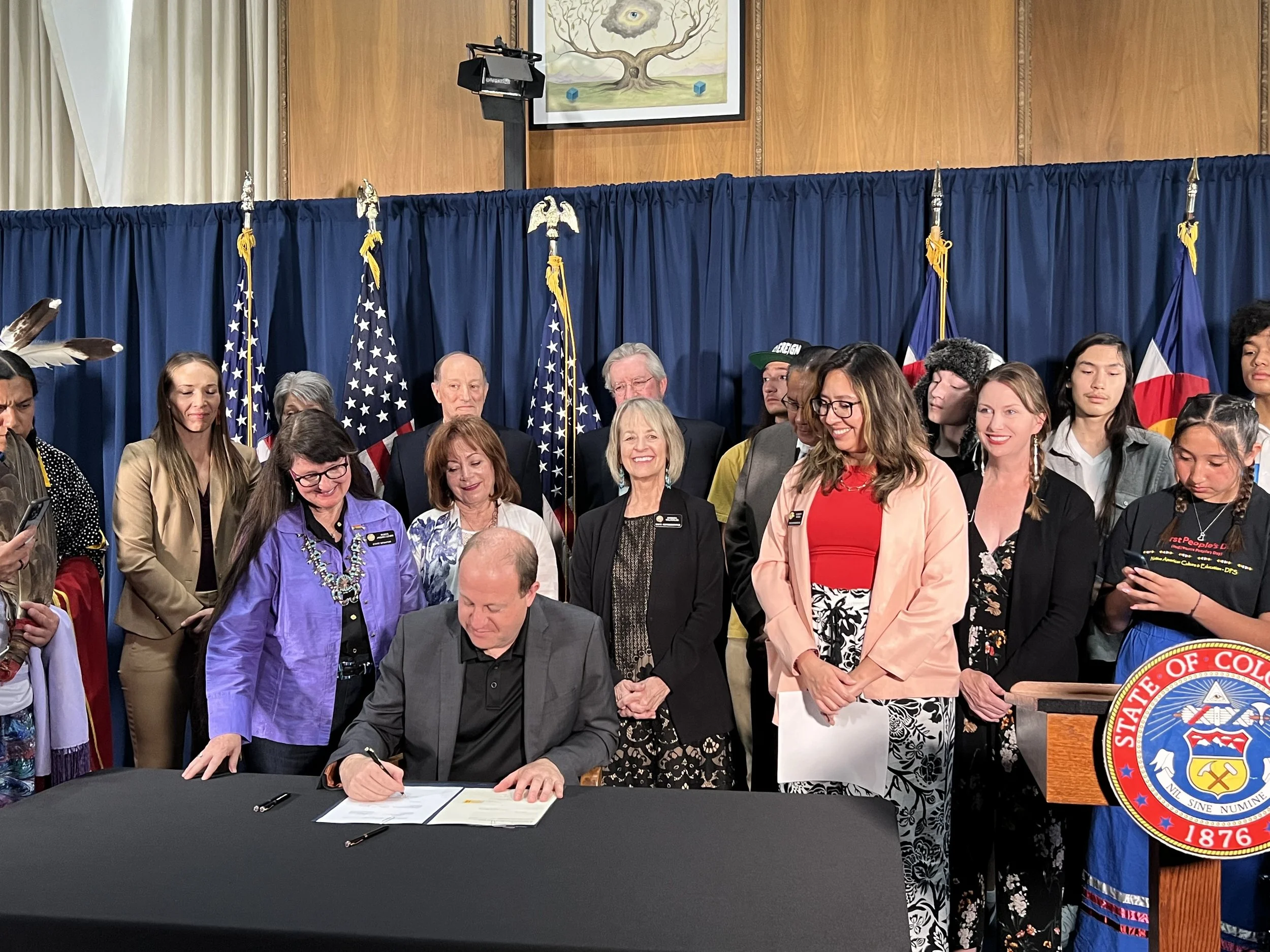
DENVER, CO – Today, Governor Jared Polis signed into law two pieces of legislation to ensure protections for Native American children and students at graduation ceremonies. The Governor and legislators were joined by members and leaders of Colorado’s federally recognized tribes at the signing ceremony, including Southern Ute Indian Tribe Chairman Melvin Baker and the Executive Director of the Colorado Commission of Indian Affairs, Kathryn Redhorse.
SB23-202, sponsored by Senators Jessie Danielson, D-Wheat Ridge, and Sonya Jaquez Lewis, D-Longmont, allows Native American students to wear traditional regalia at graduation ceremonies.
The bill requires schools, school districts and public colleges and universities to allow qualifying students, including those who are members of a Tribe, eligible to be members of a Tribe, or are of Native American descent, to wear traditional Native American regalia at graduation ceremonies. The bill aims to protect Indigenous students from discrimination and reverse the systemic effects of the Indian Civilization Act of 1819.
“Today’s bills signal our commitment to reversing the egregious, systemic effects of removal and assimilation practices, and further fortify tribal rights,” said Danielson. “From schools prohibiting kids to wear celebratory cultural regalia to the Supreme Court overturning decades of legally rock-solid precedent, the need for these bills is clear. With these new laws, the State of Colorado is supporting Native American tribes, families, and kids in the way they deserve.”
“No Native American student should have to choose between participating in their graduation with their classmates or following their religious and cultural traditions,” said Jaquez Lewis. “Our country has a long and tragic history of suppressing Native American culture and forcing people to assimilate. I’m pleased to stand alongside Tribal leaders and members as we enshrine these protections for Native American students once and for all.”
The second bill, SB23-211, sponsored by Danielson and Majority Leader Dominick Moreno, D-Commerce City, secures protections for Native American children in cases of adoption and guardianship. The bill adopts the federal Indian Child Welfare Act of 1978 (ICWA) into state law to ensure that Native American children continue to be protected if the law is struck down fully or partially at the federal level.
ICWA was enacted to safeguard the best interests of Native American children and keep them connected to their families and tribes in cases of separation. The law delineates the roles of state and tribal governments in child welfare cases, but is currently being challenged in the Supreme Court.
“For decades, the Indian Child Welfare Act has been recognized as the gold standard in child welfare practice by experts,” said Moreno. “Now that anti-tribal interests who want to undermine tribal sovereignty have made their way to the Supreme Court, it’s vital that we act immediately to protect Indigenous kids on a state level. This new law puts the best interests of Native American children first, and promotes the stability and security of tribes and families.”
In the 1970’s, studies revealed that 25 to 35 percent of all Native American children were being separated from their parents, extended families, and communities by state child welfare and private adoption agencies. Of those separated, 85 percent were placed outside of their families and communities into non-Native American households – even when fit and willing relatives were available. Since ICWA’s enactment, the law has been successful in keeping Native American children in their families and communities, and ensuring the children’s rights are protected.
Colorado is home to two federally recognized Tribes; the Southern Ute Indian Tribe and the Ute Mountain Ute Tribe. According to the 2020 US Census, 74,129 Native Americans live in Colorado, a higher population than the neighboring states of Utah and Idaho.